Cover Site Prep & Utilities: The Los Angeles Owner’s Guide
Site prep and utilities for a Cover home in Los Angeles typically run $25,000 – $75,000 installed, depending on your lot’s slope, soil condition, and how far the utility trench has to go from the street or main panel. We stock and install the full Cover-compatible package: foundation prep, grading, trenching for water/sewer/electrical, and the final hookup that gets your Cover unit connected to the grid. Most owners discover something’s wrong when their utility trench collapses after rain, the temporary power pole gets flagged by DWP, or the foundation pad settles enough that doors start binding.
We’re an independent service provider, not affiliated with Cover. We’ve built and serviced enough Cover sites across Los Angeles that we know exactly what their site-prep specs demand, which is what this page is about.
Which Cover Models This Applies To
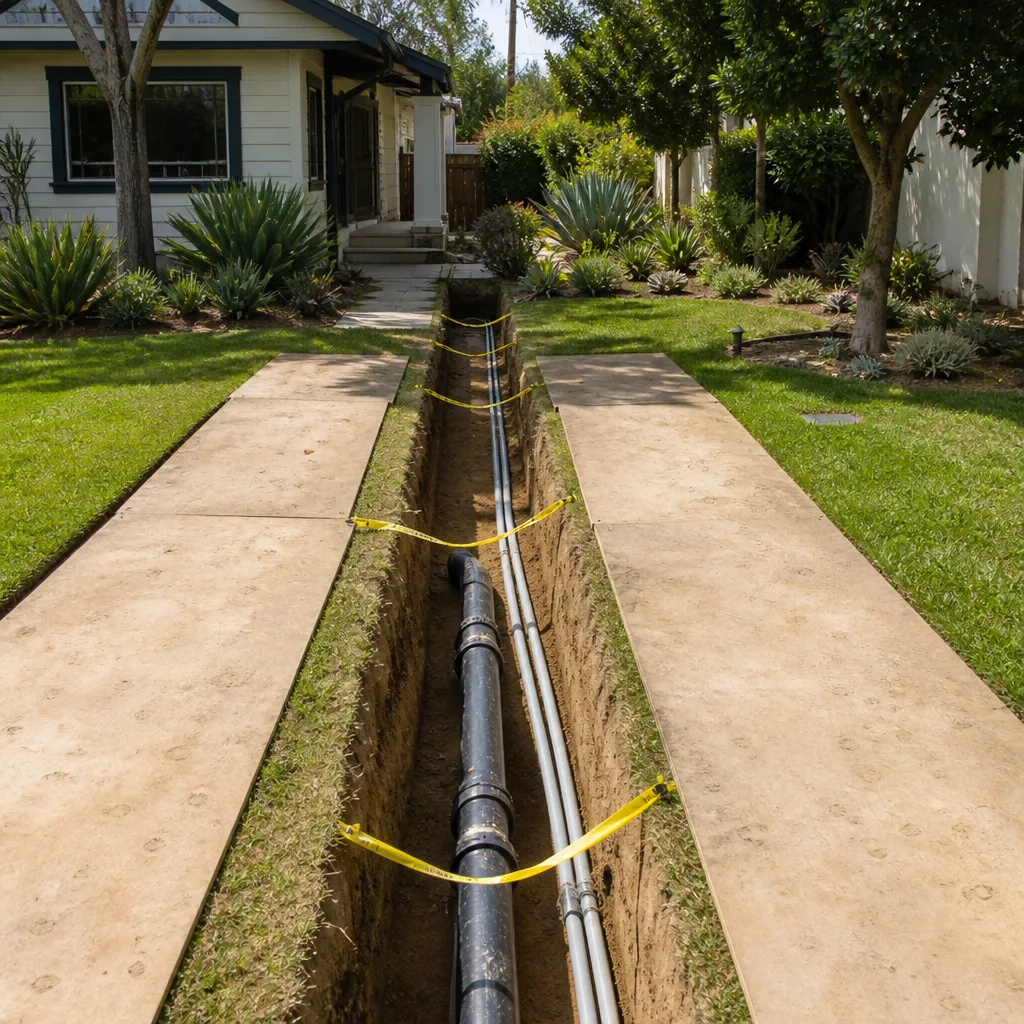
Cover designs its units around a standardized foundation and utility interface, so the site-prep requirements are broadly consistent across their ADU product line: the Cover Studio, the Cover One, and the larger Cover Two. The compatibility issue isn’t really model-to-model. It’s the site-specific utility stub locations that Catch owners off guard.
Here’s the thing most people don’t realize: Cover’s factory sets the utility penetration points during manufacturing. That means your trench has to terminate within about 6 inches of where Cover’s factory placed the stub. If your grading is off, your trench drifts, or the foundation pad is poured a few degrees out of square, that final connection becomes a custom fabrication job rather than a bolt-on. We’ve seen it add $4,000 – $8,000 to a Los Angeles project when a homeowner hired a generalist who didn’t read Cover’s site prep manual.
When you call us, have your Cover unit’s serial number and build sheet ready. It’s on the interior wall near the electrical panel. That tells us which utility interface version your unit shipped with. Cover has revised their interface details twice in the last three years, and parts that fit a 2022 unit don’t always mate cleanly with a 2024 build.
On the OEM-versus-aftermarket question: for trenching, conduit, backfill material, and foundation forms, a quality aftermarket supplier is completely fine, and honestly what we use. But for the utility interface hardware itself – the connector plates, the weatherproofing boots, the panel-mount gaskets – stick with Cover-spec components. The tolerances are tight enough that a generic part that’s 1/8″ off will leak or bind. It’s not worth gambling $250 to save $40.
Signs Your Cover Site Prep & Utilities Is Failing
- Trench collapse or sinkage after rain. Los Angeles soil, especially in hillside areas like Silver Lake, Echo Park, and parts of the Valley, expands and contracts dramatically with moisture. If your backfill wasn’t compacted in lifts, you’ll see a sunken line running from the street to your unit within the first winter. This is the most common site-prep failure we repair.
- Water pooling around the foundation pad. This usually means the pad was poured without enough of a taper away from the unit, or the drainage swale has filled in with debris. Cover units are built to sit slightly above grade, but if the pad settles unevenly, water finds the low spot and starts working on your sill plate.
- Electrical faults or tripped breakers with no obvious cause. Underground conduit that wasn’t buried to the correct depth – Los Angeles code calls for 18 inches of cover for PVC, 6 inches for rigid metal – can get crushed by vehicles or root growth. A crushed conduit damages the wire jacket over time, and you’ll see intermittent faults long before a total failure.
- Sewer smells near the unit or slow drains. Your sewer lateral runs from the Cover unit to either the main house line or the city tap. If the trench wasn’t bedded correctly, the line can develop a belly that holds water, or worse, a separation at a joint. Tree roots in neighborhoods like Los Feliz and Hancock Park will find a separated joint within 18 months.
- Gas line hissing or odor near the trench path. This one is urgent. If you smell gas anywhere near your utility trench, call SoCalGas immediately, not us. Once the line is shut off and the leak is located, then call us to trench, repair, and re-inspect. We handle the excavation and restoration; the gas company handles the line.
Replacement Cost & What’s Included
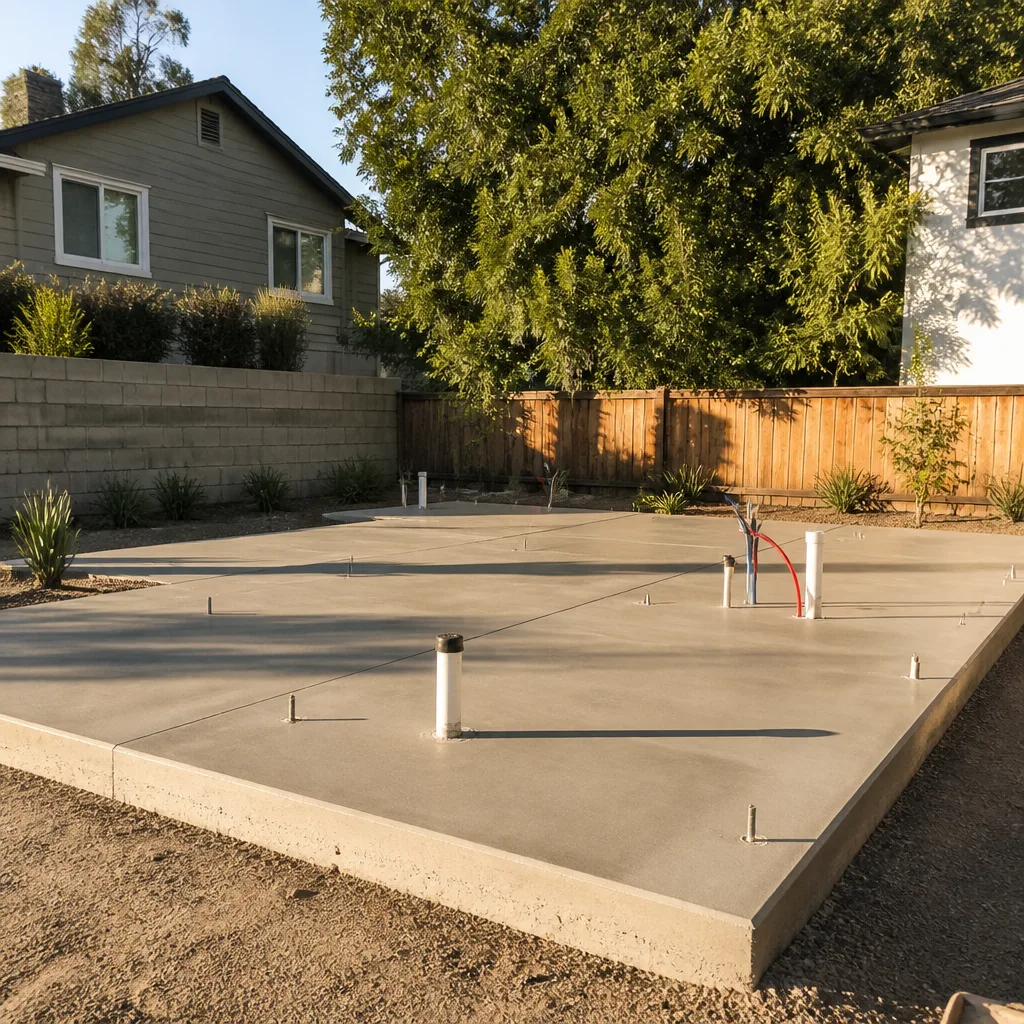
Honest installed ranges for Los Angeles County, based on projects we’ve quoted in the last two years:
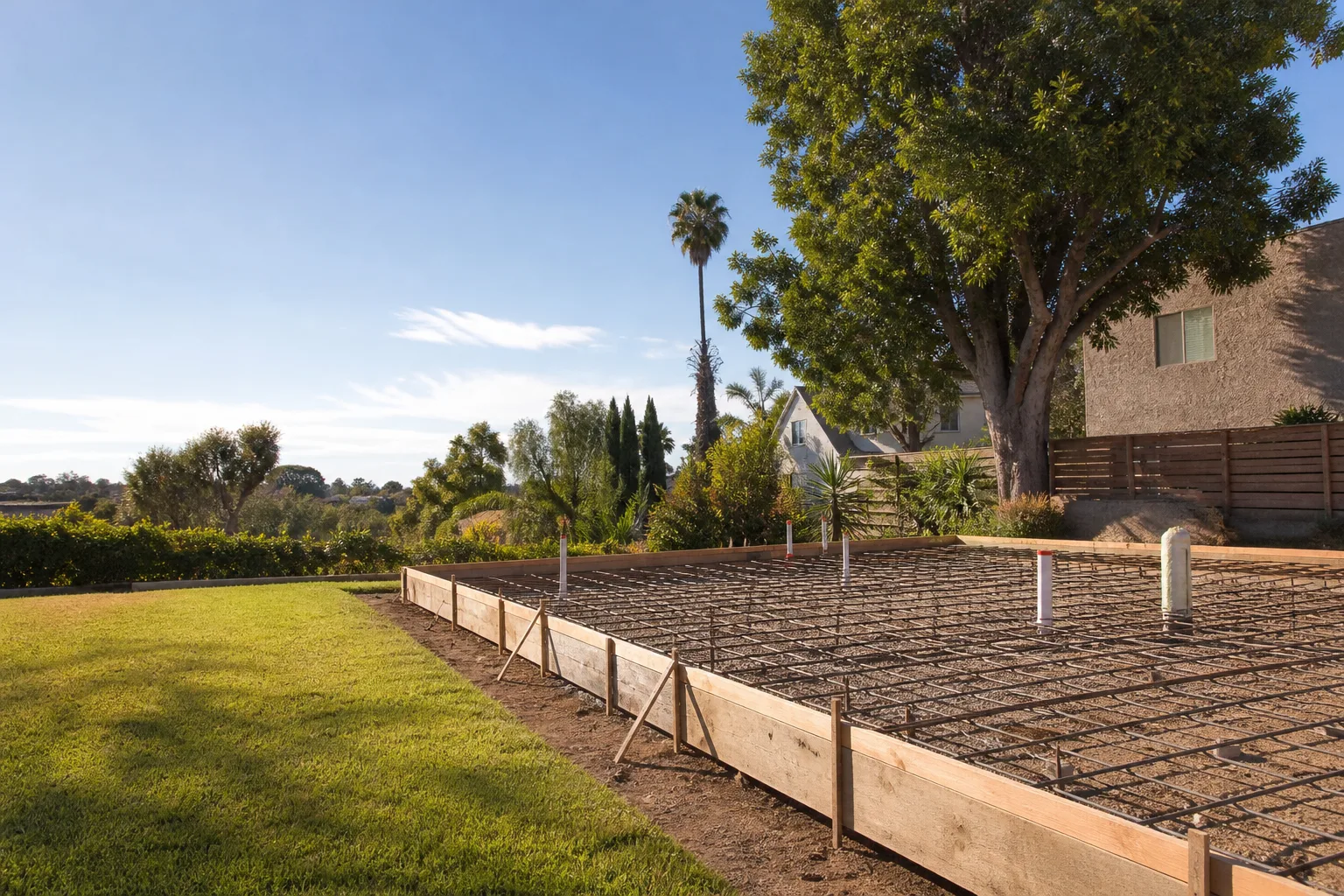
- Full site prep from bare lot (grading, foundation forms, pour, compaction): $15,000 – $40,000. The spread depends on soil type, slope, and whether we’re bringing in engineered fill. A flat Glendale lot with decent soil is at the low end. A hillside in Mount Washington or Baldwin Hills with expansive clay and a 15% grade is at the high end.
- Utility trenching and hookup (water, sewer, electrical, sometimes gas, from street or main house to the Cover unit): $10,000 – $35,000. The variables are distance, obstacles like driveways or retaining walls, and whether we need to bore under anything rather than open-trench.
- Repair of a failed site-prep element (collapsed trench, settled pad, damaged conduit): $2,500 – $12,000, depending on what failed and how much excavation it takes to fix it properly.
- Temporary power pole and DWP coordination (if your timeline requires construction power before the permanent feed is pulled): $1,800 – $4,500, including permits and the pole itself.
Every quote we write is a fixed line-item price. You see the parts cost, the labor hours, the disposal, and the equipment fees before you sign anything. If we hit a condition we couldn’t see during quoting – a buried concrete slab, a mismarked DWP line – we stop, show you what we found, and re-quote that piece before moving forward. The 365-Day Done Right Promise covers our site work and utility connections for a full calendar year after completion. If a trench settles or a connection fails in that window, we come back and fix it. No charge, no haggling.
DIY or Call Us?
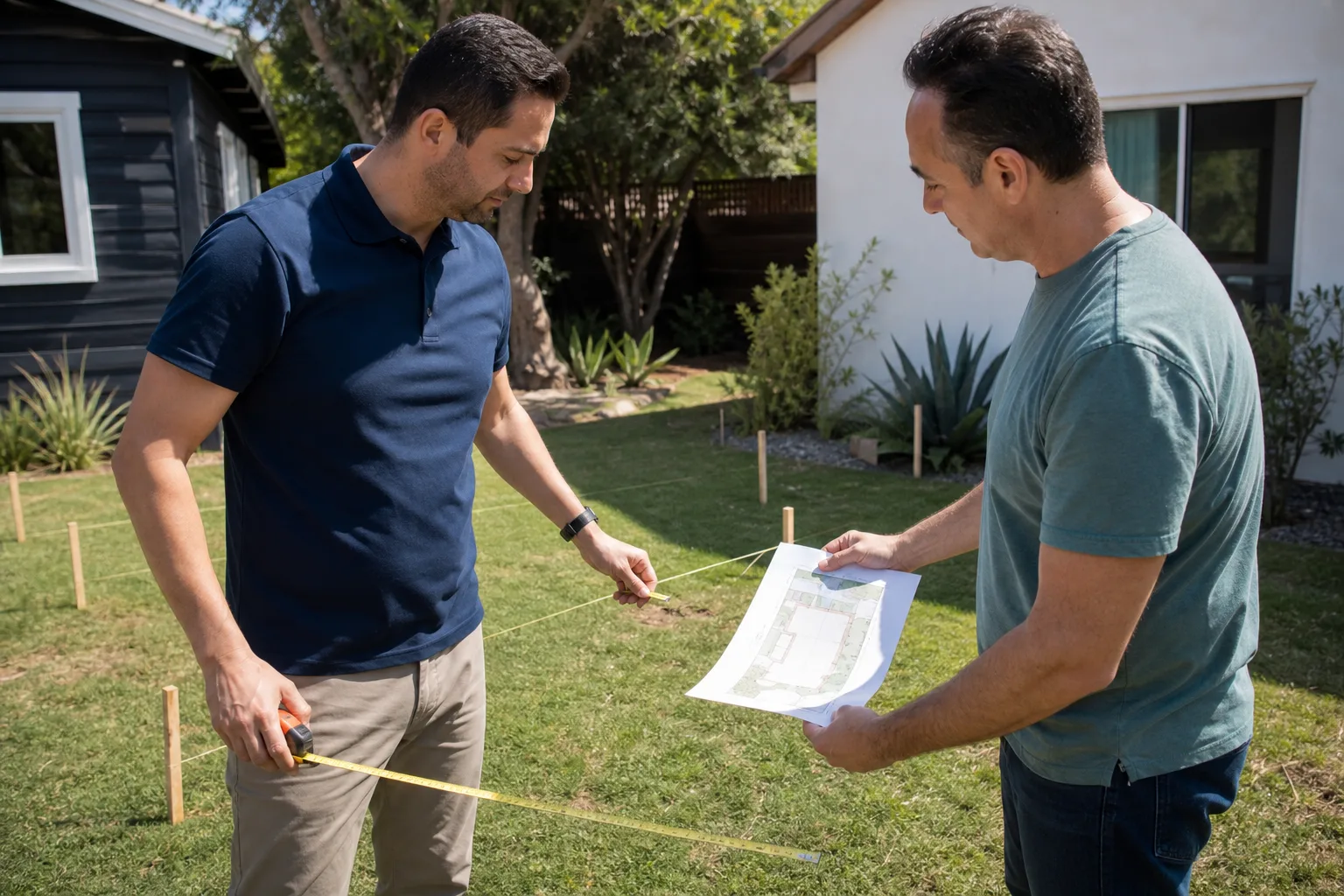
Here’s the honest split. You can safely do the inspection work yourself: walk the trench line after rain and look for sinkage, check for water pooling near the pad, and note any new cracks in the foundation or gaps at the utility stubs. That’s useful information that helps us quote accurately.
What you should not do yourself is anything involving excavation, electrical connections, gas lines, or sewer work. Underground electrical faults can kill. A damaged sewer line is a health hazard. And in Los Angeles, any utility trench deeper than 12 inches almost always requires a permit and a utility-locate. The fine for digging without calling DigAlert first is $50,000 in LA County, and it gets assessed before the damage bill. We pull permits, coordinate the locates, and handle the inspection. The trenching and connecting is not where you learn by trial and error.
If you’re seeing signs that your Cover site prep is failing, call us at (472) 248-8213. We’ll send someone who’s been through this specific situation before. Tell me what you actually need, and I’ll tell you what it actually costs.
FAQs
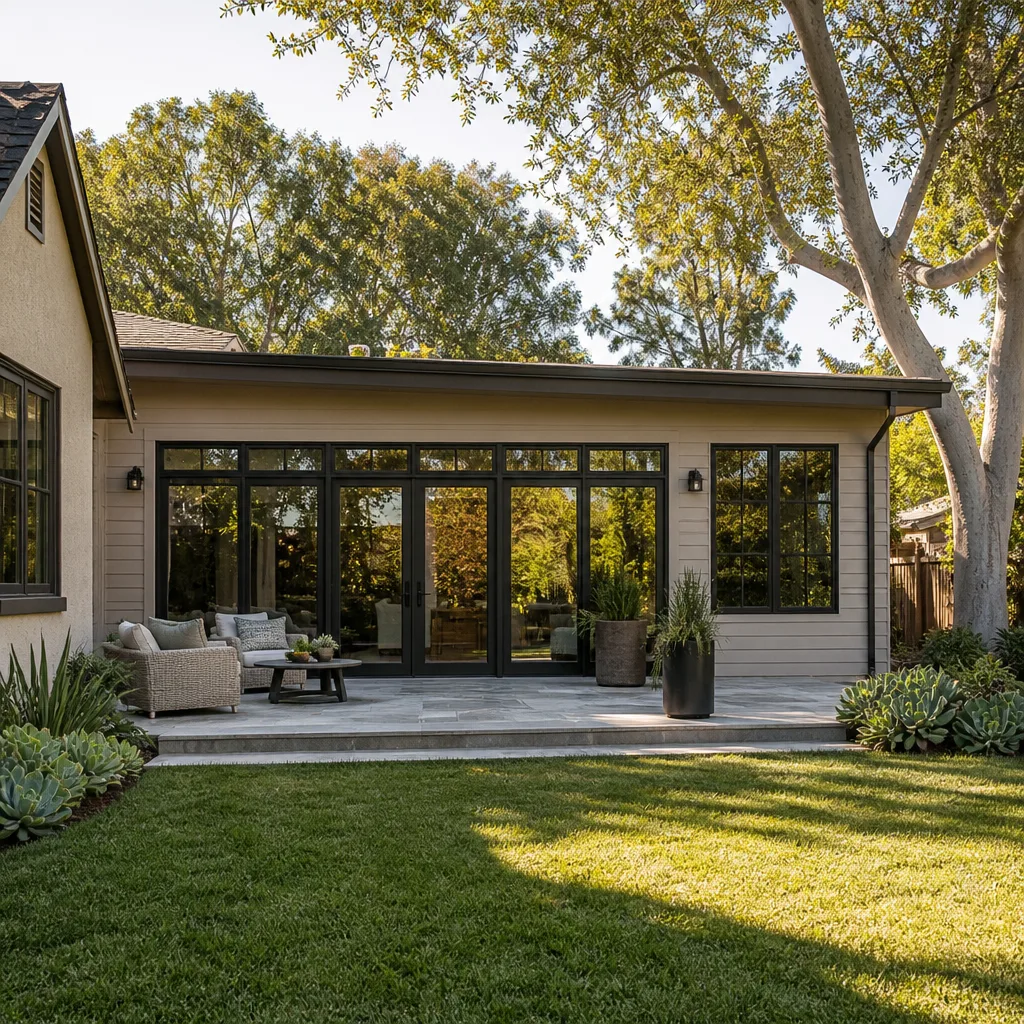
Done correctly – properly compacted backfill, correct conduit depth, sealed utility stubs – your site prep should last the life of the Cover unit, which is decades. The failure points in Los Angeles are almost always improper compaction and shallow trenching. Our work carries the 365-Day Done Right Promise, but the honest lifespan expectation for a properly built pad and trench is 30+ years before anything needs attention.
Yes, in most cases. If a section of conduit is crushed or a sewer lateral has a separated joint, we can often excavate just that section, repair or replace the damaged run, and re-compact properly. A full replacement is only necessary when the original trench was so poorly done that the entire run is compromised. Call (472) 248-8213 for an exact assessment – the inspection is free.
Most single-issue repairs – a collapsed trench section, a settled pad correction, a damaged conduit replacement – take 2 to 4 days from start to finish in Los Angeles, including inspection. A full site prep from bare lot typically runs 2 to 4 weeks, factoring in permit approvals, DigAlert locates, utility coordination, and DWP scheduling. We’ll give you a written timeline with your quote, and it’s the timeline we hold to.
We keep Cover-spec utility interface components, weatherproofing boots, and conduit fittings on our trucks, because we service enough Cover units across Los Angeles to know what gets replaced most often. Anything we don’t have on hand is sourced within 48 hours from our Los Angeles suppliers. We also maintain parts familiarity with Abodu and Dvele units if you’re comparing systems.
If you’ve got a Cover unit on your Los Angeles lot and the site prep or utilities aren’t holding up, call (472) 248-8213 for a free estimate. We’ll send you the name and photo of the technician before they arrive, hand you a written price before any work starts, and stand behind the job for a year.
Written by Miles Hartwell, Owner, Sutton ADU Builders at Sutton ADU Builders, serving Los Angeles and nearby areas.