Boxabl Site Prep & Utilities: The Los Angeles Owner’s Guide
Boxabl site prep and utility work in Los Angeles typically runs $18,000 to $55,000 depending on your lot’s slope, soil conditions, and the distance from existing power, water, and sewer lines. We stock the equipment and materials needed for Boxabl-compatible foundations, trenching, and hookups, and we can usually start within 10 to 14 days of your site survey. Most owners discover their site prep wasn’t done right when the Boxabl unit arrives and won’t sit level, the crane can’t access the pad, or a utility stub is in the wrong spot by six inches.
Here’s the reality: a Boxabl is a precision-built steel-framed unit. It arrives on a truck expecting a flat, square, properly reinforced pad with utility stubs within a two-inch tolerance. When the prep is off, the unit either won’t seat correctly or the connections get stressed over time, and you end up paying twice. We’re an independent contractor, not affiliated with Boxabl, but we’ve done enough of these in LA to know exactly what the factory tolerances demand and what inspectors here will sign off on.
Which Boxabl Models This Applies To
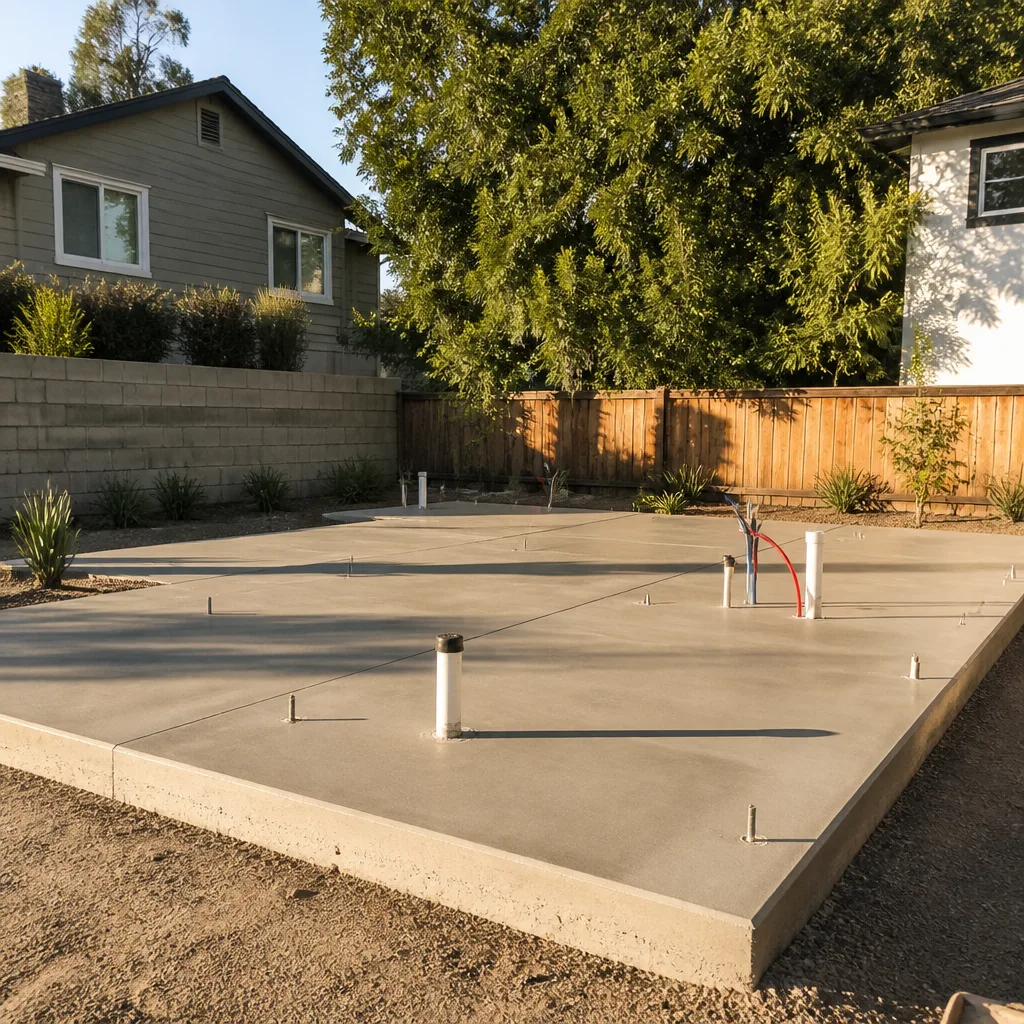
This applies to the Boxabl Casita, which is currently the main residential model rolling out to California buyers. The Casita is a 20-foot by 20-foot unit (about 400 square feet) that weighs roughly 13,000 pounds and arrives on a purpose-built trailer. That weight matters because your site prep has to support a concentrated point load at each corner jack, not just a spread load like a typical shed or park-model home.
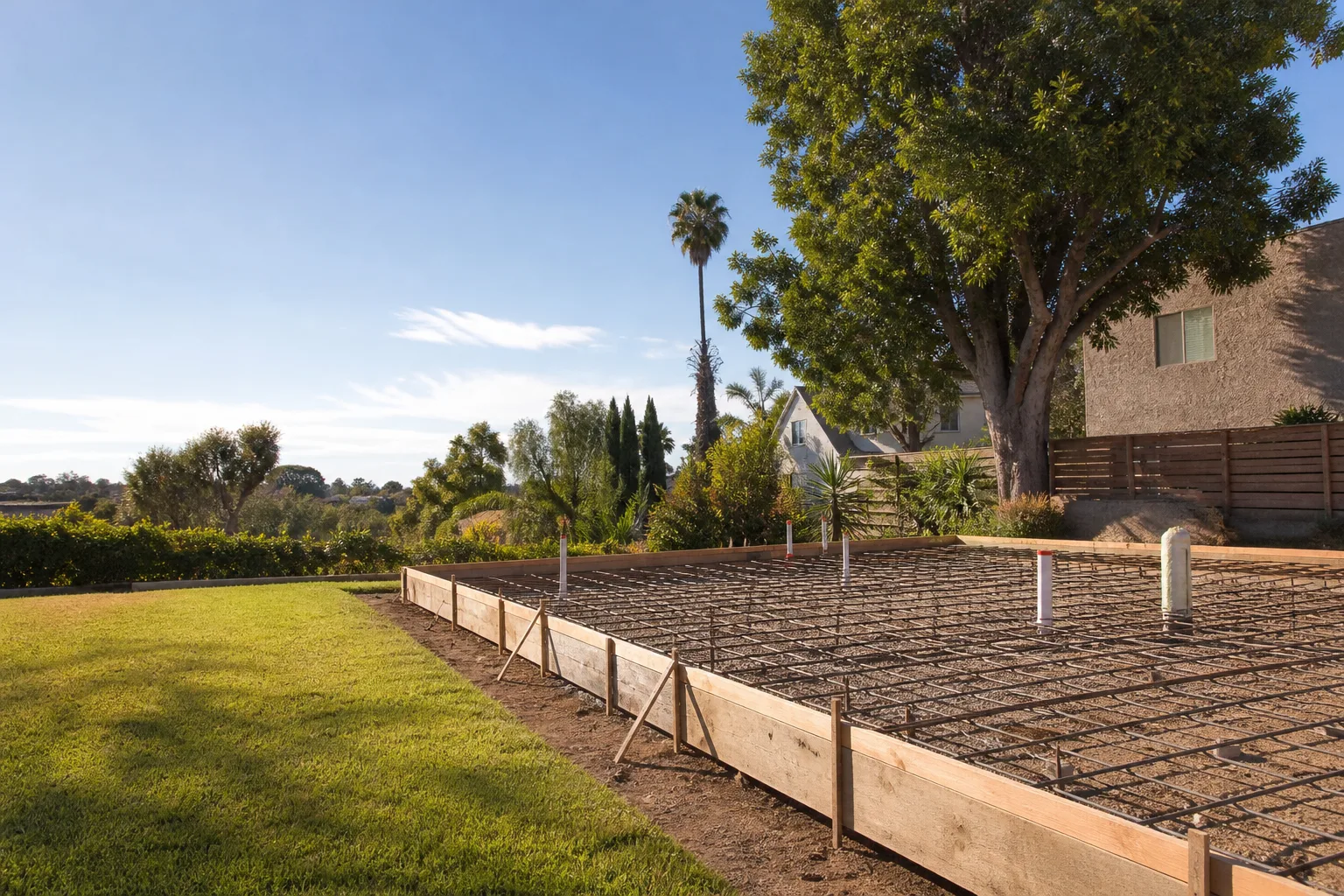
The key specification owners miss is this: the Casita’s factory documentation calls for a foundation pad with a flatness tolerance of 1/4 inch over any 10-foot span. A standard concrete pour that a general handyman does will almost never hit that. We’ve measured pads in Los Angeles that were off by over an inch, and the result is a unit that rocks slightly or sits with one corner carrying more load than designed. Over time, that uneven load works against the steel frame and can cause the folding wall mechanisms to bind.
For this part of the job there isn’t really an OEM versus aftermarket decision the way there is for a garage spring or a water heater. The foundation and utilities are site-built. The decision is whether your contractor has actually read Boxabl’s installation requirements and knows what LADBS will look for. We do. When a customer provides their Boxabl factory specs, we build to those numbers, then we add the local requirements on top: Los Angeles Department of Building and Safety rules, hillside ordinance considerations if you’re in Mount Washington or Echo Park, and utility company clearances for LADWP and SoCalGas.
Signs Your Boxabl Site Prep & Utilities Are Failing
- Visible slab cracks within the first year. Hairline cracks are normal concrete behavior. Cracks wider than a quarter inch, or cracks that run diagonally from a corner of the pad, usually mean the subgrade wasn’t compacted properly or the slab thickness was skimped. In Los Angeles’s expansive clay soils, especially in the San Fernando Valley, soil movement makes this worse.
- Water pooling against the unit after rain. A Boxabl pad should slope away from the unit at a minimum of 1/4 inch per foot. If water runs toward the steel frame or sits against the bottom rail, the site grading was wrong and you’re inviting corrosion. We see this most often in flat lots in the South Bay and along the LA River corridor.
- Door or folding-wall mechanisms dragging after the first season. If the unit settles unevenly, the walls shift just enough to throw the factory-aligned hinges and tracks out of plane. It feels like a product defect, but the root cause is usually foundation movement underneath.
- Unstable voltage or breakers tripping when both the mini-split and cooktop run. A Boxabl’s electrical panel needs a clean 100-amp service feed, and the run from your main panel to the subpanel has to be sized for the total distance. Undersized wire or a poorly landed connection causes voltage drop, which builds heat at the terminals. That’s a fire risk, not an inconvenience.
- Slow drains or sewer smells after a few months. The waste line from the Casita needs proper fall, typically 1/4 inch per foot, from the unit’s outlet to the sewer tap or septic tank. If the trench was backfilled with rocks or the line was pitched too steep or too shallow, solids build up. In older LA neighborhoods with 4-inch clay sewer laterals, a sloppy connection at the wye is a common failure point.
Replacement Cost & What’s Included
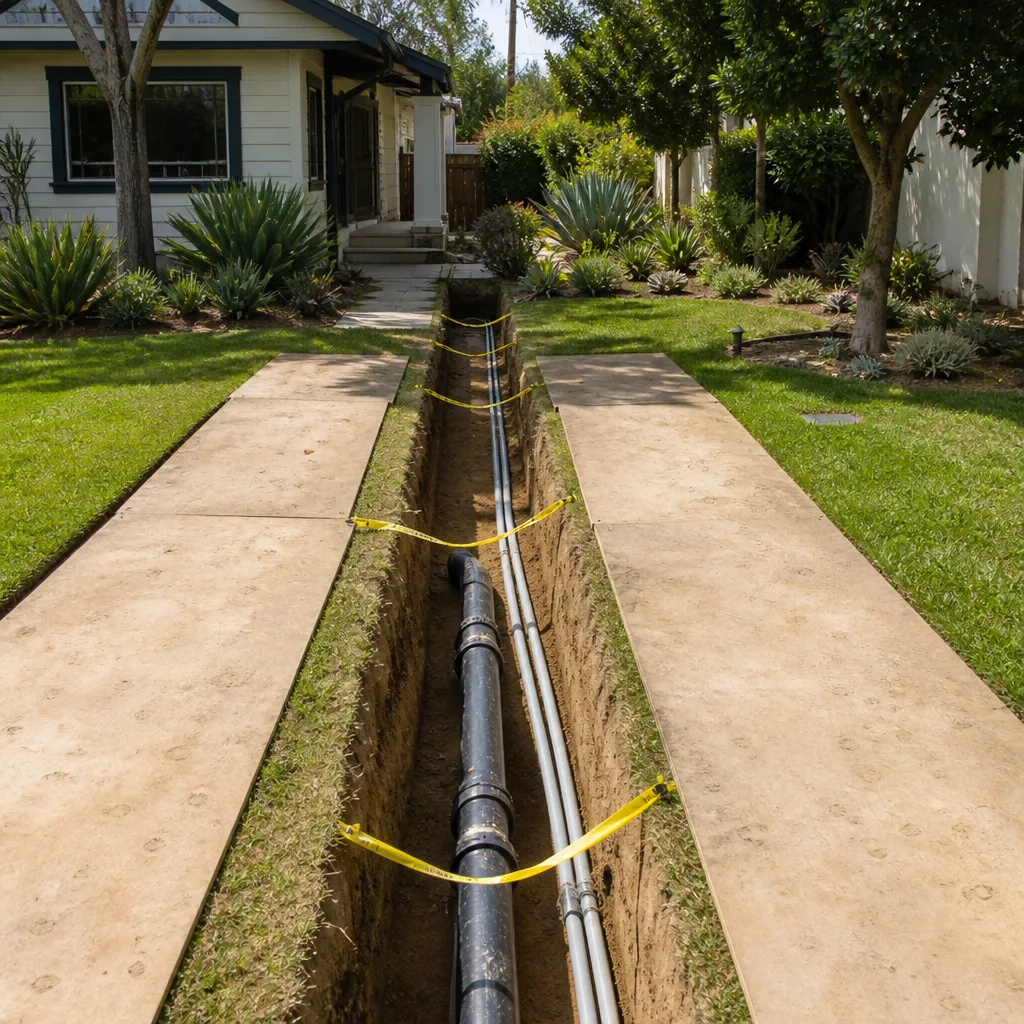
If your site prep or utility work needs to be corrected or replaced in Los Angeles, here’s what you’re looking at:
- Slab demolition and repour (400 sq ft Casita pad): $9,000 to $16,000 depending on demolition access, hauling fees, and whether we’re replacing with a standard 4-inch slab or a reinforced 6-inch pad to correct prior movement.
- Regrading and recompaction of subgrade: $2,500 to $6,000 if the underlying soil was never properly compacted or drainage was omitted.
- Electrical service correction (new subpanel run or re-pull of undersized feeders): $3,200 to $7,500 depending on trench length from the main panel and whether LADWP coordination is needed for a disconnect.
- Plumbing line correction (re-pitch waste line or replace damaged section): $2,800 to $6,400 plus the cost of any sidewalk or driveway cutting in the city right-of-way.
- Full site rework for a failed prep: $18,000 to $35,000 if multiple systems have to be corrected together.
Every price we give is written before work starts. You’ll see the parts, labor, hauling, and permit line items separately. The 365-Day Done Right Promise covers workmanship on the corrected work for one full calendar year from completion. If a slab we poured cracks beyond normal cosmetic range in that window, we make it right. No haggling.
DIY or Call Us?
There are a handful of things you can safely check on your own. Look at where water runs during the next rain. Watch the doors and folding walls through a few warm afternoons, because steel expands and if something’s binding you’ll feel it. Check that your breaker panel covers aren’t warm to the touch and that no outlets show scorch marks or smell like burnt plastic. Those observations help us diagnose faster when you call.
What you shouldn’t do yourself is lift the unit, re-pour concrete, open an electrical panel, or dig a trench on your own. Utility lines in Los Angeles can be shallow, and a shovel through an unmarked electrical line or a gas service line can be fatal. Every trench we dig goes through DigAlert locating before we break ground. If your Boxabl isn’t sitting right or your utilities aren’t performing, call us at (472) 248-8213 and we’ll walk through what you’re seeing and what it likely means before anyone shows up. Tell me what you actually need, and I’ll tell you what it actually costs.
FAQs
A properly built concrete pad with compacted subgrade in Los Angeles should last 30 to 50 years with no structural issues, and the electrical and plumbing runs should last the life of the home if sized and pitched correctly. The first-year window is when we typically see problems from improper prep, because that’s when soil settles and systems get used through a full cycle of LA seasons, including the heavy rain years we get every so often.
It depends on what failed. A low spot in a slab can sometimes be corrected with a flowable grout lift, and a drain line with one bad joint can be spot-repaired. But if the subgrade was never compacted or the slab is structurally undersized, patching will fail again within a season or two. We’ll tell you which situation you have, because a repair that buys you nine months isn’t a repair, it’s a delay. Call (472) 248-8213 and we’ll look at it honestly.
A utility correction, like re-pitching a drain line or re-pulling an electrical feeder, typically takes two to four days including inspection. A full slab repour runs seven to ten days with demolition, forming, pouring, and the 72-hour minimum cure before the unit gets re-set. Permits through LADBS can add one to three weeks depending on what the original build did or didn’t pull.
We maintain local inventory of the common materials: 4-inch and 6-inch form boards, welded wire mesh, rebar, the proper compression fittings for ABS waste lines, and the wire sizes Boxabl’s specs call for between the main panel and subpanel. Specialty items like the exact utility stub locations get measured on-site against your unit’s drawings before we order anything, so there’s no guesswork sitting in your yard. Estimates are free, call (472) 248-8213 for an exact quote.
Written by Miles Hartwell, Owner, Sutton ADU Builders at Sutton ADU Builders, serving Los Angeles and nearby areas.