
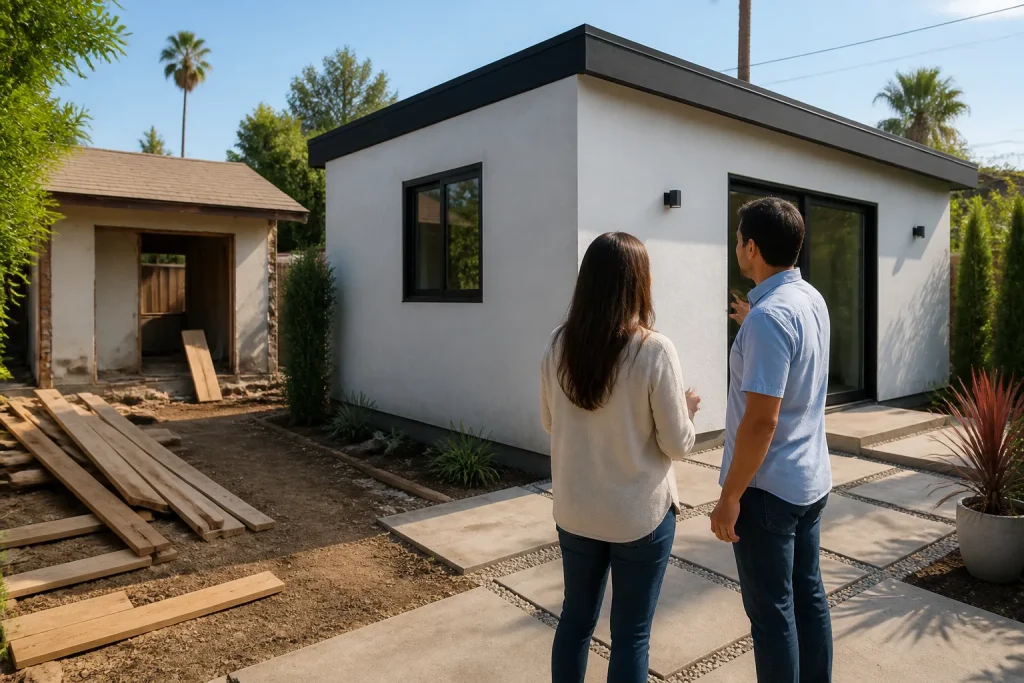
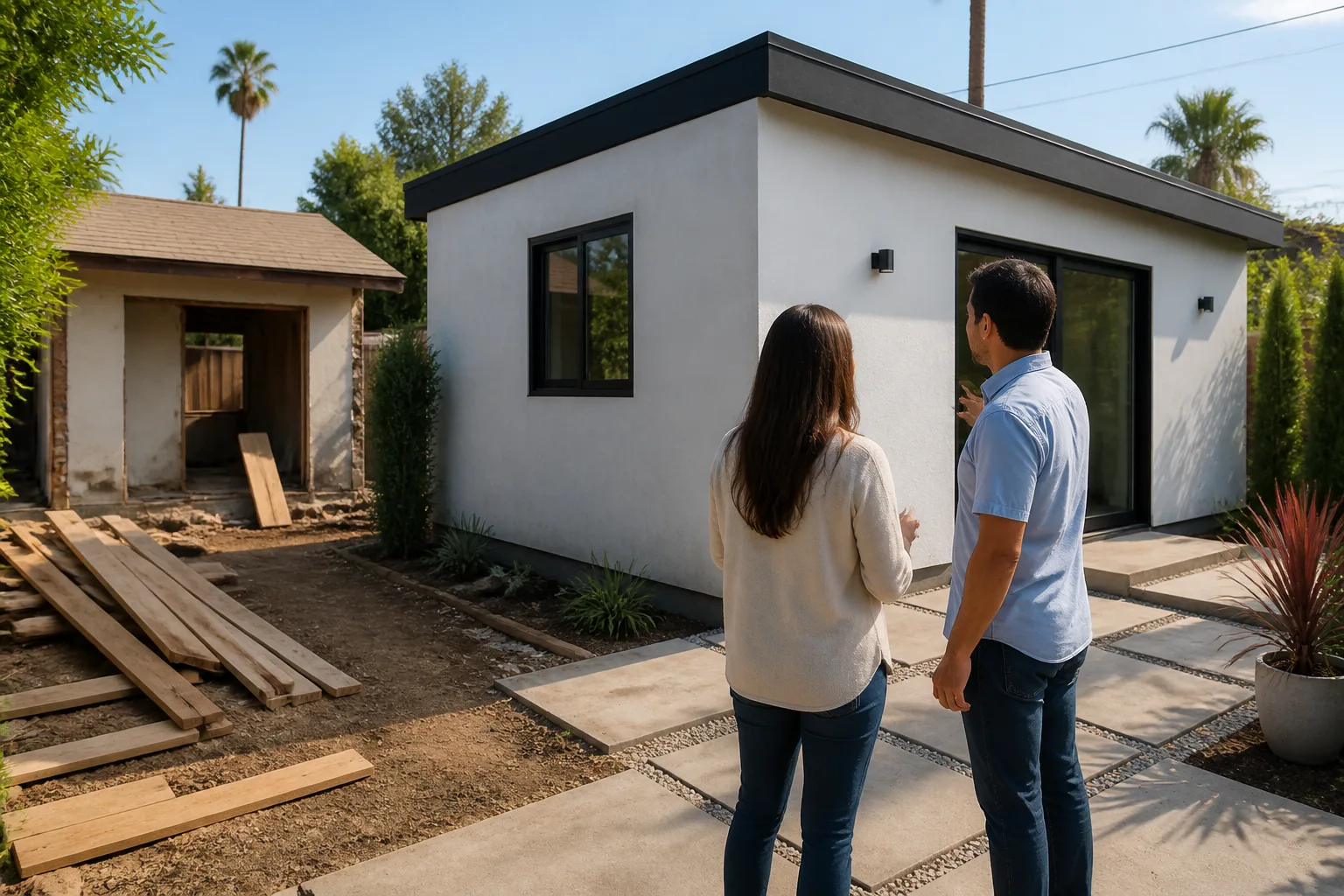
ADU Builders: Repair or Replace? How Los Angeles Homeowners Decide
Most ADUs in Los Angeles that look like they need “just a little work” actually need a full replace once you check the permit file, because unpermitted construction plus any repair over 50% of assessed value triggers a mandatory code-compliance retrofit that often costs more than starting over. The decision isn’t emotional and it isn’t really about drywall. It’s about which path produces a legal, rentable unit at the lowest total five-year cost, and in LA, that math starts at the LADBS permit counter, not in the crawlspace.
If you’d rather skip the research and get a straight answer from someone who’s run this audit hundreds of times, call Sutton ADU Builders in Los Angeles at (472) 248-8213 for a free site assessment.
Start With the Permit Audit, Not the Hammer
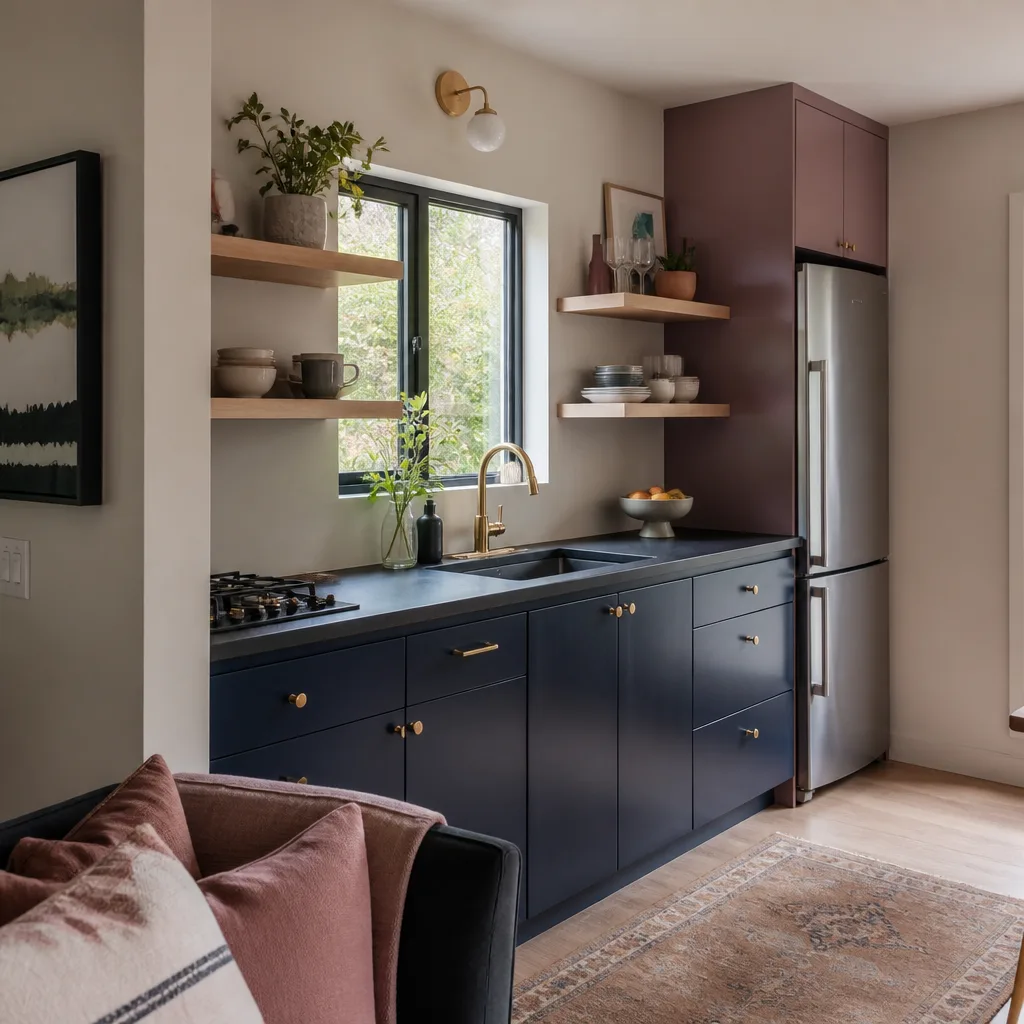
Before you get a single builder quote, pull your parcel’s permit history from LADBS. You can do this online through the city’s Building Records search or in person at a district office. What you’re looking for changes everything.
Here’s what the file will show you and what each result means:
– Permitted original construction with final sign-off: Your repair path is legally clean. You can fix walls, replace windows, upgrade electrical, and re-roof without triggering a rebuild requirement, as long as you stay under the substantial-improvement threshold.
– Open permits never closed: Someone pulled a permit for electrical or plumbing work and never called for the final inspection. You’ll need to close those before any new work can be signed off. This is common with garage conversions from the early 2000s.
– No permit record at all: The structure doesn’t legally exist as livable space, even if someone’s been sleeping in it for fifteen years. This is the most expensive category, because bringing it into compliance means proving the foundation, electrical, plumbing, insulation, and egress all meet current code.
In Los Angeles, we regularly see garage conversions and bonus rooms that were built without permits in the 1980s and 1990s in neighborhoods like Van Nuys, Reseda, and Canoga Park. They often have substandard footings, no insulation, and wiring that would never pass a Title 24 inspection. A homeowner who paid $40,000 for that conversion in 1995 can face $120,000 to $180,000 in retrofit work just to make it legal and rentable.
That’s why we say: permit status, not construction condition, drives the repair-or-replace decision in LA. A licensed home addition contractor in Los Angeles can walk you through the audit, but you can pull the records yourself before anyone steps on your property.
How LA’s 50% Substantial-Improvement Rule Actually Works
Los Angeles follows the California Building Code’s substantial-improvement provision. If the cost of your proposed repair exceeds 50% of the assessed value of the existing structure, the entire building must be brought up to current code. This isn’t a suggestion, and it isn’t something a builder can wave away.
Let’s make that concrete. Say your existing garage conversion is assessed at $60,000. The 50% line is $30,000. You need new electrical, a new roof, seismic anchoring, and two new egress windows for it to be safely rentable. That’s easily $45,000 to $65,000 of work. Under the rule, you now also have to bring the foundation, insulation, and mechanical systems up to current Title 24 energy standards, and possibly meet current accessibility requirements. Your “simple repair” just became a $90,000+ project, and you still have an old structure underneath it.
Now compare that to a replacement ADU. A new prefab unit from Abodu or Dvele in the 400 to 600 square foot range typically runs $180,000 to $320,000 installed in Los Angeles, depending on site conditions, utility runs, and foundation work. It comes with current-code energy systems, a warranty, and a clean permit file. It also rents higher, appraises higher, and lasts longer.
The 50% rule isn’t a penalty. It’s the city’s way of saying that a structure which has reached a certain level of disrepair isn’t worth patching, because the patch will never meet modern safety or energy standards. When a builder quotes a repair without first calculating whether that repair crosses the 50% line, that builder is guessing. And in Los Angeles, guessing is expensive.
The Repair Path: When Fixing Actually Makes Sense
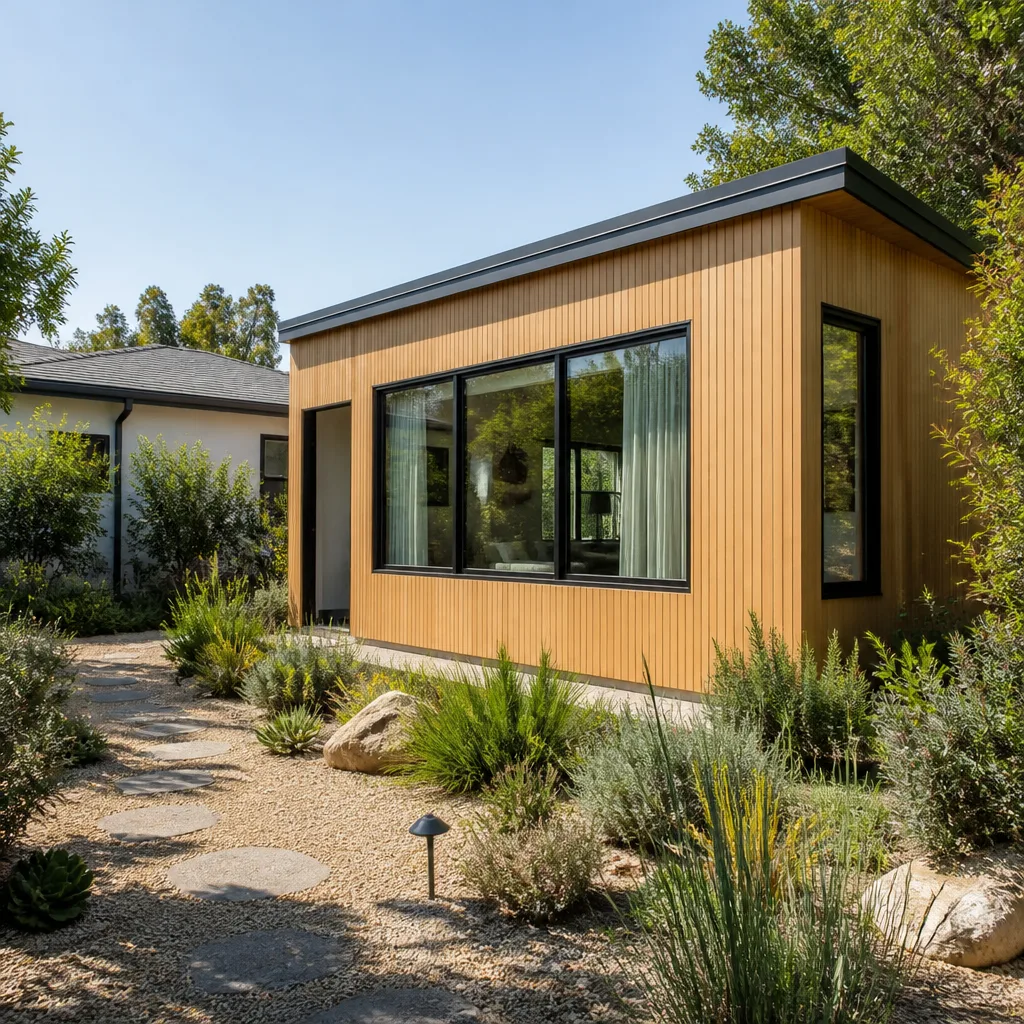
Repairing an existing ADU in Los Angeles makes financial sense under specific conditions. We tell homeowners to consider fixing when three things are all true:
1. The structure was built with permits and has a final sign-off on file. No open violations, no unresolved enforcement actions.
2. The assessed value is high enough that typical repairs stay well under 50%. A permitted ADU built in 2010 and assessed at $180,000 can absorb a $60,000 kitchen refresh without triggering full code compliance.
3. The problems are cosmetic or isolated, not systemic. New paint, cabinet refacing, a water heater swap, individual window replacement, a roof patch. These are discrete fixes.
One repair category where LA homeowners frequently take a path that runs from simple to catastrophic is converting a Tuff Shed into an ADU. The shed itself is cheap, often under $20,000 delivered. But to make it a legal ADU you need permitting, foundation anchoring, insulation to Title 24 standards, electrical service, drainage, and sometimes seismic reinforcement. That $20,000 shed can become a $120,000 project, and at that point you’re often better off with a purpose-built ADU from Cover or Mighty Buildings that arrives engineered for habitation.
The repair path is slower than people expect too. Because Los Angeles has plan-check backlogs and specific ADU ordinance requirements around setbacks (the required gap between your new structure and the property line), repairs that involve moving walls or changing rooflines can take three to six months before a single trade shows up. If the unit is already legal and rentable, that wait is tolerable. If it’s not, you’re losing rent every month.
The Replace Path: When Rebuilding Is Cheaper Than “Saving” the Structure
Replacement wins when the permit file is absent, the structure is pre-1990 construction, or the repair estimate crosses the 50% line. In Los Angeles, that’s more than half of the ADU repair inquiries we receive.
Here’s the five-year financial model we run for homeowners weighing repair against replace:
| Factor | Repair Path | Replace Path |
|—|—|—|
| Typical upfront cost | $60,000 – $120,000 | $180,000 – $320,000 |
| Permit risk after completion | Medium to high (legacy issues remain) | Low (clean Title 24, current code) |
| LA rental rate (500 – 700 sq ft) | $1,800 – $2,400/month | $2,400 – $3,200/month |
| Five-year maintenance reserve | $15,000 – $30,000 | $3,000 – $8,000 |
| Five-year net position | Often negative or breakeven | Typically positive by year three |
The rental differential matters. In neighborhoods like North Hollywood, Highland Park, and West Adams, tenants pay a measurable premium for a new, warrantied ADU with in-unit laundry, modern insulation, and current electrical. A repaired 1998 garage conversion with window units and a single circuit panel rents at the bottom of the range. A new Plant Prefab or Boxabl unit with a heat pump and Level 2 EV conduit rents at the top.
Replacement also resets your depreciation clock and eliminates the insurance complication. Many LA homeowners discover their insurer won’t cover an unpermitted conversion at all, and even a permitted one from 1995 carries a repair-cost rider that makes any claim painful. A new build with a clean LADBS record insures like new construction, because it is.
The one thing replacement is not is fast. Plan a realistic nine to fourteen months from first survey to certificate of occupancy for a custom site-build in Los Angeles. Prefab shortens that to six to ten months depending on the brand and your lot’s accessibility. Anyone who promises faster is selling, not building.
What a Real Site Assessment Should Include
A reputable ADU builder in Los Angeles won’t quote anything until they’ve done five things. We won’t either, because anything less is a guess with your money attached.
– Permit history review: Your builder should pull and review the LADBS file before pricing, not after you’ve signed. If they don’t, walk.
– Setback and lot coverage verification: LA’s ADU ordinance sets specific minimums. A builder who doesn’t measure the actual lot and check it against the parcel map is guessing whether your structure is even allowable.
– Utility service capacity check: LADWP service entrance size, sewer lateral condition, and gas line capacity all influence whether a replacement is simple or requires a utility trench across the property.
– Soil and drainage evaluation: Clay-heavy soil in parts of the San Fernando Valley moves. Builders who skip this leave you with a cracked slab in five years.
– Written itemized price before any work begins: That’s the Threshold Standard, and it means exactly what it sounds like: a written price with line items, delivered before a single tool is lifted, and no surprise invoices afterward.
We also tell homeowners to expect the builder to send the name and photo of every person who will be on the property before the crew arrives, and to check a photo ID at the door. Every Sutton ADU Builders technician is background-checked, identity-verified, and photo-badged under the Threshold Standard. It’s a system, not a promise. A builder who bristles at this request is telling you something useful about how they run jobs.
The Financial Question: What Would Your Accountant Say?
Strip out the emotional attachment to the structure and ask the question the way a finance professional would. Which option produces a legal, rentable, insurable asset at the lowest total cost per rentable year?
For most Los Angeles homeowners with an unpermitted or pre-1990 ADU, the answer is replace. Here’s the uncomfortable math. A $100,000 repair that leaves you with a legal-but-aging unit that rents for $2,000 a month and needs $4,000 a year in upkeep yields about $20,000 a year gross before vacancy and taxes. A $260,000 replacement that rents for $2,800 a month with a warranty and near-zero maintenance yields about $33,600 a year. The replacement costs $160,000 more upfront but generates roughly $13,600 more per year. Payback on the incremental spend is under twelve years, and the asset lasts thirty to fifty years instead of ten to fifteen.
Property value matters too. LA appraisers now give full weight to permitted, current-code ADUs in comparable sales. An unpermitted structure adds almost nothing to assessed value on a sale, and can actually become a liability if a buyer’s lender flags it. We pulled a quote for a homeowner in Eagle Rock last year whose unpermitted garage conversion was flagged during escrow by the buyer’s appraiser. The sale collapsed, and the eventual fix cost more than a new detached ADU would have. That’s not a rare edge case. It’s the standard outcome when permit status is ignored.
The Bottom Line
The repair-or-replace question for Los Angeles ADUs almost always comes down to permit status. A permitted structure with a clean LADBS file and isolated problems is a candidate for repair. An unpermitted structure, a pre-1990 build, or any repair that crosses the 50% substantial-improvement threshold is a candidate for replacement, and pretending otherwise costs more in the end.
Before you call any builder, pull your parcel’s permit history. Figure out your assessed value and the 50% line. Model the five-year cash flow on both paths. Then call someone who will do all of that with you, in writing, before you spend a dollar.
If you’re in Los Angeles and want a straight answer on whether to repair or replace your ADU, Sutton ADU Builders offers free estimates with a written price before any work begins. Call (472) 248-8213, or reach out through Sutton ADU Builders home. If a room addition is part of your picture too, see our Room Addition Contractor in Los Angeles page.
Frequently Asked Questions
How do I find out if my Los Angeles ADU was permitted?
You can search your address in the LADBS Building Records portal online, or visit a district office in person. Bring your parcel number. If no record exists, the structure was likely built without permits, and that changes your repair-or-replace math completely.
What triggers the 50% substantial-improvement rule in Los Angeles?
Any repair project whose cost exceeds 50% of the assessed value of the existing structure triggers a requirement to bring the entire structure up to current code, including Title 24 energy standards and accessibility requirements. A builder should calculate this threshold before you agree to any repair scope.
Is it cheaper to convert a garage or build a new prefab ADU?
In most Los Angeles cases we see, a new prefab ADU from a brand like Abodu or Mighty Buildings ends up cheaper per rentable year than a deep retrofit of an existing garage, because the retrofit carries hidden code-compliance costs and the new unit rents higher and lasts longer with lower maintenance.
Will a repair on an unpermitted ADU trigger a rebuild requirement?
Yes, often. Any permitted repair to an unpermitted structure exposes the original violations and can trigger a full compliance review. Many homeowners discover that the only path to a legal, rentable unit is a full replacement, which is why we recommend the permit audit before any repair quote.
How long does a replacement ADU take in Los Angeles?
Plan for nine to fourteen months for a custom site-build including design, plan check, and construction. A prefab or modular unit from lines like Cover or Plant Prefab can run six to ten months depending on site conditions and utility work. Anyone promising dramatically faster timelines is worth a second look.
Written by Miles Hartwell, Owner at Sutton ADU Builders, serving Los Angeles since 2006.
Need ADU Help?
Call Sutton ADU Builders - licensed & insured, here with fast after-hours help in Los Angeles.
(472) 248-8213