
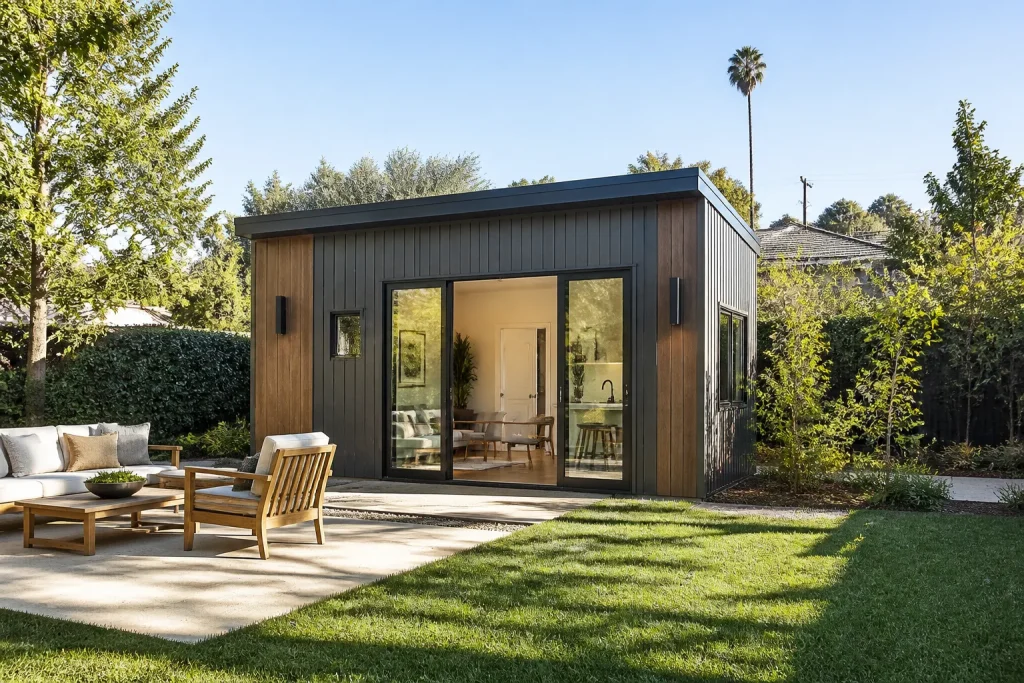
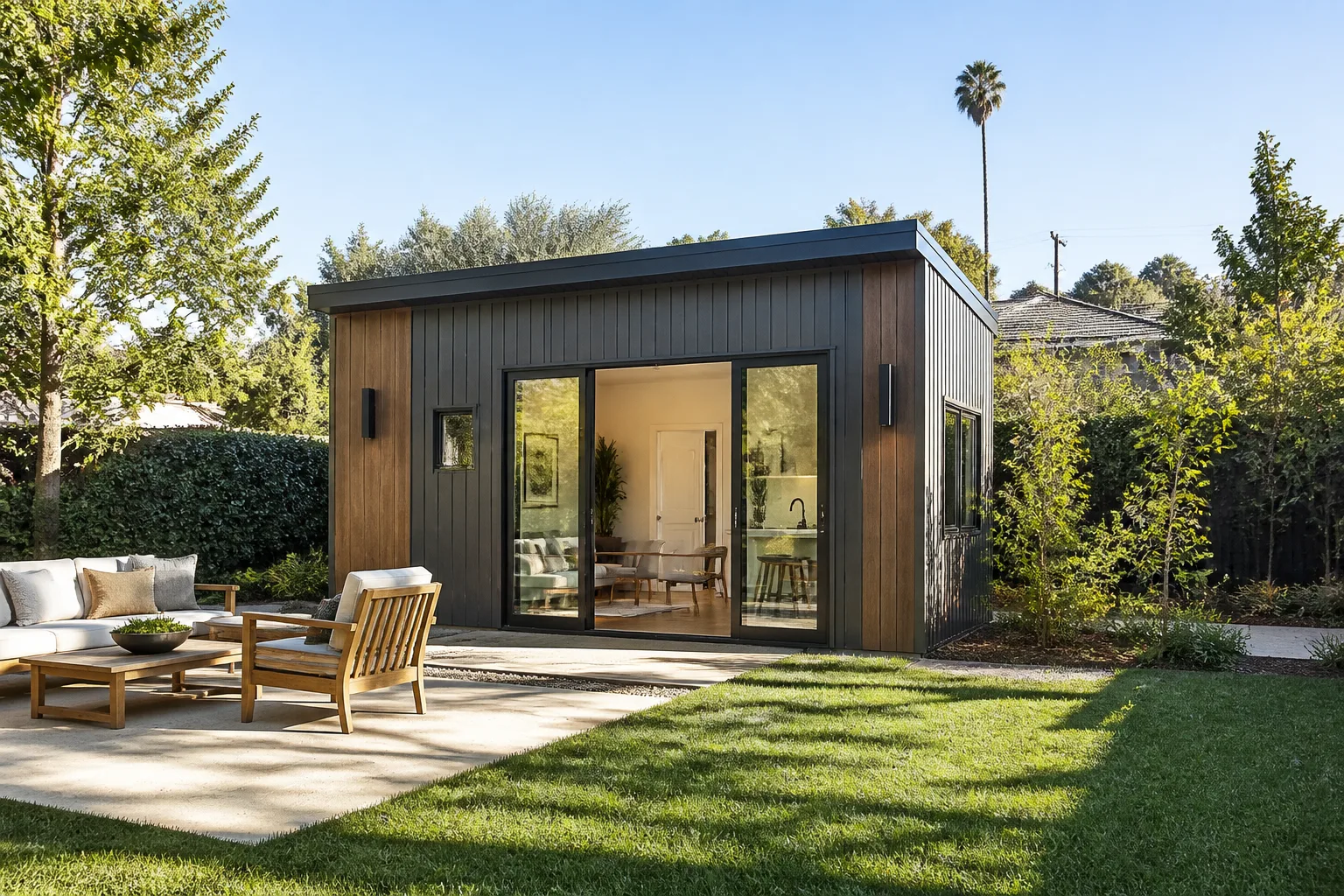
Plant Prefab Home Addition Contractor in Los Angeles: A Homeowner’s Guide
Plant Prefab quotes a 40 – 50% reduction in on-site build time, but that clock doesn’t start until your foundation, utilities, and permit are already cleared. In Los Angeles, where a wet February can delay a foundation pour by three weeks, the sequencing matters more than the panel system itself. We’ll walk you through who actually owns each piece of a Plant Prefab project so you don’t absorb costs that belong to someone else.
If you’d rather skip the research and talk to someone who’s installed these systems, call Sutton ADU Builders at (472) 248-8213 for a free estimate.
How the Split Responsibility Model Actually Works
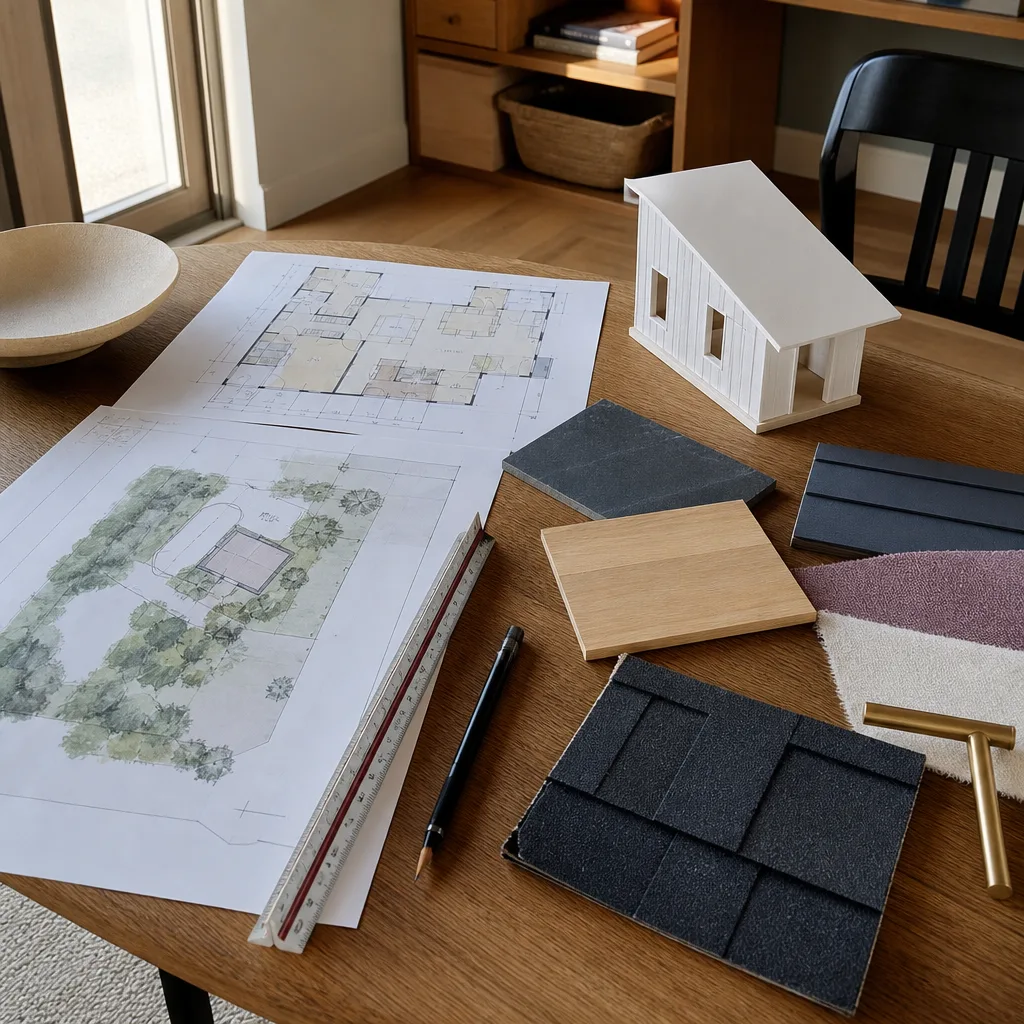
Plant Prefab manufactures panels and modules in a factory. They do not pour your foundation, pull your permits, or bolt the panels together on your lot. That work belongs to the general contractor you hire locally. This split is where most Los Angeles homeowners get surprised, because the brochure doesn’t show the handoff.
Here’s the breakdown of who owns what:
- Plant Prefab owns: panel engineering, factory fabrication, delivery to your site, and a limited warranty on the manufactured components.
- Your local GC owns: site survey, demolition (if needed), foundation, utility trenching and hookups, panel installation, interior finishes, and final inspection sign-off.
- You own: the contract between those two parties. If the foundation isn’t ready when the truck arrives, Plant Prefab doesn’t wait around. Rebooking and off-site storage fees start accruing.
We’ve seen rebooking charges in the Los Angeles market run anywhere from $2,500 to $6,000 depending on panel count, and storage runs about $450 – $900 per week at third-party yards in Vernon or Commerce. A competent GC builds the schedule backward from delivery day. That’s the person who earns their fee.
What Must Be Complete Before Delivery Day
Plant Prefab tells you when the panels will arrive, and they hold to it. The question is whether your site is ready. If it isn’t, the cost doesn’t hit Plant Prefab’s ledger. It hits yours. Before you sign any panel order, confirm your GC has certified these items:
- Foundation pass inspection. Not just poured. Cure time matters. In Los Angeles, inspectors want concrete tested before heavy panel loads get placed on anchor bolts.
- Utilities stubbed to the correct locations. Plant Prefab panels have fixed penetration points. If your sewer stub is 18 inches off from the panel design, someone is cutting concrete on delivery day.
- Permit placard posted and active. Delivery trucks get turned around by LADBS inspectors if the job card isn’t visible. Rebooking after a failed delivery attempt is a real line item.
- Crane access confirmed. Not every Los Angeles backyard has crane clearance. Panel weight dictates equipment size, and if the crane can’t reach the set point, you’re paying for a second mobilization.
- Neighbor notifications filed. In dense neighborhoods like Echo Park or Highland Park, a crane blocking the street requires advance notice and sometimes a temporary encroachment permit from the Bureau of Engineering.
The homeowner who gets hurt is the one who thinks Plant Prefab’s delivery date is a finish date. It’s a midpoint. Everything before it is on your GC, everything after it is on your GC, and the gap between is where storage fees live.
Los Angeles Permit Questions the Panels Trigger
Los Angeles has its own energy code, and prefab panels don’t automatically pass it. Title 24 compliance has to be modeled for your specific site, because orientation and window placement change the energy calculation even when the factory panels meet code on paper. Your GC should run the Title 24 report before you finalize a panel order, not after.
Setbacks are another issue. A setback is the required gap between your new structure and the property line. Los Angeles zoning varies by neighborhood and lot type, and Plant Prefab’s standard panel dimensions don’t always fit within the setback envelope for a given lot. If the panel module is 16 feet wide and your buildable area is 15 feet 6 inches, you’re paying for a custom panel modification, or you’re redoing your site plan entirely.
We also see homeowners overlook the ADU-specific rules when using panels. The city’s ADU ordinance allows detached units up to 1,200 square feet in most single-family zones, but lot coverage, height limits (typically 16 feet for a flat-roof ADU, 25 feet if over a garage), and parking requirements still apply. Panels don’t exempt you from any of that.
A knowledgeable Los Angeles GC will pull the existing permit record for your property before you commit to a panel system. It’s not glamorous work, but it prevents the $6,000 mistake of ordering panels that don’t fit your legal buildable area.
How to Vet a Contractor’s Actual Plant Prefab Experience
Every GC in Los Angeles now says they “work with prefab.” Most mean they’ve watched a YouTube video of a panel being set. Installing Plant Prefab panels is different from stick framing, and the difference shows up in the details: anchor bolt tolerances, seam flashing, crane coordination, and sequencing with the factory’s delivery schedule.
Here’s what to actually ask when you’re interviewing someone:
- “Which Plant Prefab panel models have you installed in the last two years?” A real answer names the line, not just the brand. If they can’t name it, move on.
- “Who handles the factory-to-site logistics on your projects?” They should have a direct contact at the factory, not a vague “we’ll figure it out.”
- “Walk me through a project where the delivery date slipped and what you did.” The answer tells you whether they manage risk or pass it along.
- “Can I see one of your panel installations in person?” In Los Angeles, many owners are happy to show off a completed ADU. If no one will take a phone call from you, that’s a signal.
We’ve worked with panel systems from Plant Prefab, Abodu, Dvele, and Cover, and the honest truth is that each one has its strengths for specific lot types and budgets. A contractor who pushes one brand on every project is selling inventory, not solving your problem.
What Plant Prefab’s Published Pricing Doesn’t Include
Plant Prefab’s website lists panel costs, and those numbers are real. But they cover the factory output. They don’t cover the things that actually make a home addition expensive in Los Angeles: the foundation, the permit process, the utility hookups, and the GC’s labor to assemble everything on site.
Here’s a realistic range for a detached 2-bedroom ADU (400 – 600 square feet) using Plant Prefab panels in Los Angeles:
- Panel package (factory): $90,000 – $140,000 depending on finish level and customization
- Foundation and site work: $25,000 – $55,000 depending on soil, slope, and access
- Permits and plan check: $8,000 – $18,000 including Title 24 reports and structural review
- Utility hookups (sewer, water, electric): $15,000 – $35,000 depending on distance to mains and trenching conditions
- GC fee and installation labor: $50,000 – $90,000 including crane, framing crew, and finish work
- Total realistic budget: $188,000 – $338,000 for a complete, permitted, move-in-ready unit
Those numbers don’t include soft costs like survey, geotech report, or LA County school fees if those apply to your lot. A written line-item quote from a GC should show every one of these categories before you sign anything.
One more note on quality assurance: when you’re spending $200,000+ on a home addition, you should know who is walking onto your property. At Sutton ADU Builders, every technician is background-checked and identity-verified under our Threshold Verified standard. We send you the name and photo of each crew member before they arrive. Every project carries our 365-Day Done Right Promise in writing, covering workmanship for a full year from completion. If something isn’t right, we come back and fix it. No haggling, no fee.
When to Call a Pro
Prefab panels are not a DIY project, even for experienced homeowners. The crane work alone is dangerous, and the panel connections affect structural integrity and waterproofing. If you’re at the point where delivery dates are approaching and the foundation isn’t inspected, or if you’ve received a rebooking notice from the factory, stop negotiating with the delivery schedule and call someone who manages this full-time.
A few related services we handle here in Los Angeles: home additions, ADU builds, and room additions. If you’re comparing panel brands alongside Plant Prefab, we’ve installed systems from Sutton ADU Builders home, Abodu, and Cover, and we’re happy to give you straight answers on what each one costs and where each one makes sense.
We pulled a Plant Prefab panel off a delivery truck over in Atwater Village last year where the foundation passed inspection at 2 p.m. and the crane showed up at 7 a.m. the next morning. Tight, but it worked. The homeowner’s previous contractor had told her the delivery date was “flexible.” It isn’t.
The Bottom Line
Plant Prefab’s panels genuinely reduce on-site time, and for Los Angeles homeowners dealing with rain delays, labor shortages, and permit timelines, that’s a real advantage. But the panel is only one piece of the project. The foundation, the utilities, the permits, and the final assembly all sit with your local GC, and that’s where your schedule and your budget either hold or break.
Vet the GC harder than you vet the panel system. Ask for proof of specific installation experience. Get a written line-item price before anything is ordered. And make sure the person showing up to your home is someone you can verify, by name and by face, before they step through the gate.
If you’re planning a Plant Prefab addition in Los Angeles and want honest guidance on costs, sequencing, and whether the system fits your lot, Sutton ADU Builders offers free estimates. Call (472) 248-8213 and we’ll walk you through it.
Frequently Asked Questions
Expect $188,000 – $338,000 for a completed 400 – 600 square foot detached ADU using Plant Prefab panels, including permits, foundation, utilities, and GC labor. The panel package alone runs $90,000 – $140,000. Call (472) 248-8213 for an exact quote based on your lot.
You are. The contract between you and Plant Prefab commits you to accepting delivery on the scheduled date. If your foundation isn’t inspected or utilities aren’t stubbed, you pay rebooking fees and storage charges. Your GC is responsible for certifying site readiness before delivery day. Call (472) 248-8213 if you’re facing a delivery deadline and need help.
No. Title 24 compliance must be modeled for your specific site because orientation, window placement, and shading change the energy calculation. Panels that meet code in the factory can fail the on-site analysis. A qualified Los Angeles GC runs the Title 24 report before ordering panels. Call (472) 248-8213 to discuss your project.
Ask which specific panel models they’ve installed in the last two years, request the name of their factory contact, and ask to see a completed project in person. Vague answers mean they’re learning on your dime. Sutton ADU Builders has installed Plant Prefab panels in Los Angeles and can show you our work. Call (472) 248-8213.
Written by Miles Hartwell, Owner at Sutton ADU Builders, serving Los Angeles since 2006.
Need ADU Help?
Call Sutton ADU Builders - licensed & insured, here with fast after-hours help in Los Angeles.
(472) 248-8213