


5 Mistakes to Avoid With Home Addition Contractor
The five mistakes that cost Los Angeles homeowners the most on a home addition are not rookie errors. They are traps that catch experienced, careful people because each one sounds reasonable when it happens: accepting a square-footage price, letting the contractor handle the permit solo, paying a big deposit, trusting the crew without checking, and skipping the one-year walkthrough. Every one of these has a specific mechanism that turns a $200,000 project into a $320,000 one. We will walk through exactly how each mistake works and how to avoid it. If you would rather not sort all this out yourself, call (472) 248-8213 and we will help you price your addition correctly from the start.
Key Takeaways
- Square-footage pricing is a sales tool, not a contract. Demand a written scope of work before you sign anything.
- California law caps home improvement deposits at 10% or $1,000, whichever is less. Anyone asking for more is already breaking the rules.
- Whoever holds the permit holds the project. Keep a copy and know the number.
- The subcontractor liability gap means the crew in your home may not be covered by the contractor’s insurance. Verify every worker.
- Los Angeles seasonal shifts expose defects that are invisible in the first month. A 365-day written guarantee is the only real test.
Why “Mistakes to Avoid Home Addition Contractor” Searches Lead People the Wrong Way
Most articles on this topic tell you to get three bids, check reviews, and read the contract. That is fine advice, but it misses the point. The homeowners who lose money on additions in Los Angeles are not skipping due diligence. They are doing exactly what feels diligent and still getting burned because the traps are structural, not cosmetic. A contractor can have five stars, a clean license, and a friendly project manager, and still hand you a square-footage number that has no enforceable detail behind it. The mistakes below are the ones that survive the standard advice. Each one is a decision that sounds fine in the moment and costs real money later.
Mistake 1: Accepting a Square-Footage Price Without a Written Scope of Work
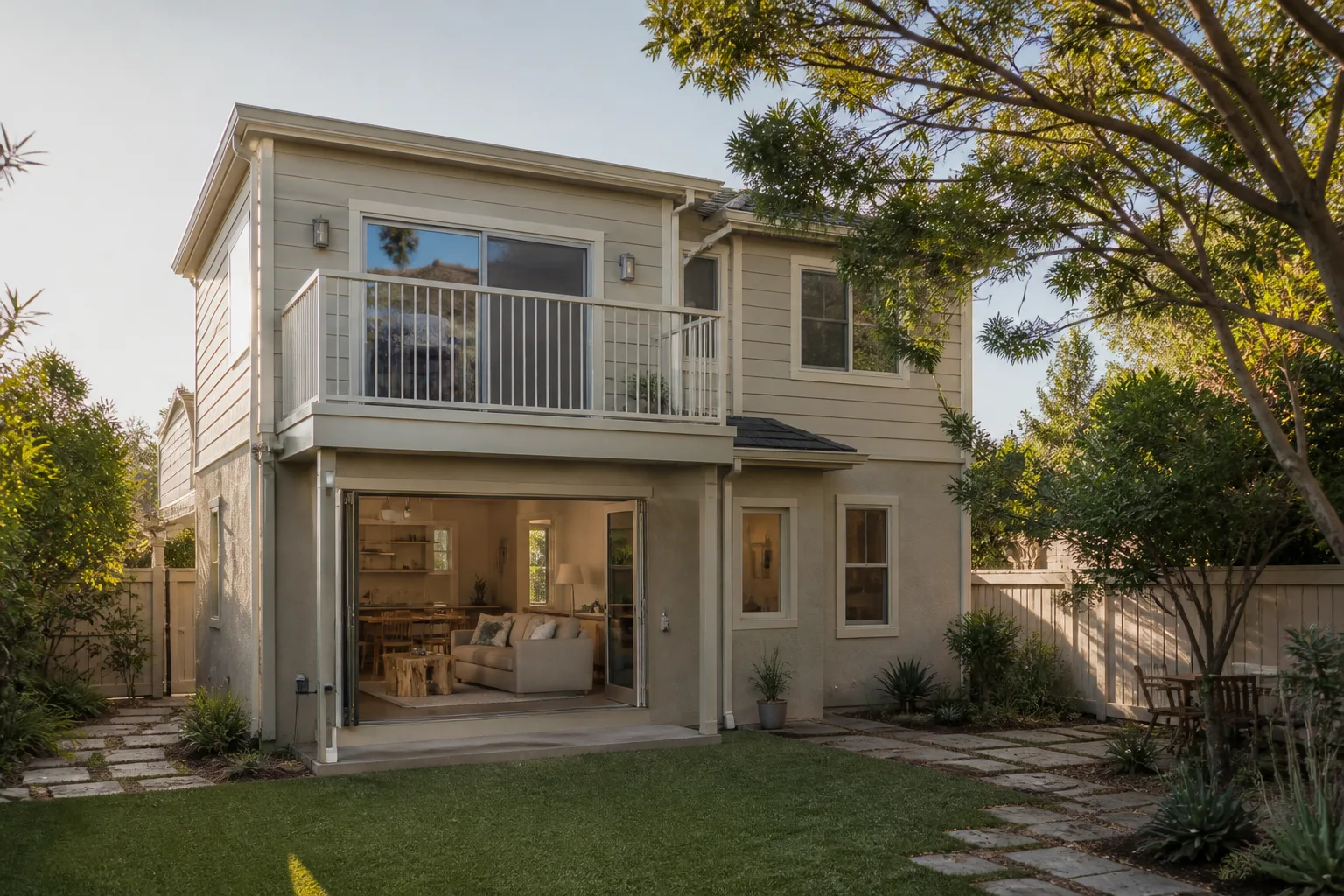
The phrase “$350 per square foot” sounds precise. It is not. In Los Angeles, the price per square foot for an addition can swing from $220 to $450 or more depending on foundation conditions, roofline complexity, finish level, and whether your lot triggers hillside or seismic requirements. A square-footage number without a written scope of work attached is a marketing figure. It tells you what the contractor hopes the job will cost, not what it will cost.
The harm happens later, in small increments. The roofline turns out to need reframing. The foundation needs more steel than the contractor assumed. The plumbing ties in farther from the main line than the drawing suggested. Each surprise becomes a change order, and each change order is priced at retail, not bid. A homeowner who accepted “$250 per square foot” on a 600-square-foot addition can watch the final bill land 40% or 50% higher, and they have no document that contradicts any of it.
What a written scope of work includes: every fixture, every finish, every allowance, every exclusion, every assumption about the existing structure, and every condition under which the price may change. It is tedious, yes. It is also the only document that has any legal weight when the two of you disagree about what was included. At Sutton ADU Builders home, we deliver a written price bound to a written scope before any tools are lifted. No scope, no signature. That is the rule.
Mistake 2: Letting the Contractor Pull the Permit Without Retaining a Copy
This one sounds genuinely harmless. The contractor says, “We’ll handle the permits, don’t worry about it.” That is what you are paying them for, right? Yes, but the moment they pull the permit under their own name and keep the documentation, you have ceded control of the project’s legal spine. In Los Angeles, a building permit is tied to the property and the permit holder. If the contractor walks off the job, you cannot easily transfer the permit. If there is a dispute, the contractor controls the document that proves what was approved. If a city inspector comes by and finds work that does not match the approved plans, you are the one who owns the property, but you may not even know what the approved plans say.
The mechanism of harm: whoever holds the permit holds the project’s pause button. A homeowner who cannot produce a permit number, a permit copy, or the approved plan set has no leverage. They cannot call the city to verify anything. They cannot show a second contractor what was approved. They cannot prove to a lender or an insurance company what work was permitted versus what was not.
Simple fix: the contract should state that you receive a full copy of the permit, the permit number, and the approved drawings before construction begins. You do not need to become a code expert. You need to be the person who can answer the question “can I see the permit?” without making a phone call. We recommend keeping a physical folder, not just a digital one, because city documents have a way of disappearing from email threads.
Mistake 3: Paying More Than 10% Down Before Materials Are On-Site
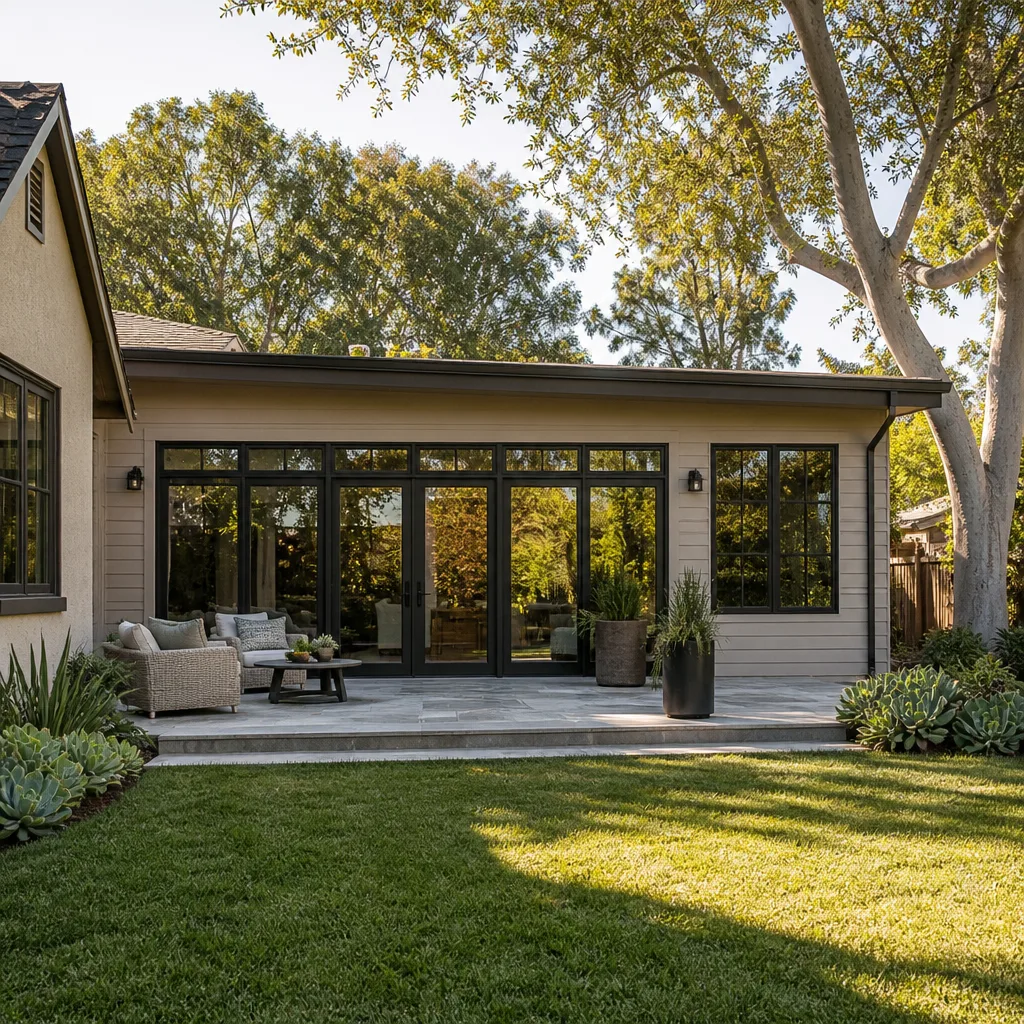
California Business and Professions Code section 7159 caps the down payment on any home improvement contract at 10% of the total project cost or $1,000, whichever is less. That is not a guideline. It is the law. A contractor who asks for 30% or 50% up front is already breaking it, and that fact alone should tell you everything about how the rest of the project will go.
Why does this mistake persist? Because homeowners do not know the cap exists. The contractor says, “I need 30% to order materials and lock in my crew,” and that sounds like a business reality. But a licensed contractor in California has access to supplier accounts and trade credit. They do not need your cash to buy lumber. What the big deposit actually does is shift the risk from the contractor to you. Once you have handed over $60,000 on a $200,000 addition, the contractor can be slow, sloppy, or absent, and you are the one chasing them, because they already have your money.
The fix is simple and non-negotiable: 10% down, maximum, and not a dollar more until materials are delivered to your property and work has begun. Then progress payments can follow in stages tied to completed milestones, not calendar dates. Every payment should buy you completed work you can see and touch. If a contractor pushes back on the 10% cap, walk. You have just learned something about them for free.
When to call a pro: if you are already mid-project and a contractor is demanding a payment that does not match completed work, stop and get advice before writing the check. One call to a construction attorney or a contractor who will tell you straight is cheaper than the wrong deposit.
Mistake 4: Not Verifying Every Worker on the Crew, Not Just the Contractor
You hired ABC Construction. The owner seems solid, the supervisor is professional, and the contract lists ABC’s license and insurance. Then the framing crew shows up. Who employed them? Many Los Angeles additions involve subcontractors: framers, electricians, plumbers, drywallers, tile setters. The contractor you hired may be fully insured and licensed, and the subcontractor who actually swings the hammer in your home may have no insurance at all. If a worker is injured on your property, the claim can fall to you under premises liability. If a substandard electrical rough-in causes a fire two years later, you may discover that the person who did the work was never covered by the contractor’s policy.
This is the subcontractor liability gap, and it is one of the most expensive blind spots in residential construction. The fix is a certificate of insurance for every trade that steps onto your property, plus the name of every worker, before they arrive. It sounds cumbersome. It is not. A serious contractor already has this documentation and will hand it over without blinking.
This is also where the security question comes in, and it is a legitimate one. Opening your home to a construction crew means giving strangers access to your house, often for months. You deserve to know who those strangers are. At Sutton ADU Builders, every technician is background-checked, identity-verified, uniformed, and photo-badged under what we call the Threshold Standard. Before anyone arrives, we send the homeowner the name and photo of the person coming. When they ring the doorbell, they show a photo ID badge. Every time. That is not a luxury for nervous people. It is a basic standard for any trade entering a home where children or older adults might be alone.
Mistake 5: Skipping the 365-Day Post-Completion Walkthrough

Most people walk through the finished addition on day one, see fresh paint and working outlets, sign the final check, and consider the project done. The problem: Los Angeles has two seasons that stress a building in opposite ways. Summer brings months of dry heat and intense sun, which expands framing, dries out caulk, and causes stucco cracks. Winter brings long rain cycles, which test flashing, waterproofing, and drainage. A roof connection that looks perfect in October can reveal a small leak after the first real storm in February. A foundation crack from soil movement might not appear until the ground has gone through a full wet-dry cycle.
Defects that matter rarely show up in the first month. Shrinkage cracks in drywall, door frames that bind as the house settles, sealant failures where the addition meets the original structure, these are seasonal. The fix: do a deliberate walkthrough 12 months after completion, with the contractor present, looking for exactly those things. The problem is that most contractors offer a 90-day punch list and then disappear.
We handle this with the 365-Day Done Right Promise. It is a written guarantee, stamped on every project, covering defects in workmanship for one full calendar year from project completion. If something is not right, we make it right. That includes a free second visit if any element of the build fails. No haggling, no “that’s normal settling.” In our experience, homeowners who schedule this walkthrough catch small issues before they become expensive ones. It costs us a few hours a year, and it saves our clients real money.
Related Services in Los Angeles
If you are planning a detached ADU rather than a room addition, the same five mistakes apply, but the stakes are slightly different: prefab and modular products like Dvele, Boxabl, and Plant Prefab have their own pricing structures and permit paths. We have worked with those product lines and can tell you honestly which one fits your lot and budget. For more on that, see ADU Builders in Los Angeles. If your project is a conventional room addition on an existing structure, Room Addition Contractor in Los Angeles covers the specifics. And if you are still deciding what kind of addition makes sense, start with Home Addition Contractor in Los Angeles for a broader look at your options.
What happens when you call
- 1
A real person answersNo phone trees - you reach a local pro.
- 2
You get an upfront price rangeHonest numbers before anyone is dispatched.
- 3
A background-checked tech heads outLicensed & insured, dispatched right away.
- 4
You approve before work beginsNothing starts until you say go.
The Bottom Line
The pattern across all five mistakes is the same: the homeowner loses because they accepted a verbal or vague arrangement in a business where only written specifics protect you. A written scope of work, a permit copy in your hand, a 10% cap on the deposit, verified workers with documented insurance, and a written one-year guarantee. None of these are unreasonable asks. A legitimate contractor will meet all of them without complaint, because they already run their business that way.
If you are in Los Angeles and planning a home addition or ADU, Sutton ADU Builders offers free estimates with a written scope and a locked price before work begins. Call (472) 248-8213 and we will walk you through the numbers honestly, even if you decide to use someone else.
Frequently Asked Questions
California law caps the down payment on a home improvement contract at 10% of the total project cost or $1,000, whichever is less. Anything beyond that before materials are delivered to your property is a red flag. Call (472) 248-8213 if you have a contractor asking for more and you want a straight answer on whether it is legal.
A written scope of work with every fixture, finish, allowance, and exclusion named specifically, plus the price, payment schedule tied to milestones, permit documentation, insurance certificates for every trade, and a written warranty of at least one year. Verbal descriptions are not enforceable. If your contract fits on two paragraphs, it is not a contract, it is an invitation to change orders.
Ask for a certificate of insurance naming every subcontractor that will work on your property, and ask for the name of every worker before they arrive. If the contractor hesitates, you have your answer. A serious company already does this. Our clients get the name and photo of every technician before the visit, and every person shows a photo badge at the door.
Most building defects tied to weather, settling, and material movement appear after a full seasonal cycle. In Los Angeles, that means after one dry summer and one wet winter, roughly 10 to 14 months after completion. That is why we schedule a deliberate post-completion walkthrough at 12 months and back it with a written 365-Day Done Right Promise. Call (472) 248-8213 to talk through your addition plans and get a free estimate.
Written by Miles Hartwell, Owner at Sutton ADU Builders, serving Los Angeles since 2006.
Need ADU Help?
Call Sutton ADU Builders - licensed & insured, here with fast after-hours help in Los Angeles.
(472) 248-8213