
Cover Home Addition Contractor in Los Angeles: A Homeowner’s Guide
Hiring a Cover home addition contractor in Los Angeles means finding someone who can assemble a prefabricated addition properly, pull permits, and manage site work, and the vetting process should look a lot like it would for any major build: license check, reference calls, a written price, and a clear contract. A home addition is not a handyman project. If you’re planning one in Los Angeles, the right contractor will make the difference between a build that closes out clean and one that drags on for eighteen months and still isn’t right.
The average Los Angeles home addition runs $150,000 to $400,000 and takes the better part of a year from permit to final inspection. Most homeowners spend less than two hours total vetting the contractor they hand that money to. We’ve watched people choose a builder because the bid was $8,000 cheaper, then spend twice that fixing what that builder left behind. This guide is about not being that person. If you’d rather not do the legwork, you can call us at (472) 248-8213 for a free estimate and skip to the part where you know exactly who’s showing up.
What a Cover Home Addition Actually Costs in Los Angeles
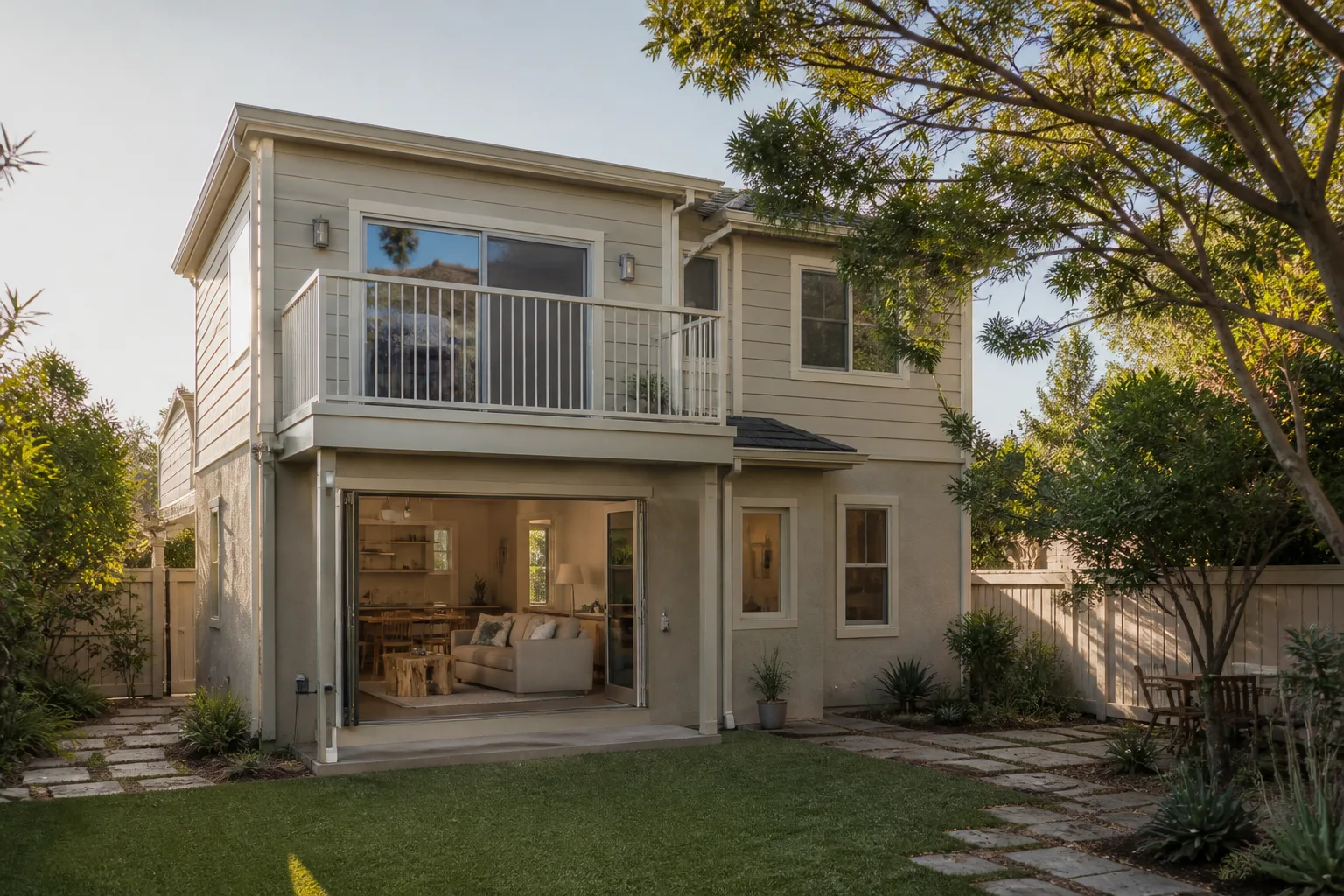
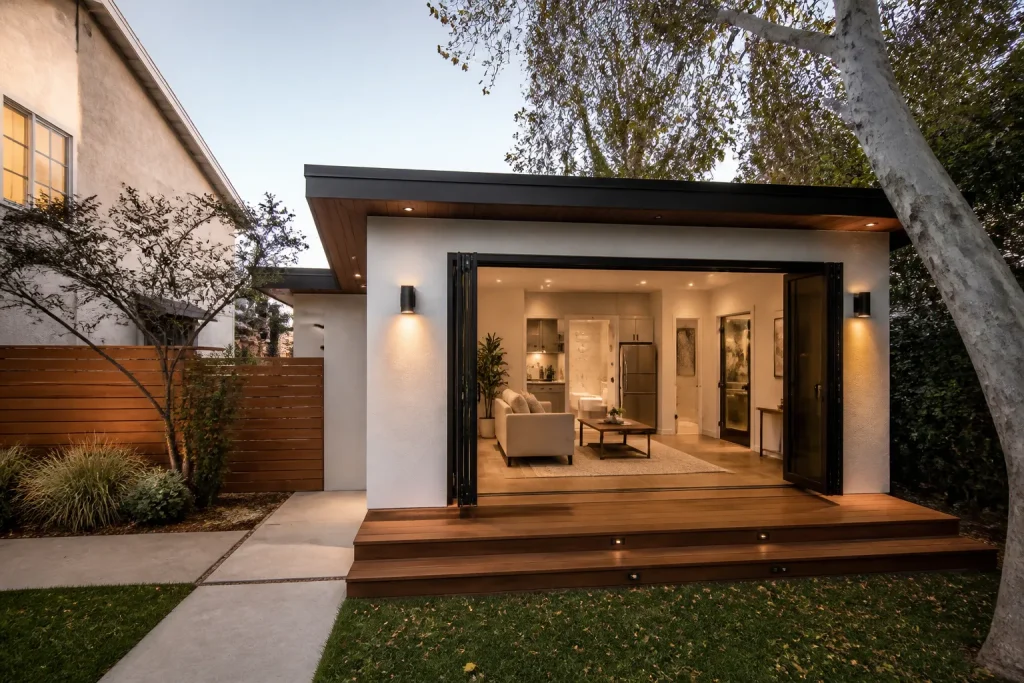
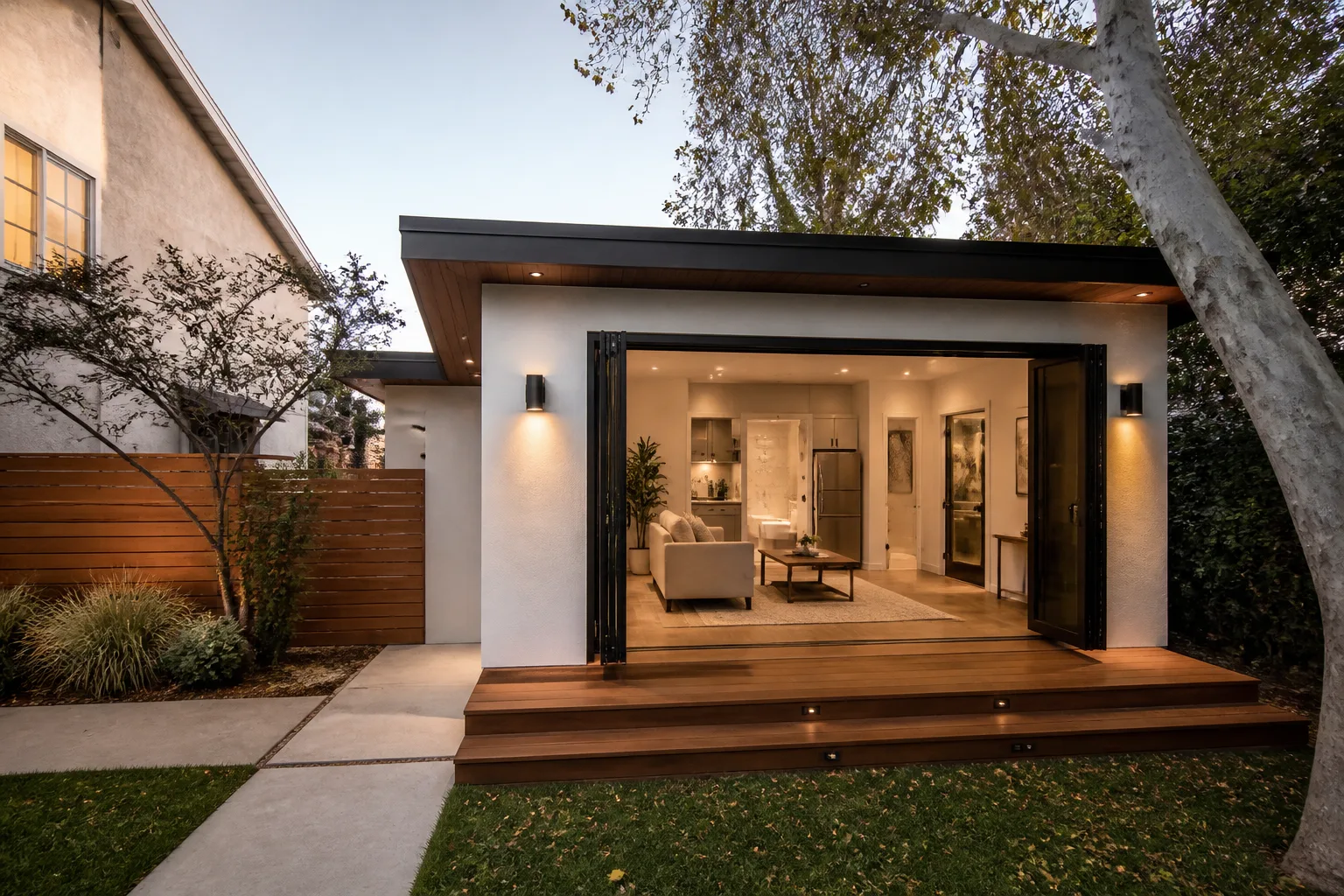
Cover, the Los Angeles-based prefab home company, builds panelized ADUs and additions in a factory in Gardena and ships them to your lot. We’ve installed Cover ADUs and additions across Los Angeles, from Eagle Rock to Mar Vista, and the pricing is fairly consistent for what you get: a detached ADU or addition shell in the 400 to 1,200 square foot range typically runs $150,000 to $320,000 for the Cover package itself, depending on size and finish level. Site work is separate per project and here’s what most homeowners don’t budget for:
- Site preparation and foundation: $25,000 to $60,000 depending on lot slope, soil, and access.
- Utility connections (electrical, plumbing, sewer): $15,000 to $40,000, more if the main panel needs an upgrade.
- Permits and fees: $8,000 to $20,000 depending on the Los Angeles Department of Building and Safety plan check route.
- Landscaping and drainage: $5,000 to $25,000, which matters more on hillside lots than people expect.
Total all-in cost for a Cover ADU in Los Angeles: most projects land between $250,000 and $450,000. A room addition built the same way runs slightly less because there’s less site infrastructure. These are real numbers from Los Angeles builds we’ve managed, not brochure figures.
The Biggest Mistake Los Angeles Homeowners Make When Hiring
The biggest mistake is treating a $300,000 construction project like a $300 plumbing repair. A plumber shows up, fixes the leak, you pay, you never think about it again. A home addition in Los Angeles involves architectural drawings, structural engineering, soil reports, HOA review, city plan check, multiple inspections, subcontractors you’ll never meet, and a warranty period that lasts a full year after completion. The vetting process needs to match the stakes.
In Sherman Oaks and Studio City, we regularly see homeowners who hired a contractor on a verbal promise and a one-page bid, then discovered mid-build that the crew had no workers’ compensation coverage and no permit for the foundation work. One homeowner on a hillside lot in Highland Park ended up with an unpermitted retaining wall that the City of Los Angeles flagged during a resale inspection and had to pay $40,000 to have demolished and rebuilt. That cost more than the entire original bid difference.
How to Vet a Home Addition Contractor in Los Angeles
Here’s a structured process we recommend. It takes about three hours total and is worth every minute:
- Check the CSLB license. Go to the California Contractors State License Board website and look up the license number. Confirm it’s active, confirm the name on the license matches the person you’re talking to, and read any disciplinary actions. A general contractor doing additions in Los Angeles needs a Class B license. If they hand you a Class C specialty license for a full addition, keep looking.
- Verify workers’ compensation coverage. Ask for the workers’ comp certificate directly from their insurer, not from the contractor. If a worker gets hurt on your Los Angeles property and the contractor has no coverage, you’re on the hook.
- Look up their permit history. The Los Angeles Department of Building and Safety keeps records online. A contractor who has pulled permits for additions in your neighborhood has passed inspections there before.
- Call three references from the last twelve months, not from five years ago. Ask these questions specifically: Did the price change after work started? How many different crews came through? Did they keep the site clean? Would you hire them again?
- Demand a written price before you sign anything. If a contractor won’t put the price in writing before work begins, that’s not a contractor, that’s a rolling tab.
We built Sutton around this exact frustration. Every project with us starts with a written price, and that price doesn’t change unless you change the scope. The 365-Day Done Right Promise is a written guarantee covering defects in workmanship for one full calendar year from project completion. If something isn’t right, we make it right, and a second visit for any failed element is free. That’s the standard every Los Angeles homeowner should demand.
What Your Home Addition Contract Needs Under California Law
California has specific requirements for home improvement contracts, and most homeowners in Los Angeles don’t know them. The contract for any home addition over $500 must include: the contractor’s CSLB license number, a start and completion date, a payment schedule that doesn’t front-load more than 10% or $1,000 whichever is less, a detailed description of work and materials, and a three-day right to cancel. Anything less is illegal, and courts have voided contracts that missed these requirements.
What’s optional but worth demanding: a fixed-price clause with a written change order process. Here’s how cost creep works in a typical Los Angeles addition. The original bid says $280,000. Mid-site work, the contractor says the soil report requires a different foundation and that’s another $22,000. Then the panel delivery gets delayed and they need a different crane, another $9,000. Then the city inspector flags an electrical detail and the panel gets opened up, another $6,000. Each individual change sounds reasonable, and then the final bill is $340,000 and you never saw it coming.
A fixed-price contract with a clear change order process doesn’t eliminate legitimate change orders. Site conditions do change. But it makes every one of them explicit, written, and approved before the work happens. You should never discover a line item at the end of a build. At Sutton, this is the Threshold Standard: a written price before work begins, with any change documented, signed, and priced before a tool gets lifted.
Design-Build vs. Design-Bid-Build for Los Angeles Additions
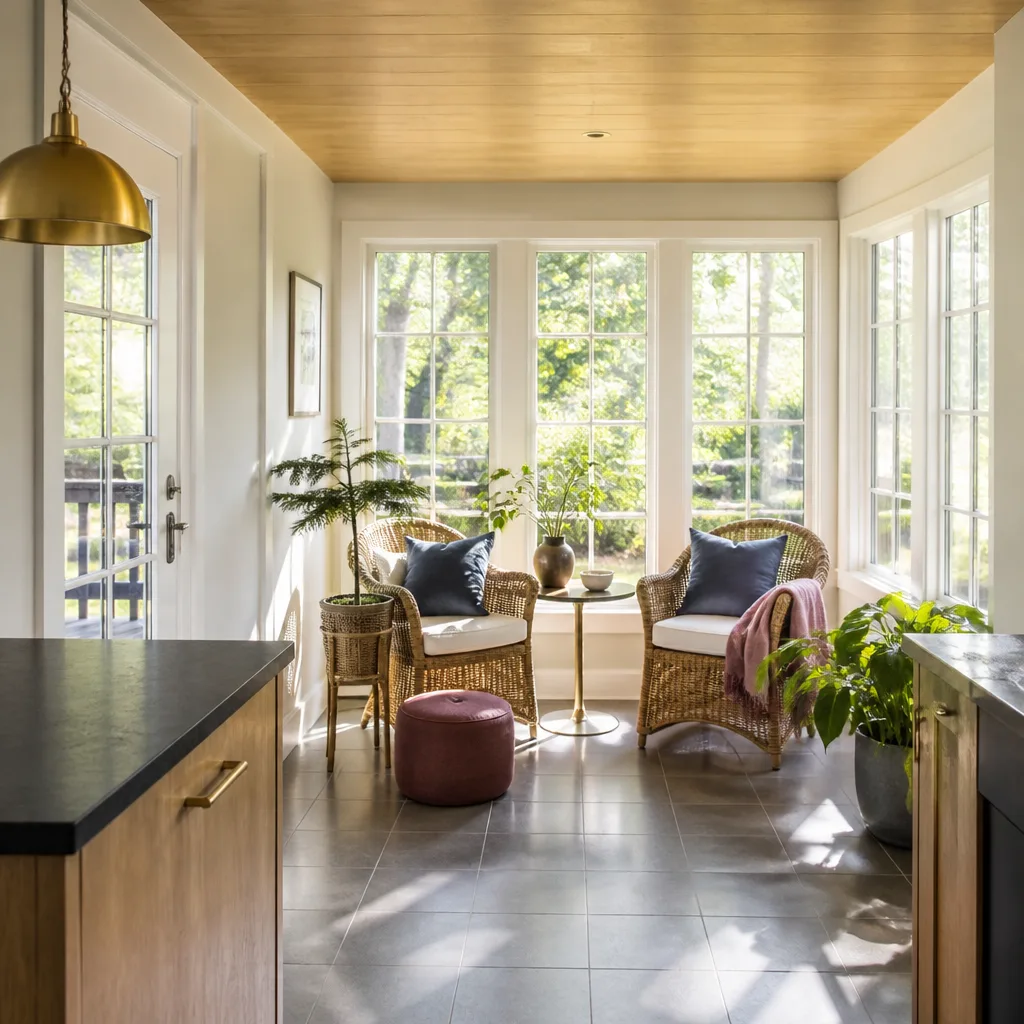
There are two ways to structure a home addition project. In design-bid-build, you hire an architect first, get drawings, then send those drawings to several contractors for bids. In design-build, one firm handles both the design and the construction under a single contract.
For most Los Angeles homeowners doing a home addition or ADU, design-build is the better choice, and the reason is practical rather than ideological. Design-bid-build puts you in the role of project manager. You’re coordinating the architect, the structural engineer, the contractor, the city, and the HOA. That’s a part-time job, and most homeowners already have one. Design-build collapses that coordination into one point of contact. It also eliminates the finger-pointing that happens when the contractor says the drawings were bad and the architect says the contractor didn’t follow them. You don’t have time for that fight while you’re also paying a mortgage on a house that’s under construction.
If you have a truly complex site, a well-known architect, or a very specific design vision, design-bid-build can make sense. On a typical flat lot in the San Fernando Valley or a modest slope in Mount Washington, design-build with a contractor who has real ADU and addition experience will get you to final inspection faster and with fewer headaches.
Neighborhood Complexity That Changes Everything
Los Angeles is not one permitting environment. It’s dozens of them, and the contractor you hire needs to know the ones that affect your specific lot. Hillside lots in Los Angeles trigger additional structural review, often a soils report, and sometimes a retaining wall plan. HOA overlays can restrict the exterior finish, the color palette, and even the placement of a room addition. Historic Preservation Overlay Zones, like the ones in Angelino Heights or Hancock Park, limit what you can do to a visible elevation. The Coastal Zone, which affects parts of Venice, Playa del Rey, and San Pedro, adds a whole second permitting layer in addition to the city.
We’ve walked a Cover addition through the Coastal Commission process in Venice, and it added four months to the timeline. That’s not a horror story, that’s just the process. The right contractor tells you that upfront. The wrong one figures it out halfway through and sends you a change order. When you’re interviewing contractors in Los Angeles, ask them directly: have you pulled permits in this specific neighborhood? If the answer is vague, that’s an answer.
When to Call a Pro
Anytime a project involves structural work, foundation changes, electrical panels, or plumbing relocation, you need a licensed contractor, full stop. Los Angeles will require permits anyway, and doing unpermitted structural work on a hillside lot is exactly how a house ends up in the news. A home addition is not a weekend project. The foundation, the tie-in to the existing structure, the electrical load calc, the roof connection, these are life-safety details that need an engineer’s stamp and an inspector’s sign-off. We say this as people who fix what DIY additions get wrong: the cost of corrections is always higher than the cost of doing it right the first time.
For related work, see our ADU Builders in Los Angeles page or the Room Addition Contractor in Los Angeles page for more on what a specific project type involves.
Why the Written Price Matters More Than Anything
Here’s the thing about construction in Los Angeles. The city is expensive, permits are slow, and surprises are common. But the most common reason a homeowner ends up over budget isn’t a city delay or a hidden soil problem. It’s a contractor who never locked in a real price. The vague estimate is a feature, not a bug. It lets the builder start work, discover costs as they go, and pass every one of them to you. You’re effectively writing a blank check.
We started Sutton in 2006 because we kept seeing the same pattern over and over, and it bothered us. Homeowners are asked to hand over the single largest check of their lives to people they’ve never met, whose names they don’t know, who show up in an unmarked truck. Over at a garage conversion in Atwater Village a few years ago, the homeowner told us she’d had three crews before us and not one of them had given her a single name in advance. Not one. She didn’t know who was walking through her gate. That should make anyone uncomfortable.
The Threshold Standard is the answer to that. Every technician is background-checked, identity-verified, uniformed, and photo-badged. Your name and photo reach the homeowner before arrival. The crew shows up in a marked vehicle, knocks on the door with a badge in hand. That’s a system, not a promise. And the written price is the same kind of system: it exists on paper before the work begins, and it governs the whole project.
Prefab and Panelized Options: Cover and Other Brands We Work With
Cover isn’t the only prefab game in Los Angeles, and it’s worth understanding the landscape before you commit to one. Dvele makes high-end factory-built homes with a health-focused indoor air quality emphasis, priced at the top of the market. Mighty Buildings does 3D-printed composite panels with a faster install timeline and a more modern aesthetic. Boxabl ships a folding room module that works for some garage conversions and very simple additions but has a narrower use case in LA’s permitting environment. We work with all of these, plus Cover, and the honest advice is this: the brand matters less than the site work around it. A great panelized shell installed with a bad foundation is still a bad addition. The contractor who manages the crane, the foundation, the utilities, and the inspection is the one you need to vet.
The Bottom Line
Hiring a home addition contractor in Los Angeles is a major financial decision that deserves a structured process: check the license, verify workers’ comp, look up the permit history, call references with specific questions, and demand a written price before work begins. Most addition horror stories trace back to one missing step in that list. Get the contract in writing, insist on a fixed price with a clear change order process, and know your neighborhood’s specific challenges before you sign. If you’re in Los Angeles and want to skip the guessing, Sutton ADU Builders offers free estimates on home additions and ADUs. Call (472) 248-8213 and we’ll send you a written price, a name, a face, and a 365-day written guarantee before you commit to anything.
Frequently Asked Questions
A Cover home addition in Los Angeles typically totals $250,000 to $450,000 all-in, including site work, foundation, utilities, and permits. The Cover panelized package itself runs $150,000 to $320,000 for a 400 to 1,200 square foot addition, and site preparation adds another $50,000 to $130,000 depending on lot conditions. Call (472) 248-8213 for an exact quote. Estimates are free.
Visit the California Contractors State License Board website and search by the license number or contractor name. Confirm the license is active, matches the person you’re dealing with, and carries no disciplinary actions. A home addition contractor in Los Angeles needs a Class B general building license. Call (472) 248-8213 if you want to verify whether Sutton ADU Builders is properly licensed for your project, we’ll point you to the record.
Only if you change the scope of work. A properly structured fixed-price contract locks in the cost before the project begins, and any legitimate change, like a foundation adjustment triggered by a soils report, gets priced, documented, and approved by you in writing before any work proceeds. That’s the standard at Sutton ADU Builders. Call (472) 248-8213 to get a written price for your addition.
Yes. Any structural change, foundation work, or livable square footage addition in Los Angeles requires permits from the Los Angeles Department of Building and Safety. Unpermitted additions become a problem at resale and can be flagged for demolition. A qualified contractor handles the permits, the inspections, and the sign-offs. Call (472) 248-8213 and we’ll walk you through what your specific project needs.
Written by Miles Hartwell, Owner at Sutton ADU Builders, serving Los Angeles since 2006.
Need ADU Help?
Call Sutton ADU Builders - licensed & insured, here with fast after-hours help in Los Angeles.
(472) 248-8213