
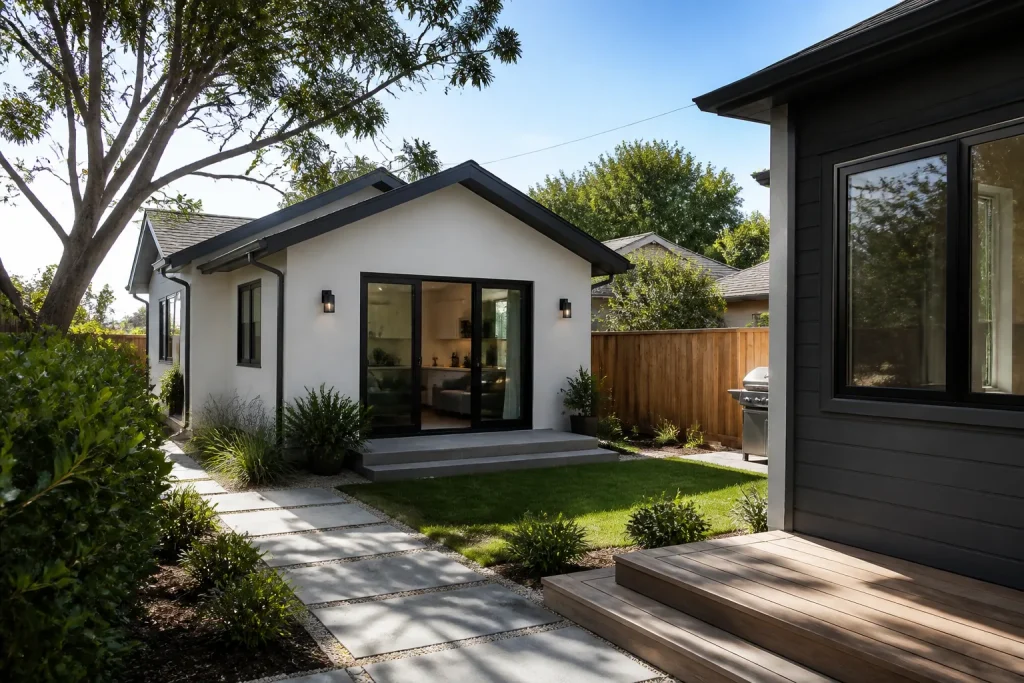
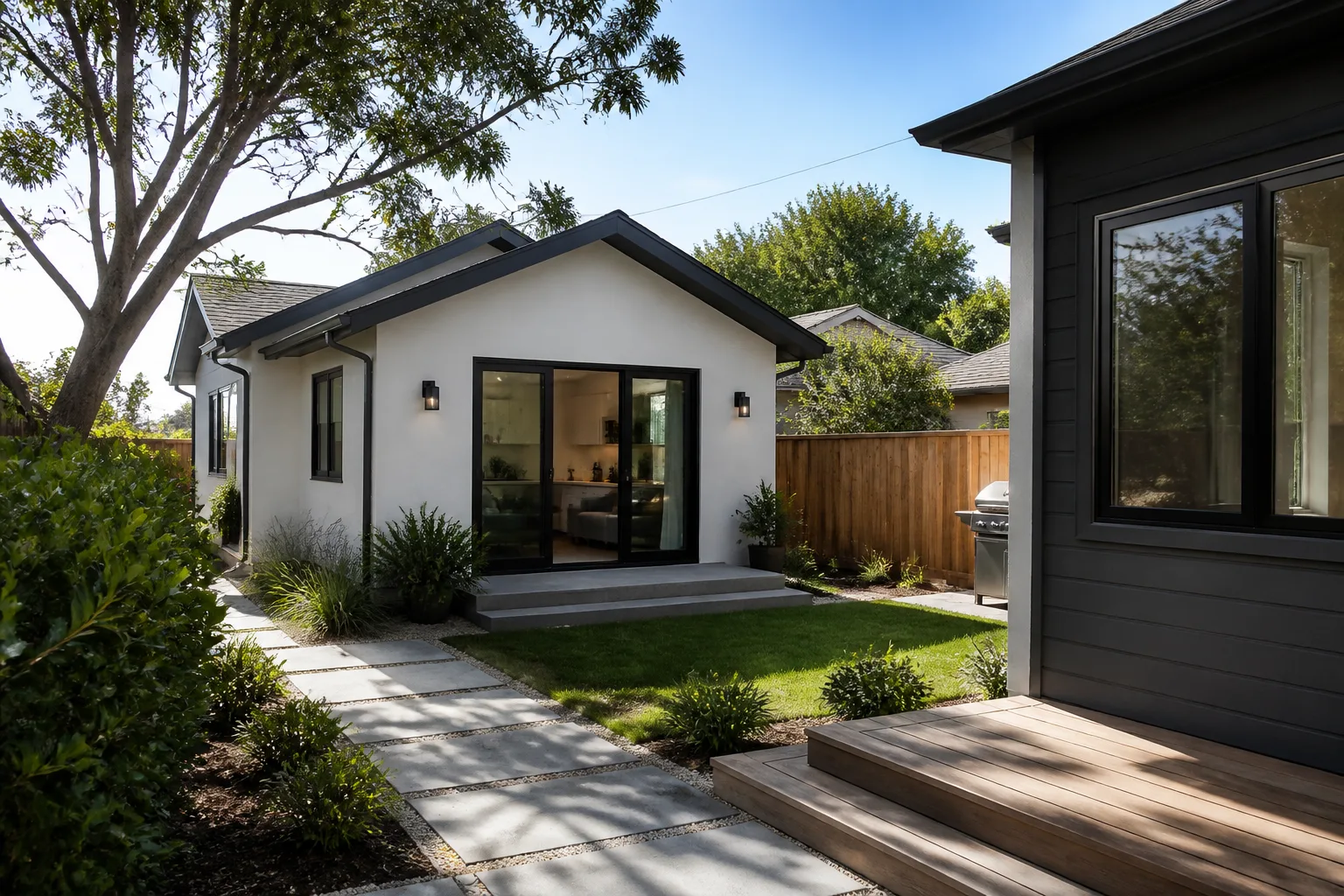
Dvele Home Addition Contractor in Los Angeles: A Homeowner’s Guide
Dvele builds factory-made ADU panels with integrated smart-home systems, and they charge a premium for it. That premium only pays off if the contractor doing your site prep, foundation, and finish work in Los Angeles can meet Dvele’s tolerances, which are tighter than what most local crews are used to. If you’d rather skip the research and talk to someone who does this regularly, call Sutton ADU Builders home at (472) 248-8213 for a free estimate.
Most homeowners focus on the Dvele unit itself: the panels, the integrated sensors, the air-tight envelope. Fair enough. But what we’ve learned doing ADU work across Los Angeles since 2006 is that the handoff between Dvele’s factory scope and your local contractor’s scope is where projects go sideways. The unit matters. The site work matters more than you think.
What Dvele Builds Versus What Your Los Angeles Contractor Must Handle
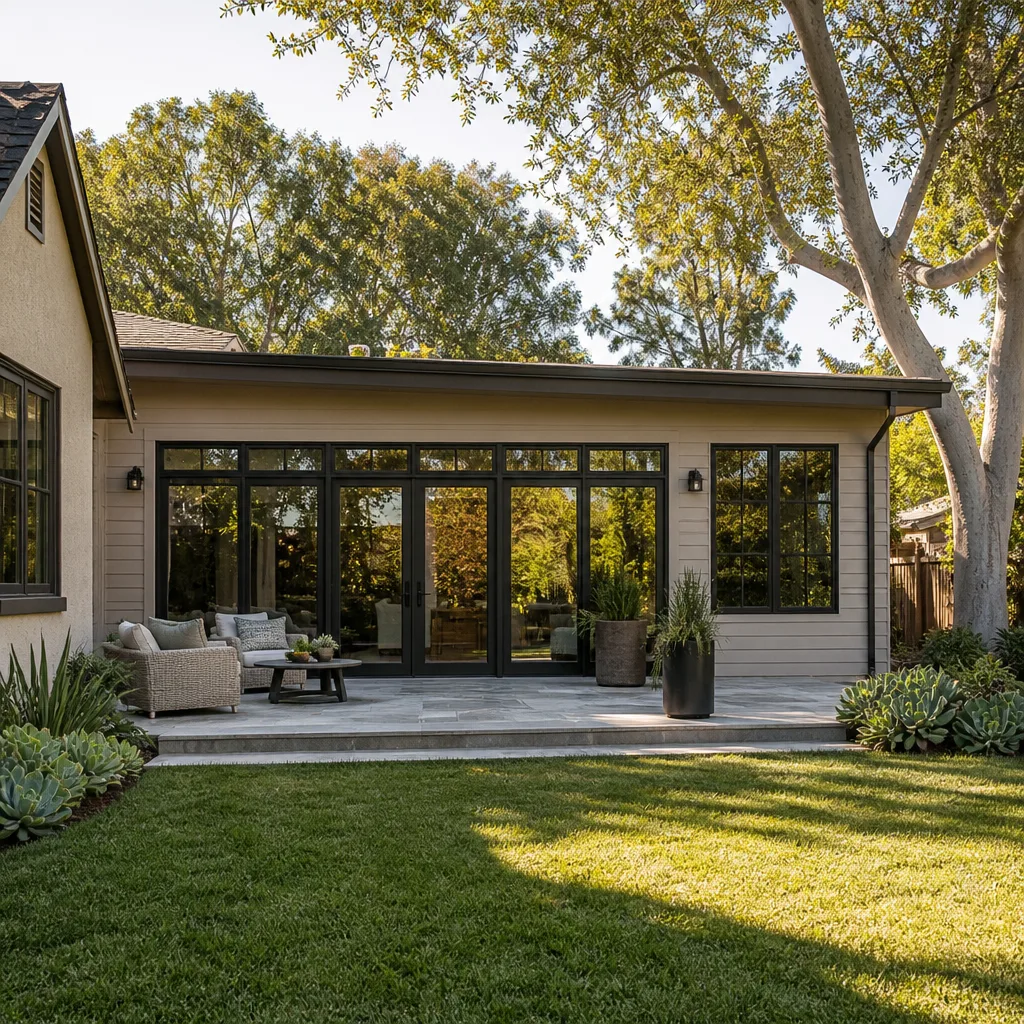
Dvele manufactures the home module: wall panels, roof assembly, windows, doors, wiring pre-installed in the walls, plumbing rough-ins in the floor cassette, and the smart-home hardware. The unit arrives on a truck, gets craned onto your prepared foundation, and gets bolted down. That’s the Dvele side.
Your local contractor handles everything else. In Los Angeles, that list is longer than most people expect:
- Foundation and slab work, engineered to Dvele’s exact anchor-bolt layout and elevation tolerance
- Utility trenching from the street or main house to the ADU location, including sewer lateral connection
- Site drainage and grading, which LA hillside lots make genuinely complicated
- Setback verification against your specific lot lines and any hillside or flood overlays
- Final electrical panel work and service connection with LADWP or SoCal Edison, depending on your neighborhood
- Interior finish work: drywall seams at the module joints, flooring transitions, trim, and paint
- Exterior cladding integration with any existing structures
- Landscaping restoration and hardscape around the crane path and work zone
So when a Dvele representative says “the unit is turnkey,” what they mean is the unit itself is complete. The site is your responsibility, and that’s a six-figure scope of work on most Los Angeles lots.
Site Prep for a Dvele Unit in Los Angeles: Soil, Setbacks, and Crane Access
Los Angeles soil conditions are not uniform. In the Valley, you’re often dealing with expansive clay that shifts with moisture. In hillside neighborhoods like Mount Washington or Baldwin Hills, you’re on decomposed granite with slope-stability requirements. On the Westside, you may hit sandy soil near old creek beds. Each soil type changes your foundation design, and your foundation has to match Dvele’s specs.
Dvele’s anchor points are fixed. If your foundation is off by half an inch at one corner, the unit doesn’t sit level, doors bind, and the factory envelope seal at the base plate fails. That’s not a cosmetic issue. That’s a thermal and moisture performance issue that voids the whole point of paying for a Dvele.
Setbacks work the same way. Los Angeles allows detached ADUs up to 800 square feet with a standard four-foot side and rear setback, but that changes if you’re in a hillside overlay, a historic district, or on a flag lot. Your contractor should verify setbacks against your actual site survey, not the listing sheet. We’ve walked onto plenty of Los Angeles lots where the “ADU-friendly” backyard turned out to have a 15-foot utility easement running straight through it.
Crane access is the one nobody thinks about. A Dvele module can weigh over 20,000 pounds. If your backyard is accessible only through a narrow side yard, the crane can’t reach, and you’re either paying for a specialty crane with a longer boom or rethinking the Dvele option entirely. Check this before you sign anything.
How to Vet a Contractor’s Actual Dvele Experience
Lots of Los Angeles contractors say they do modular. Doing Dvele specifically is different. Dvele’s wiring is pre-installed, which means your electrician isn’t roughing walls in the traditional sense, they’re making terminations at junction points. Dvele’s plumbing rough-ins use specific fitting standards. If your subcontractors don’t know the spec, they’ll improvise, and improvisation at the rough-in stage means opening up a finished wall later.
Here’s what to ask any contractor who claims Dvele experience:
- How many Dvele units have you actually set? Not “modular units.” Dvele units. Ask for addresses or at least neighborhoods.
- Who runs your electrical terminations on a Dvele project? If they hesitate or say “whoever’s available,” keep looking.
- Do you pull the permit, or do I coordinate with Dvele’s team? In LA, someone has to own the LADBS permit file. Make sure it’s your contractor, not a hand-off between three parties.
- Can you show me a Dvele-specific scope sheet from a past project? This separates the talkers from the ones who have actually sequenced a Dvele install.
At Sutton, every crew that touches a Dvele project works under our Threshold Verified standard: background-checked, identity-verified, uniformed, and photo-badged. You get the names and photos of the people showing up before they arrive. We started doing this because ADU Builders in Los Angeles typically send whoever’s available that morning, and “whoever’s available” is not who you want setting your Dvele foundation.
The Permit Pathway for a Dvele Unit in Los Angeles
Dvele has done pre-certification work with the state, which helps. Their units carry factory approvals that streamline certain building-code reviews. But “streamlined” does not mean “no permits.” In Los Angeles, every Dvele ADU still goes through LADBS plan check for:
- Zoning verification for your specific lot
- Foundation and structural review for your soil conditions
- Utility service confirmation and meter allocation
- Fire-access requirements if your unit is in a high fire severity zone, which covers big swaths of the Santa Monica Mountains and parts of the Valley
The good news: LADBS has gotten faster on ADU permits in the last few years, and pre-approved modular plans do genuinely help. The bad news: if your contractor files the wrong paperwork or doesn’t understand how Dvele’s pre-certification interacts with local review, you can sit in plan check for months while the crew sits idle.
When we handle a home addition in Los Angeles with a Dvele unit, Miles Hartwell signs the permit file and stays named on it through final inspection. No pass-the-buck between the factory rep and a sub nobody’s met.
Utility Connection Sequencing for Dvele’s Integrated Systems
Dvele’s smart-home systems depend on clean power. The order in which your utilities get connected matters more than most people realize, and it’s a question we almost never hear from homeowners until something’s already been done out of sequence.
The right order in Los Angeles is:
- Electrical service first. LADWP or SoCal Edison sets the meter, your electrician lands the main panel, and you verify the Dvele unit’s onboard systems power up cleanly. No generator, no temp power. Clean utility power.
- Water second. Once the unit has stable power, you connect water and pressurize the system slowly. Dvele’s plumbing is tested at the factory, but transport and setting can stress fittings. Pressurize, check every connection, then move on.
- Sewer last. Sewer connection usually involves your contractor coordinating with LA Sanitation or a private lateral contractor, and it’s the most likely point for schedule delays. Getting electrical and water done first means the unit is nearly functional even if the sewer inspection takes an extra week.
If your contractor does sewer first (because it’s the longest lead time item), then discovers an electrical issue that requires opening an interior wall, you’re paying to redo finished work. Sequence matters. Ask your contractor about this before you sign. If they look confused, that’s a hiring signal.
When to Call a Pro
If your lot is flat, fully surveyed, clear of utility easements, accessible by crane without removing any structures, and your contractor has set at least three Dvele units in Los Angeles that you can verify, this is a manageable project. Most lots in LA don’t check every box.
If you’re in the hills, on a flag lot, in a historic overlay, or working with a lot that has any grade change at all, call a professional who has handled Dvele-specific site work before. The cost of a bad foundation pour or a mis-sequenced utility hookup isn’t a punch-list item. It’s a re-do, and re-dos on a Dvele unit are expensive because you’re paying for both the factory component and the local labor to fix what the site work broke.
Related services in Los Angeles: if you’re weighing Dvele against a traditional build, our room addition contractors in Los Angeles can give you a side-by-side cost comparison before you commit to a factory route.
The Bottom Line
Dvele builds an impressive product. If the site work is done right, the tight tolerances and integrated systems perform as advertised. If the site work is sloppy, you’ve paid a premium for a unit that underperforms because of what happened before it arrived, not because of anything Dvele did wrong.
The contractor you choose in Los Angeles is the variable. Look for specific Dvele experience, a named permit holder, a written price before work starts, and a guarantee that covers workmanship for a full year. Sutton’s 365-Day Done Right Promise does exactly that: if our work isn’t right within a full calendar year of completion, we make it right. Written, on every project, no verbal assurances.
If you’re in Los Angeles and want to know whether a Dvele unit fits your lot, your budget, and your timeline, call Sutton ADU Builders at (472) 248-8213. We’ll give you a straight answer, a written estimate, and the names and photos of whoever shows up before they step foot on your property.
Frequently Asked Questions
Dvele units typically run $250,000 – $450,000 depending on size and configuration, but that’s the factory side only. Site work in Los Angeles (foundation, utilities, trenching, permit fees, crane access, finish work) usually adds another $50,000 – $120,000. Your total landed cost for a Dvele ADU in LA is realistically $300,000 – $570,000. Call (472) 248-8213 for an estimate specific to your lot, our estimates are free.
Dvele’s factory-side production is fast, often 3 to 5 months depending on their order queue. But your site work in Los Angeles, permits through LADBS, utility coordination with LADWP or SoCal Edison, and final finish time typically add another 4 to 8 months. Plan on 8 to 13 months total from contract to move-in, and add time if your lot has grading, hillside, or easement complications.
Dvele provides factory documentation and pre-certification support, but the local permit file with LADBS is managed by the contractor you hire. Someone has to be named on the permit, coordinate plan check, schedule inspections, and hold the file through final sign-off. In our Los Angeles projects, that’s us. The homeowner should never be the one chasing a plan checker.
Not if your contractor writes a fixed price before work begins. The risk with Dvele projects is that site conditions discovered after excavation trigger change orders that get passed to you silently. Sutton’s rule is a written price delivered before any work starts, no exceptions. If a condition is uncovered, you see it in writing with a line-item explanation before any additional work proceeds, not after.
Written by Miles Hartwell, Owner at Sutton ADU Builders, serving Los Angeles since 2006.
Need ADU Help?
Call Sutton ADU Builders - licensed & insured, here with fast after-hours help in Los Angeles.
(472) 248-8213