
Preparing Your Home’s ADU for Winter in Los Angeles
Winterizing an ADU in Los Angeles means doing three things before the rains arrive: checking that water drains away from the foundation at a 2% slope, confirming every roof penetration is sealed, and making sure the heating system can hold 70°F on a cold January night. Those are the systems that fail first on detached units. If you’d rather have a professional handle it, call Sutton ADU Builders at (472) 248-8213 for a free estimate.
Los Angeles averages just 15 inches of rain per year, but nearly half of it falls between December and February. That concentrated window is why an ADU with a drainage or flashing defect will reveal itself within 90 days of your first tenant moving in, often triggering an LAHD habitability complaint that pauses rent collection. A few hours of inspection before the rain starts beats a code violation and a vacant unit after it.
Key takeaways for this post:
- LA’s winter rain, not cold, is your ADU’s biggest seasonal threat.
- Flat-roof parapet flashing and skylight curb seals are the most common leak points on detached ADUs.
- You can check the required 2% drainage slope with a $15 level and a tape measure in under ten minutes.
- Undersized HVAC is common in ADUs because LA’s mild climate invites corner-cutting. It fails the 70°F habitability standard on cold nights.
- Written communication with your tenant about leak reporting protects you under LA’s habitability code.
Why LA Winters Are Harder on ADUs Than You’d Think
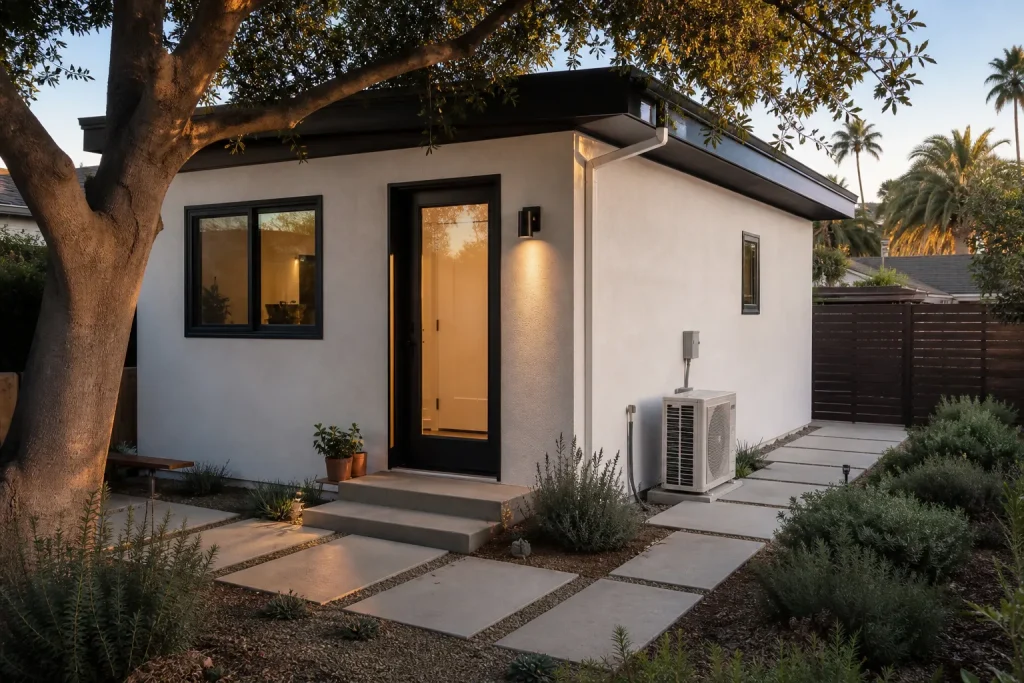
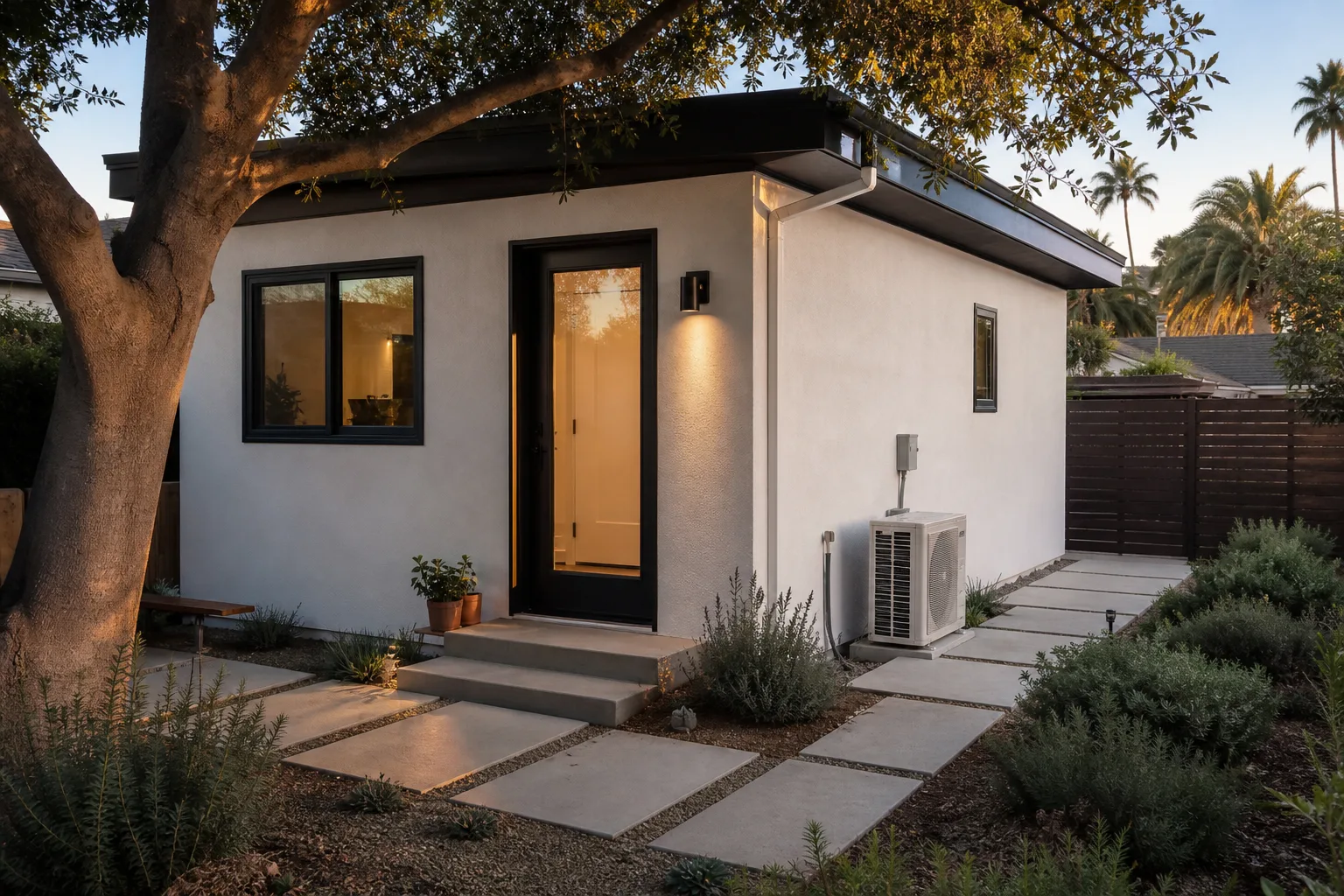
A detached ADU in Los Angeles lives a different life than your main house. It has more exposed wall surface per square foot, which means more thermal cycling. It typically has its own roof, its own drainage path, and its own HVAC system, each of which was likely installed by a subcontractor who never met the others. When a builder rushes a detached unit, winter is when the shortcuts surface.
The 15-inch annual rainfall figure hides a more important number: most LA neighborhoods get 3 to 5 inches of rain in a single storm event during a wet January. A flat roof with a marginal seam, a downspout terminating six inches from the foundation, or a stucco scratch coat left unsealed behind a planter bed, none of those fail in August. They fail in the first sustained downpour. And in Los Angeles, a tenant whose heat goes out or whose ceiling leaks can file a complaint with the Los Angeles Housing Department faster than a general contractor can return a voicemail.
We’ve pulled failed flashing out of a garage conversion in Mar Vista where the original builder had caulked over a parapet seam instead of replacing it. The caulk lasted one season. The water damage behind it ran four figures. That’s the pattern we want you to avoid this winter.
Roof and Flashing Checklist for a Detached ADU
Start with the roof, because it’s the first line of defense and the most expensive thing to ignore. Here’s the inspection order we use on every pre-winter ADU check in Los Angeles:
- Parapet flashing on flat roofs: Most detached ADUs in LA have low-slope or flat roofs with a parapet wall. The metal flashing at the base of the parapet, called counterflashing, is where water gets in first. Check for cracked sealant, lifted metal, or vertical gaps at the corners. If you can slide a fingernail into a seam, water can get into it.
- Skylight curb seals: Skylights sit on raised curbs, and the seal between the frame and the curb dries out faster on a detached unit because the building moves more with temperature swings. Look for shrinking, cracking, or gaps where the sealant has pulled away from the metal.
- Downspout termination: An LA downspout should discharge at least three feet from the foundation, onto a splash block or into a drain line, and ideally not into a planter bed pressed against the wall. LA’s clay soil expands when wet, and a downspout pouring water into that soil next to your stem wall puts lateral pressure on the structure all winter.
- Roof penetrations: Exhaust vents, plumbing stacks, and electrical masts all have rubber boots or flashing collars. On a 10-year-old ADU, those boots are likely cracked. A $40 boot replacement now beats a $3,000 drywall repair in February.
If you’re not comfortable on a ladder, don’t get on one. Flat commercial-style roofs on ADUs often have no fall protection, and a fall from even eight feet changes a person’s life. We send a trained crew member with proper safety gear, and we’d rather you call us than risk it. That’s the kind of thing the ADU Builders in Los Angeles page covers in more depth.
Drainage: The 2% Rule and How to Check It Yourself
Los Angeles building code requires that all hardscape, soil, and paving around a structure slope away from the foundation at a minimum 2% grade. That means a two-inch drop for every ten feet of horizontal distance. It sounds modest, and it is enough, until someone plants a succulent bed right against the ADU wall or pours a small patio pad that tilts the wrong way by half a degree.
Here’s how to check it with a $15 level and a helper:
- Place a 4-foot level on the ground perpendicular to the foundation, with one end against the wall.
- Lift the outer end of the level until the bubble centers.
- Measure the gap between the bottom of the level and the ground at the outer end. You need at least one inch of gap over that 4-foot span, which equals 2%.
- Repeat every 10 feet around the ADU. A single low spot becomes a pond, and a pond against the foundation becomes a crack in the footing over a few winter cycles.
Clay soil makes this worse in Los Angeles. Most of the basin sits on clay that shrinks in summer and swells in winter. When a downspout dumps water at the corner of an ADU, the clay swells unevenly, the slab shifts slightly, and you get hairline cracks that widen each year. Fixing drainage before the rainy season is genuinely one of the cheapest preventive moves you can make.
If you catch this during a pre-winter check and the slope is wrong, regrading is usually a one-day job with a small excavator and a few yards of fill dirt. On a detached ADU with a simple rectangular footprint, we’ve regraded around an entire unit for under $2,500, which is far less than a foundation repair later. The Home Addition Contractor in Los Angeles page has more on site work and drainage if you’re planning something bigger.
Heating: Why Your ADU’s HVAC Is Probably Undersized
Los Angeles building code sets a habitability standard: a rental unit must be able to maintain 70°F during the day and 68°F at night. Most detached ADUs pass on the day they’re inspected, in June. January is a different story.
Here’s what we see in the field. A builder sizes a mini-split or wall heater for the ADU’s square footage using a formula that assumes the same insulation values as the main house. But detached ADUs often have less insulation in the walls, especially if the unit was permitted under an older accessory dwelling code or converted from a garage. Garages converted before 2020 frequently have uninsulated stem walls and single-pane windows, and the HVAC that passed inspection in summer cannot hold 70°F on a 38°F night.
The telltale sign is a tenant who runs a space heater constantly in January and February. That stops being a comfort issue and becomes a liability issue when the tenant files an LAHD complaint about inadequate heat, which triggers an inspection, a notice to correct, and a pause in rent collection until the unit passes. For $150 to $400, depending on the unit, a supplemental wall heater or an upgrade to a properly sized mini-split solves it. A heat pump rated for the ADU’s actual envelope, not a generic square-foot formula, is the right long-term fix.
We recommend checking your ADU’s heat with a simple test: set the thermostat to 70°F on the coldest morning of the year, and verify that every room in the ADU reaches it. Bedrooms at the back of a long, narrow detached unit are usually the ones that fall short.
Windows, Doors, and Weatherstripping on Detached ADUs
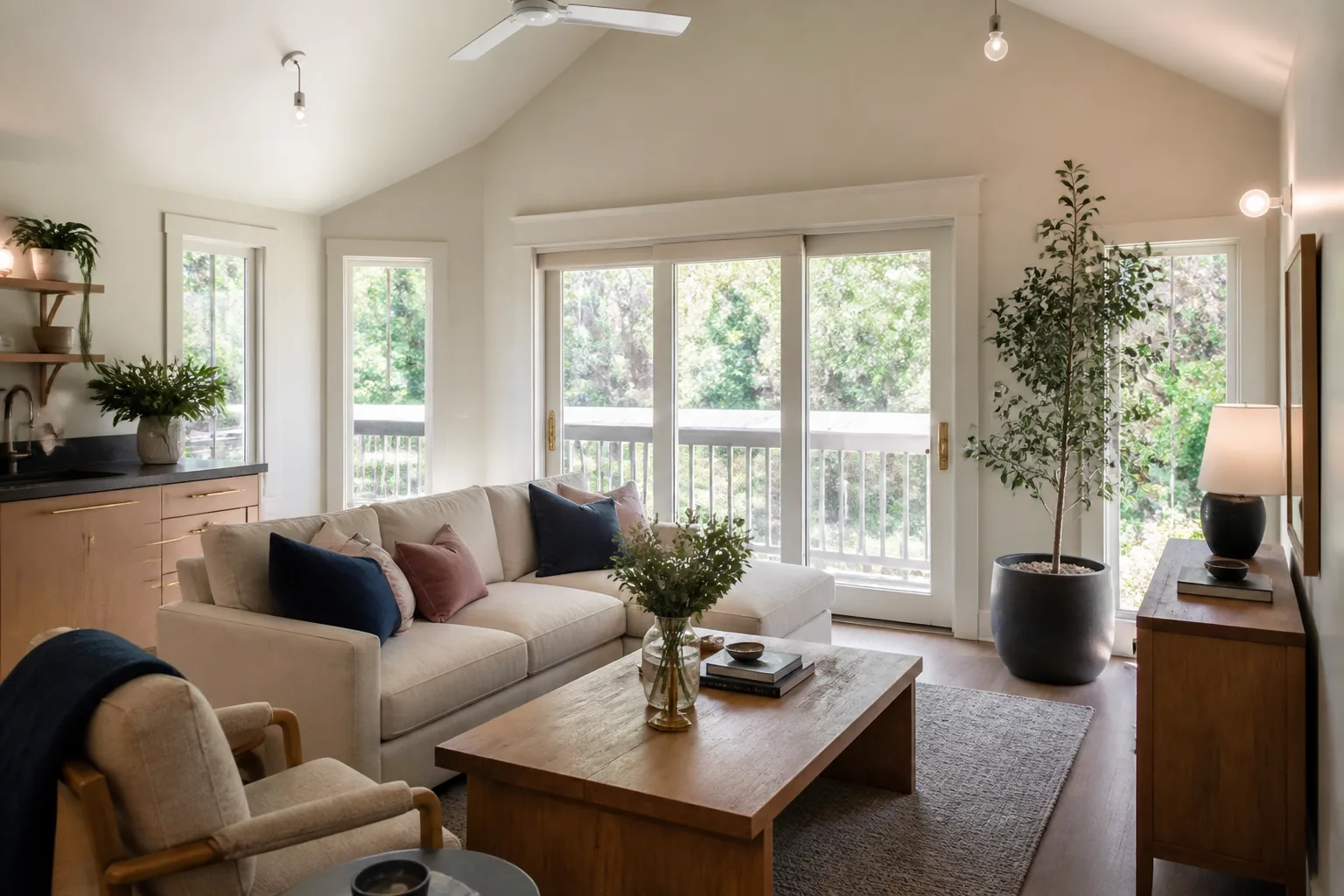
Detached ADUs experience more thermal cycling than your main house. A small building heats up and cools down more dramatically in a day than a large house with thermal mass. That movement causes weatherstripping to compress, crack, and pull away from door and window frames faster than you’d expect, often within three to five years.
Here’s what to check before winter:
- Door sweeps: Run your hand along the bottom of every exterior door. If you feel a draft, the sweep is worn. A new sweep costs $12 to $30 and installs with a screwdriver.
- Window glazing seals: On vinyl and aluminum windows, the seal between the glass and the frame dries and cracks. Failed seals let moisture between panes, which fogs the glass and reduces insulation. Replacement sash sections are usually available for common window brands without replacing the whole window.
- Weatherstripping around door frames: The adhesive-backed foam strips that came with many ADU doors compress flat within a few years. Peel and replace. Note: do this yourself if the ADU is past its workmanship warranty period. If your ADU is still within a contractor’s warranty window, contact them first, because some warranties are voided by owner repairs done incorrectly.
For ADUs built with James Hardie siding and exterior trim systems, the exterior envelope is extremely durable, but window and door openings still rely on sealant that degrades on UV exposure. A tube of the right exterior-grade caulk costs under $15. Re-caulking around window and door trim on a detached ADU takes an afternoon. Do it on a dry day above 50°F so the sealant cures properly.
Tenant Communication: What to Put in Writing Before Winter
This is the part most landlord checklists skip, and it’s the one that can protect you under Los Angeles code. LA’s habitability laws hold landlords responsible for a unit’s condition regardless of whether the tenant reported a problem quickly. But timely reporting matters for one specific reason: if a small leak becomes a large mold problem because the tenant waited three weeks to mention it, the tenant’s delay is a relevant fact in any dispute.
Put this in writing to your ADU tenant before the first big rain of the season:
- “Please report any water coming through the ceiling, walls, floor, or around windows and doors within 24 hours of noticing it.”
- “Please do not attempt to repair roof, electrical, or heating issues yourself.” That sentence is partly for their safety and partly to avoid contractor warranty issues caused by tenant DIY work.
- “If heat stops working, report it the same day.” Heating failures are the most common LAHD habitability complaint tied to winter, and early notification lets you fix it before it becomes a citation.
- “During heavy rain, please check the area around the ADU for any water pooling against the foundation and report it.” Most tenants won’t think to look, and a simple ask gets you an extra set of eyes.
A written notice ahead of winter is not a substitute for you inspecting the unit yourself. It’s a supplement. Landlords who inspect in November and document the condition have a much stronger position in any spring dispute. And if your ADU was built by a company that gave you a written workmanship warranty, like our 365-Day Done Right Promise, having a documented pre-winter inspection helps you use that warranty before it lapses.
When to call a pro: If you find any of these during your pre-winter check and you’re not certain how to fix them correctly, call us. A failed DIY sealant job on a roof penetration or a misdiagnosed drainage slope costs more than a professional fix. Every Sutton technician is background-checked, identity-verified, and photo-badged under the Threshold Verified standard, so you’ll know who’s coming before they arrive. Related services in Los Angeles: if your winter inspection turns up bigger issues than a tube of caulk can fix, our Room Addition Contractor in Los Angeles team handles structural and envelope repairs on detached units.
The Bottom Line
Preparing your ADU for winter in Los Angeles comes down to water, heat, and documentation. Check that water drains away from the foundation at a 2% slope, inspect every roof penetration and parapet seam before the rain arrives, verify the heating system can hold 70°F in every room, and put a written leak-reporting notice in your tenant’s hands. The inspection takes an afternoon. The alternative, an LAHD complaint, a rent pause, and a five-figure repair, does not.
If you’re in Los Angeles and need help with a pre-winter ADU inspection, repairs, or upgrades before the rains arrive, Sutton ADU Builders offers free estimates. Call (472) 248-8213 and we’ll send a written price before any work begins. We founded this company in 2006 on a simple idea: the person you see on the crew roster is the person who shows up at your door, with a name, a face, and a 365-day written promise. That idea still runs the place.
Frequently Asked Questions
How much does a pre-winter ADU inspection cost in Los Angeles?
A visual inspection of drainage, roof flashing, weatherstripping, and heating function typically costs $150 to $400 when bundled with any needed caulking or sealing work. Many homeowners in Los Angeles roll the inspection into a larger maintenance visit. Our estimates at Sutton ADU Builders are free, and the written price covers everything we find.
Do I need to prepare a detached ADU differently than a garage conversion?
Yes, detached units have more exposed surface area and sit directly on grade with their own drainage paths, so they need closer attention to downspout termination and slab-edge drainage. Garage conversions share at least one wall with the main structure and usually inherit its roofline, which changes where water enters and how heat is lost. We check both types every winter. Call (472) 248-8213 for an exact quote.
What happens if my ADU fails a heating code inspection in winter?
If an LAHD inspector finds the unit cannot maintain 70°F, you’ll receive a notice to correct, and rent collection can pause until the unit passes a follow-up inspection. Most fixes are straightforward: a properly sized mini-split, better insulation around window openings, or a supplemental wall heater. The Sutton ADU Builders home page has more on how we approach these repairs.
Will a contractor warranty cover pre-existing drainage problems found in winter?
It depends on the warranty terms and when the deficiency is discovered. Our 365-Day Done Right Promise covers defects in workmanship for one full calendar year from project completion, and we include a free second visit if any element fails. If you’re outside the warranty window, most drainage and flashing repairs on a detached ADU run $300 to $1,200 depending on scope. Call (472) 248-8213 and we’ll give you a written price before any work starts.
Written by Miles Hartwell, Owner at Sutton ADU Builders, serving Los Angeles since 2006.
Need ADU Help?
Call Sutton ADU Builders - licensed & insured, here with fast after-hours help in Los Angeles.
(472) 248-8213