Abodu Site Prep & Utilities: The Los Angeles Owner’s Guide
Site prep and utility work for an Abodu unit in Los Angeles typically runs $25,000 to $75,000 depending on your lot, soil conditions, and how far your sewer, water, and power lines need to travel. We stock and install the fittings, trenching materials, and connection hardware specific to Abodu’s chassis and utility hookup points, and we can usually start within a week of your site assessment. Most owners discover a problem the hard way: the ADU is sitting in the factory queue, the site plan calls for a utility trench, and the existing sewer lateral turns out to be 18 inches too shallow or the panel doesn’t have the ampacity the Abodu spec sheet requires. That’s the moment the phone rings.
We’re an independent Los Angeles contractor, not an Abodu dealer or factory affiliate. That matters because we can tell you what’s actually required on your lot without a brand agenda. Abodu units are well-engineered, but their site work is still site work: grading, foundations, trenching, utility connections, and stormwater management all happen in LA dirt, and LA dirt has opinions. Miles Hartwell has walked enough of these lots to know that the difference between a smooth Abodu install and a three-month delay usually comes down to what’s underground, and nobody can see underground from a brochure.
Which Abodu Models This Applies To
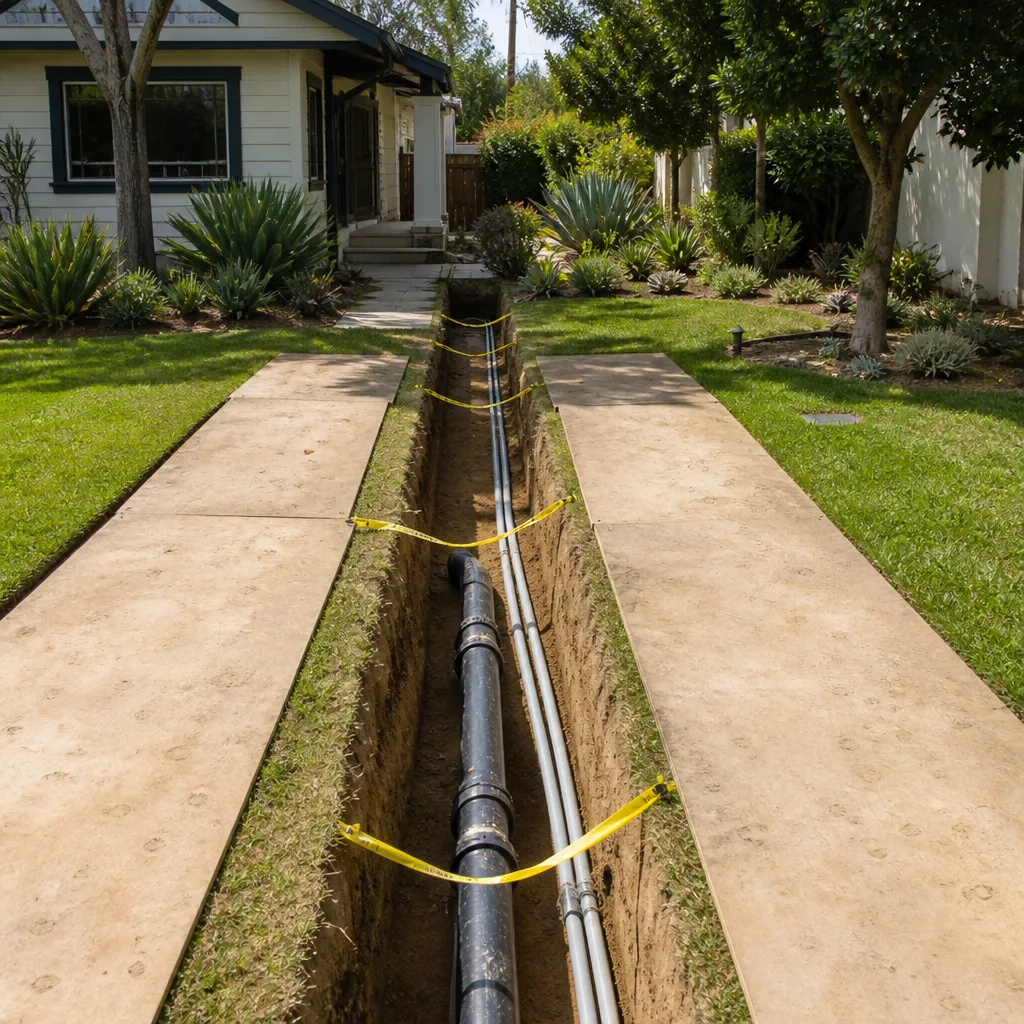
Abodu’s current lineup includes the Studio (approx. 340 sq ft), the One (approx. 500 sq ft), and the Two (approx. 610 sq ft). All three share the same fundamental utility requirements: a 100-amp electrical subpanel or dedicated service connection, a 3/4-inch water supply line minimum, and a 3-inch or 4-inch sewer connection depending on your local jurisdiction’s code. Los Angeles Department of Building and Safety (LADBS) enforces its own standards and many hillside or older neighborhoods add further complications.
The compatibility gotcha with Abodu that we see constantly: the factory specs assume a relatively flat, accessible lot with standard utility depths. Los Angeles has thousands of hillside lots, expansive clay soils, and neighborhoods where sewer laterals were installed in the 1940s at depths that don’t meet modern code. Your Abodu unit’s hookup points are fixed at the factory, so if your sewer lateral sits higher than the unit’s discharge point, you’re looking at a pump system ($4,000 to $8,000 added) or re-piping the lateral ($6,000 to $15,000). We check this before you order additional factory options, not after the unit arrives.
OEM versus aftermarket for Abodu site work: Abodu doesn’t manufacture trenching pipe, conduit, or concrete. What you’re really choosing is a site contractor who understands Abodu’s specific foundation system and utility routing, versus a generic foundation crew. We install the same spec-grade materials specified in Abodu’s site requirements: Schedule 40 PVC for sewer, Type K or L copper (or PEX per city amendment) for water, and rigid metal or Schedule 80 PVC conduit for electrical. The materials are standard; the knowledge of where they go and how they connect to Abodu’s chassis is not.
Signs Your Abodu Site Prep & Utilities Is Failing
- Water pooling near the foundation or utility trench after rain. This usually means backfill wasn’t compacted properly or the drainage plan didn’t account for your lot’s slope. Left alone, it undermines the foundation and can shift utility lines. We see this most often on Los Angeles hillside lots where clay soil expands dramatically in winter.
- Sewer backups or slow drains in the ADU. On a newer Abodu unit, this almost always traces back to incorrect lateral slope or a belly in the trench. A sewer line needs a consistent 1/4-inch drop per foot. Too little slope and solids settle; too much and water outruns the solids. Both cause blockages.
- Breakers tripping when the ADU’s heat pump or dryer runs. Abodu specs call for a 100-amp subpanel in most configurations. If your electrician undersized the feed or the main panel can’t carry the additional load, you’ll get nuisance trips that get worse in summer when the AC works hardest.
- Water pressure dropping when both the main house and ADU run fixtures simultaneously. This points to an undersized supply line. Abodu’s 3/4-inch minimum is often insufficient when the main house is also on the same meter, especially in older Los Angeles neighborhoods with 1/2-inch meter service. We routinely upgrade the service from the meter to a 1-inch line to fix this.
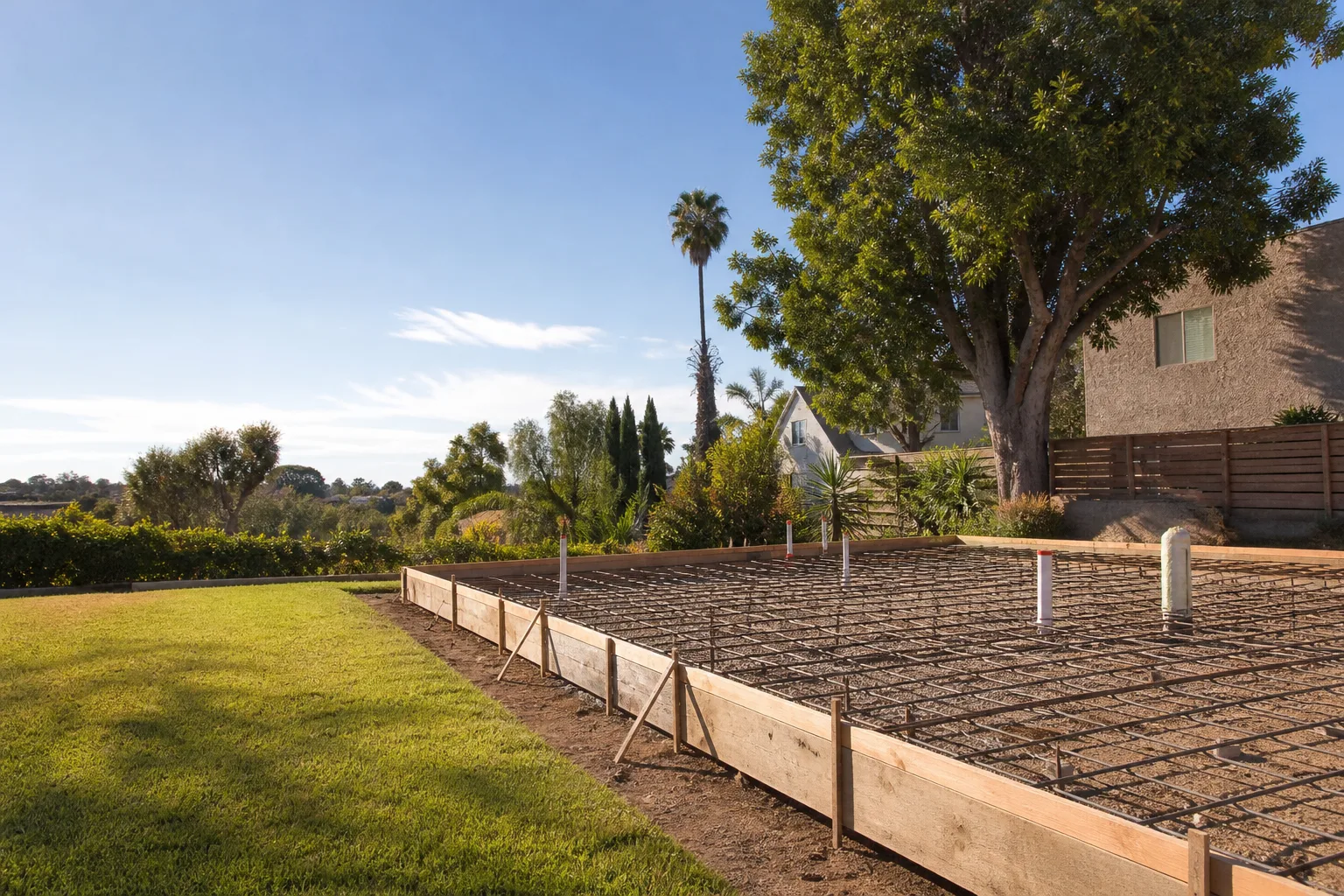
- Cracks in the foundation or gaps at the ADU’s connection points. Abodu units sit on a site-built foundation. If your site prep didn’t include proper soil compaction or the right foundation depth for your soil type, you’ll see movement within the first rainy season. In Los Angeles, expansive soils can lift and drop a slab by an inch or more between wet and dry months.
Replacement Cost & What’s Included
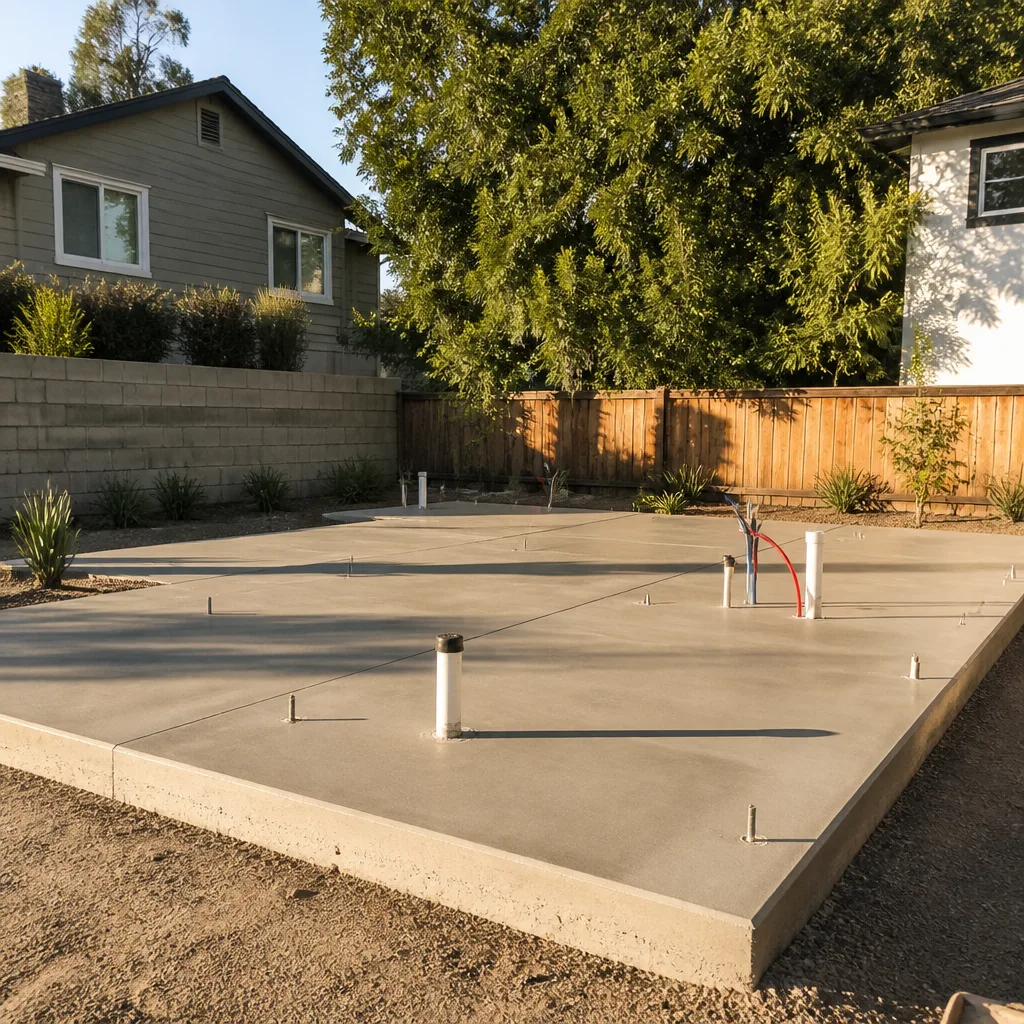
Here’s what honest site prep and utility work actually costs in Los Angeles, broken down by scope. These numbers reflect what we see across the basin, from the flat lots of the Valley to the hillside work in Eagle Rock and Mount Washington.
| Scope | Typical Range (Los Angeles) |
|---|---|
| Site assessment, survey, soil testing | $1,500 – $3,500 |
| Foundation (slab or pier, per Abodu spec) | $12,000 – $28,000 |
| Grading and drainage | $3,000 – $12,000 |
| Utility trenching and backfill | $4,000 – $10,000 |
| Sewer connection (new lateral or tie-in) | $5,000 – $15,000 |
| Water service and connection | $2,500 – $6,000 |
| Electrical service, subpanel, trench conduit | $5,000 – $12,000 |
What drives the range? Four things. First, distance: every foot of trench costs money, and a detached ADU 80 feet from the main house costs far more than one 25 feet away. Second, soil: hitting rock or groundwater changes the math fast. Third, your existing infrastructure: a main panel with open breaker slots and capacity is cheap; a panel that needs replacement is not. Fourth, city requirements: Los Angeles has specific stormwater management rules, and hillside lots often require additional geotechnical engineering. Every quote we give is a written, line-item price before work starts. The 365-Day Done Right Promise covers all site prep and utility workmanship for a full calendar year from completion. If something isn’t right, we fix it. No haggling.
DIY or Call Us?
Site prep and utility connections sit at the intersection of heavy equipment, buried infrastructure, and code enforcement. This is not a place for weekend DIY. Hitting a gas line with a rented trencher is how people end up on the news. Improperly graded sewer lines fail inspection and fail again later. An undersized electrical feed is a fire hazard, not a nuisance. The dangerous parts here are real: gas lines, electrical feeders carrying 100-amp loads, and trenches deep enough to collapse on a person. We trench safely or we don’t trench at all.
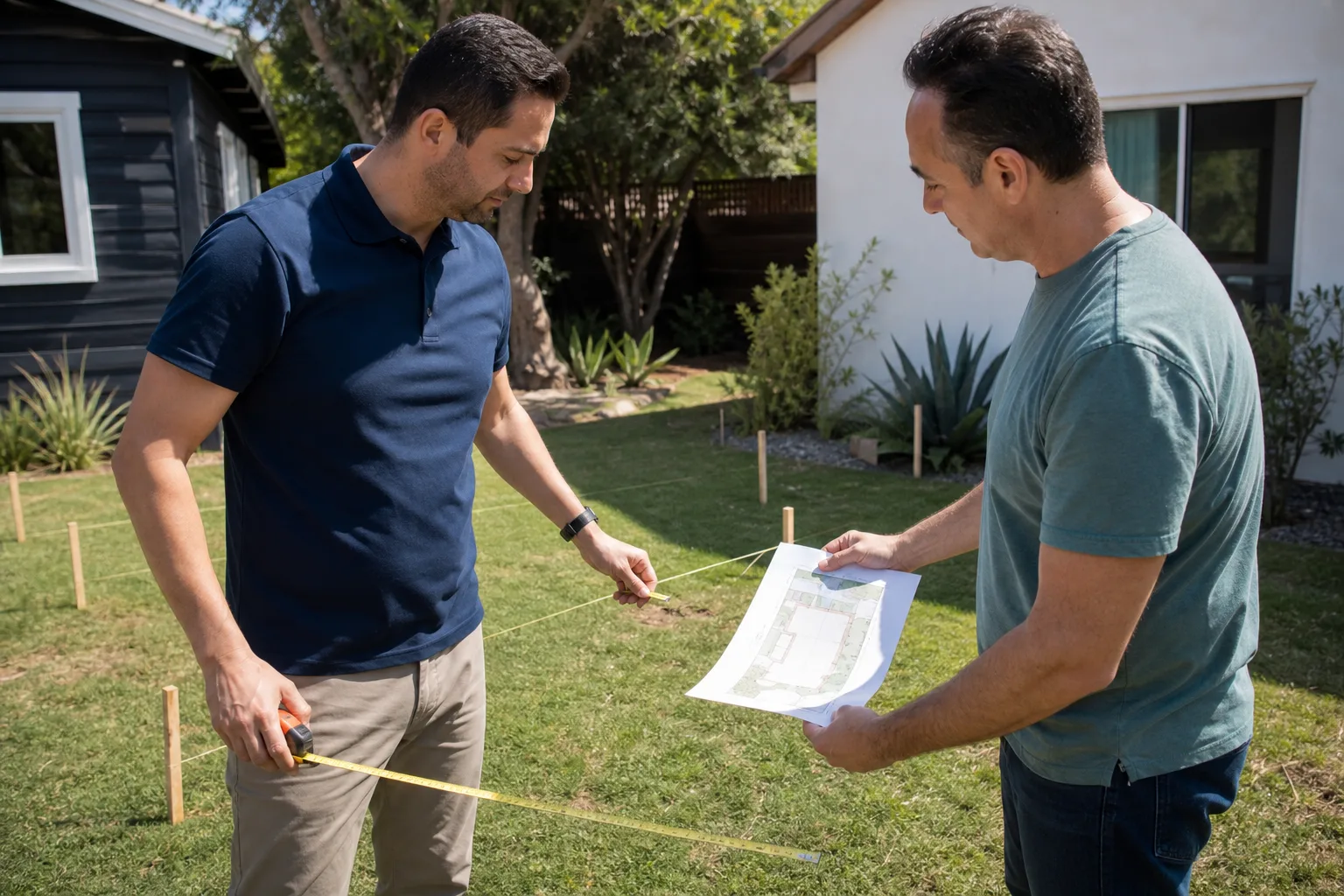
What you can do yourself: measure your lot, photograph your existing panel (exterior and interior, with the door open), find your water meter and note the pipe size, and locate your sewer cleanout. Walk the proposed ADU location and note any trees, slopes, retaining walls, or drainage patterns. If you send us photos and a rough site sketch, we can give you a ballpark over the phone before we ever schedule a site visit. That gets you pricing context without paying for anything. Call (472) 248-8213 and ask for a free estimate. Tell me what you actually need, and I’ll tell you what it actually costs.
FAQs
Properly installed site work should outlast the ADU itself. Concrete foundations and correctly sloped sewer lines installed with the right materials routinely last 50-plus years in Los Angeles, though expansive clay soils and seismic activity mean we design for movement from day one. The weak points aren’t the materials, they’re shortcuts: shallow footings, uncompacted backfill, and undersized water lines. Our 365-Day Done Right Promise covers workmanship for a year, but the work itself is built for decades. Call (472) 248-8213 if you want us to assess existing site work on your property.
Sometimes. A belly in a sewer line can often be fixed by spot-digging and re-sloping that section rather than replacing the entire run. Drainage problems can frequently be solved with a new swale, French drain, or catch basin added to the existing system. Foundation cracks can be evaluated and often repaired with epoxy injection or underpinning. But when trenching was done wrong from the start or the foundation was never right, patching just delays the inevitable. We’ll tell you straight which situation you’re in, and the fix is always a written price before we start.
A standard flat-lot installation in Los Angeles takes 2 to 4 weeks from first dig to utility sign-off, assuming permits are already in hand. Hillside lots, long trench runs, or existing infrastructure problems can extend that to 6 to 8 weeks. Permitting time is separate and varies by jurisdiction; a straightforward over-the-counter LADBS permit might take 2 to 3 weeks, while a hillside lot requiring geotechnical review can add months. We schedule site work around your Abodu delivery date so the foundation is cured and utilities are live before the unit arrives. Call (472) 248-8213 and we’ll walk you through a realistic timeline for your specific lot.
Yes. We keep standard spec-grade materials on hand and sourced from local Los Angeles suppliers: Schedule 40 PVC for sewer, copper and PEX for water, Schedule 80 PVC conduit for electrical, and the anchor bolts and hold-down hardware that match Abodu’s foundation embedment requirements. Having materials locally means we don’t wait on back-ordered parts when your project is ready to move. For homeowners who already have site work failing, we typically have what we need on the truck for a first-visit diagnosis and can return with everything required for the repair within days, not weeks.
If your Abodu unit is on order or already on your lot and the site work isn’t right, don’t wait. Call (472) 248-8213 for a free estimate. We’ll send you the name and photo of the technician coming to your property before they arrive, and you’ll get a written price before any work begins. That’s how we do every job in Los Angeles, whether you’re in the flats of the Valley or up in the hills where the trenching gets interesting.
Written by Miles Hartwell, Owner, Sutton ADU Builders at Sutton ADU Builders, serving Los Angeles and nearby areas.