Cover Room Addition Contractor in Los Angeles: What to Know First
An independent Cover room addition contractor in Los Angeles handles the structural integration, permitting, site work, and finish trades that a Cover prefab panel system requires once it lands on your lot. Most room addition projects involving Cover panels run 8 to 16 weeks from permit approval to final inspection, and honest written pricing before a single tool is lifted is the standard we operate under every day. If you own a Cover home or are planning a Cover addition and need a contractor who understands the panel system without being tied to Cover corporate, this page is for you. Call (472) 248-8213 for a free estimate with a written price. This page is written for Los Angeles homeowners who want straight answers about what a Cover addition actually costs and who exactly will be doing the work.
Key takeaways:
- We are an independent Cover service provider, not affiliated with or authorized by Cover.
- Every Sutton ADU Builders job gets a written price before work begins, and a 365-Day Done Right Promise after it ends.
- We are familiar with Cover’s panelized wall, floor, and roof systems and how they behave in Los Angeles’ climate and seismic zone.
- Every technician who shows up at your door is background-checked, identity-verified, and photo-badged under the Threshold Verified standard. Their name and photo are sent to you before arrival.
How Cover Products Fail – and How We Fix Them
Cover homes and additions are factory-built panelized systems, and most of the issues we see in Los Angeles come from the transition points: where panels meet the foundation, where panels meet each other, and where the panel system meets conventional framing. Here are the failure modes we see most often on Cover structures.
- Panel-to-foundation moisture wicking at the sill plate. Cover’s wall panels sit on a continuous sill, and in older Los Angeles hillside lots with heavy irrigation or poor drainage, we regularly find moisture tracking up through the bottom plate. The panel skins hide it until drywall tape begins to crack along the base. Our fix is to open the lower panel edge, replace any compromised blocking, install the correct sill seal and flashing detail, and re-secure the panel to spec before drywall and trim go back.
- Racking movement at panel spline connections during seismic events. Cover panels join at vertical splines, and after the 2019 Ridgecrest and 2024 Malibu quakes we got calls from owners who noticed hairline cracks at ceiling corners where two panels met a roof beam. The cause is usually a fastener schedule that wasn’t fully hit during original install, or a missing shear transfer strap at a panel chord. We remove the interior finish at the joint, inspect the spline and straps, add or replace fasteners to the engineered schedule, and re-flash before closing it back up.
- Improper flashing at roof-to-wall transitions. Cover’s flat-roof panel details depend on a continuous metal drip edge and membrane wrap at parapets and wall intersections. On room additions where a Cover roof panel meets an existing stucco wall or a conventional rafter tail, the transition gets flashed wrong more often than we’d like to see, especially on older Los Angeles homes with settled frames. We open the transition, install proper step flashing and a membrane pan, and then run a hose test before closing the wall. That hose test has caught leaks on multiple jobs before drywall went back up.
- Window and door rough openings that don’t match Los Angeles Title 24 glazing specs. Cover’s standard panel openings are designed around their preferred window packages, and when a homeowner wants a specific window line or a larger sliding door, the modification has to be engineered, not just cut. We’ve seen DIY-modified openings sag because the header wasn’t sized for the Los Angeles wind and seismic load. We frame to the engineered detail, install a proper header and king studs, and make sure the window or door is installed with the correct nailing flange and sealing tape system, not just caulk.
- Interior partition attachment to Cover wall panels causing drywall pop and tape cracks. When an interior non-structural wall is screwed directly into a Cover panel face, the differential movement between the panel and the stud wall causes a recurring crack line down the corner bead. We use slip-track connections at the head and leave a small gap at the panel side that gets finished with a flexible sealant, so the two systems can move independently. It’s a detail most general contractors miss, and it’s the reason we get called back to fix additions others installed.
Our Cover Room Addition Contractor Process
You’ll know exactly what’s happening before we send anyone to your door. Here’s how a Cover room addition rolls out with us in Los Angeles.
- 1
Call and talk to a person. A live person answers at (472) 248-8213, any hour. You tell us what you’re planning and what’s on your mind. If the project sounds like something we’d take on, we schedule a site visit with a confirmed technician name and photo sent to you before arrival.
- 2
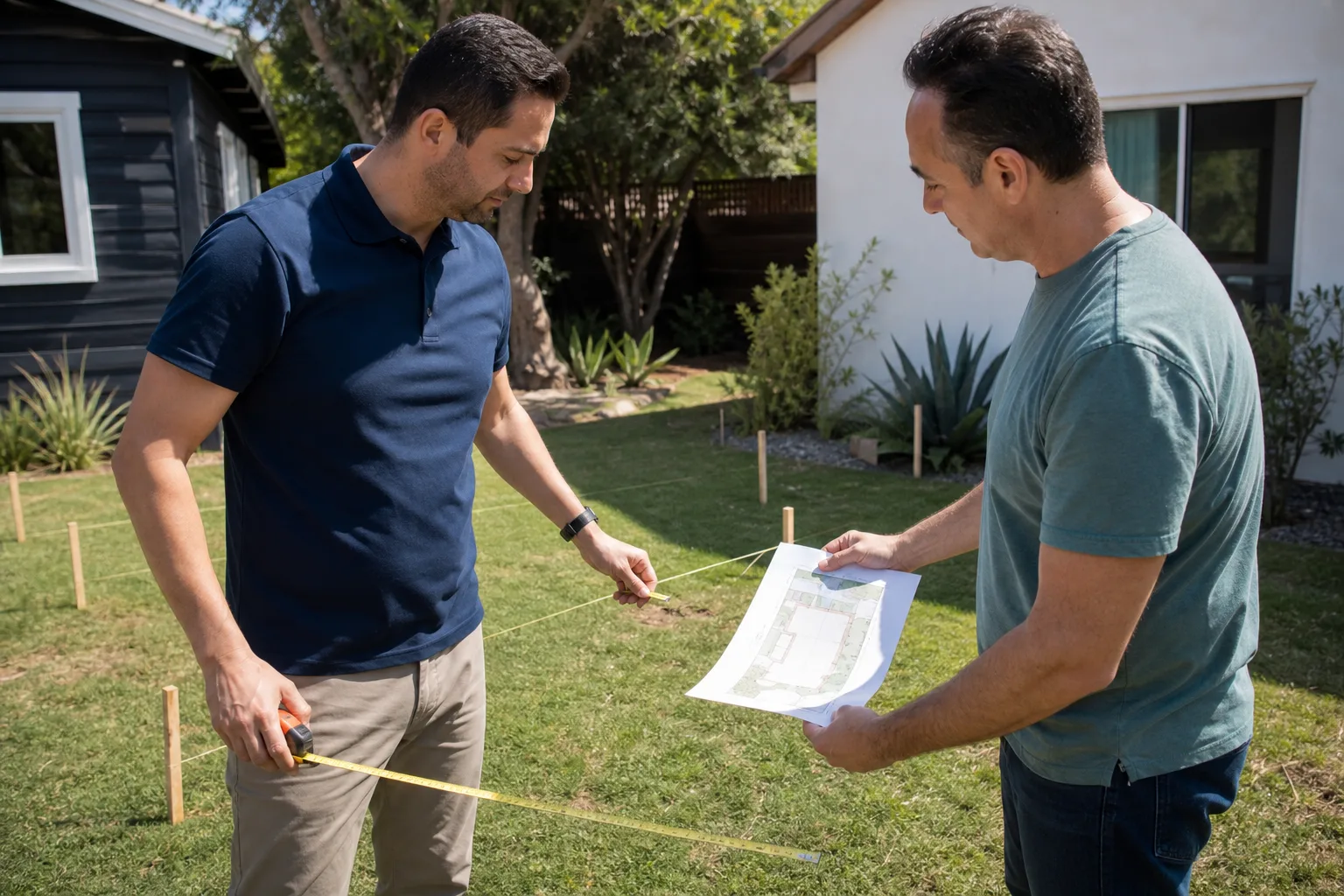
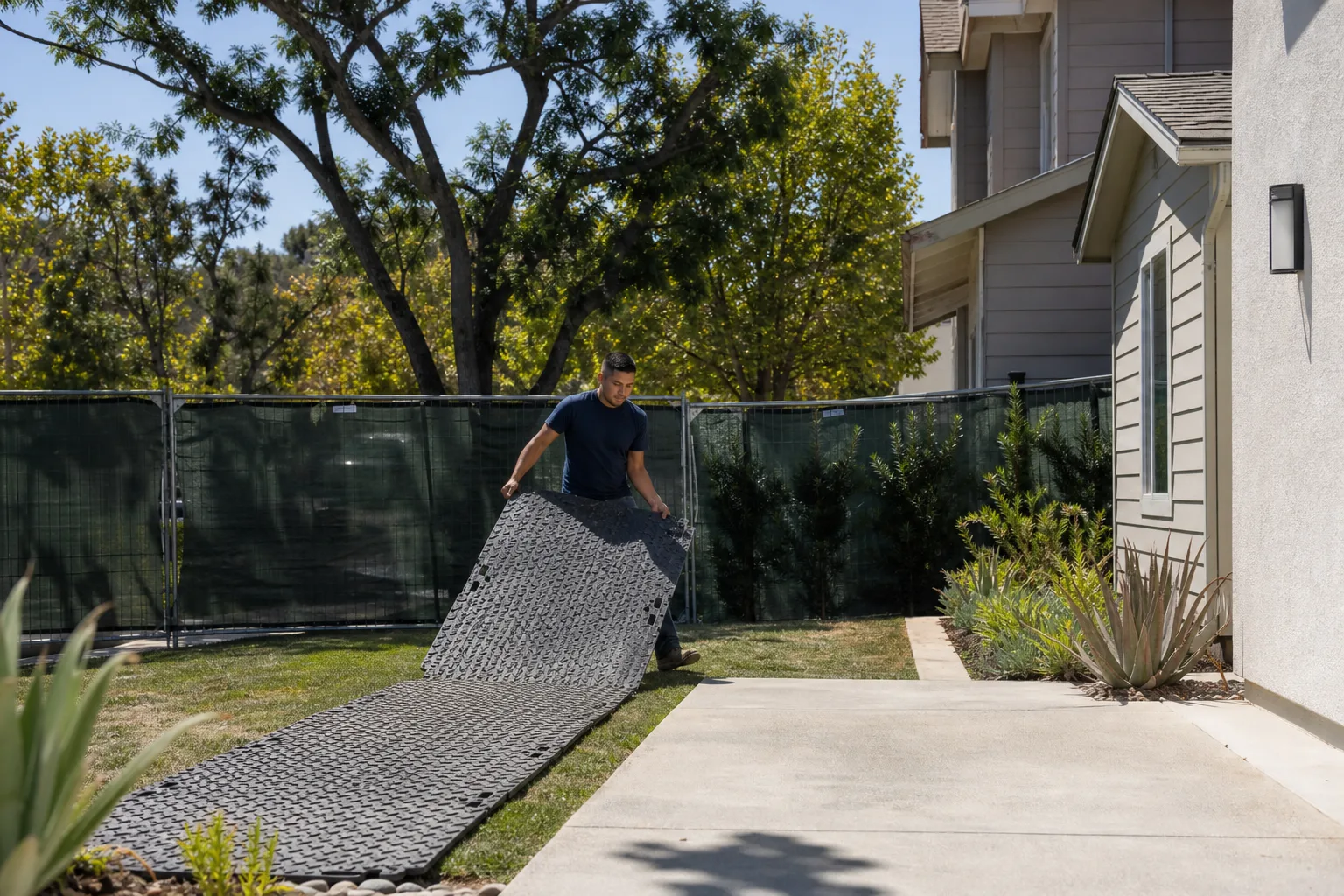
Site walk and honest scoping. We walk the lot, check the foundation condition, review your Cover panel order or existing structure, measure access for the crane or panel trailer, and talk through what we’re seeing. If your addition needs a structural engineer stamp, we’ll say so at this point, not after you’ve committed.
- 3
Written price, line by line. You receive a written price with line items before any work starts. No allowance games, no “we’ll figure it out later” on the big-ticket lines. Miles Hartwell’s signature phrase applies here: “Tell me what you actually need, and I’ll tell you what it actually costs.”
- 4
Permits and panel coordination. We handle the Los Angeles Department of Building and Safety permit package for your addition, coordinate with Cover on delivery timing, and make sure the panel set and the site work line up so nothing sits on the curb for a week. We’ve learned from experience that LA’s permit queue rewards a complete application the first time.
- 5
Build and test. Foundation, panel set, mechanical rough-in, roof integration, drywall, finishes. We test everything before we call it done: water tests on flashing, electrical load checks, level and plumb on panel walls.
- 6
Walkthrough and the 365-Day Done Right Promise. We walk the project with you, hand you the written warranty, and explain exactly what it covers: defects in workmanship for one full calendar year from project completion. If something isn’t right, we come back and make it right, no haggling.
What Cover Room Addition Contractor Costs in Los Angeles
Here’s what we’re seeing on Cover-related room addition work in Los Angeles right now. These are real ranges, not marketing numbers.
| Project type | Typical range in Los Angeles |
|---|---|
| Cover panel room addition, 300 – 500 sq ft, on existing slab, no new foundation | $85,000 – $140,000 |
| Cover panel room addition, 500 – 800 sq ft, requiring new foundation and utility runs | $150,000 – $260,000 |
| Cover panel room addition with new kitchen or bath rough-in | Add $35,000 – $65,000 to the base build |
| Repair work on an existing Cover structure (flashing, spline fix, sill repair) | $1,200 – $8,500 depending on scope and access |
What moves the price most in Los Angeles: lot access for the panel delivery, whether you’re adding on to an existing Cover home or building fresh from panels, and how much Title 24 energy compliance work your existing home triggers. We also know the Abodu and Dvele product lines if you’re comparing systems. Call (472) 248-8213 for a written estimate, no charge.
Why Los Angeles Homeowners Call Sutton ADU Builders for Cover Work
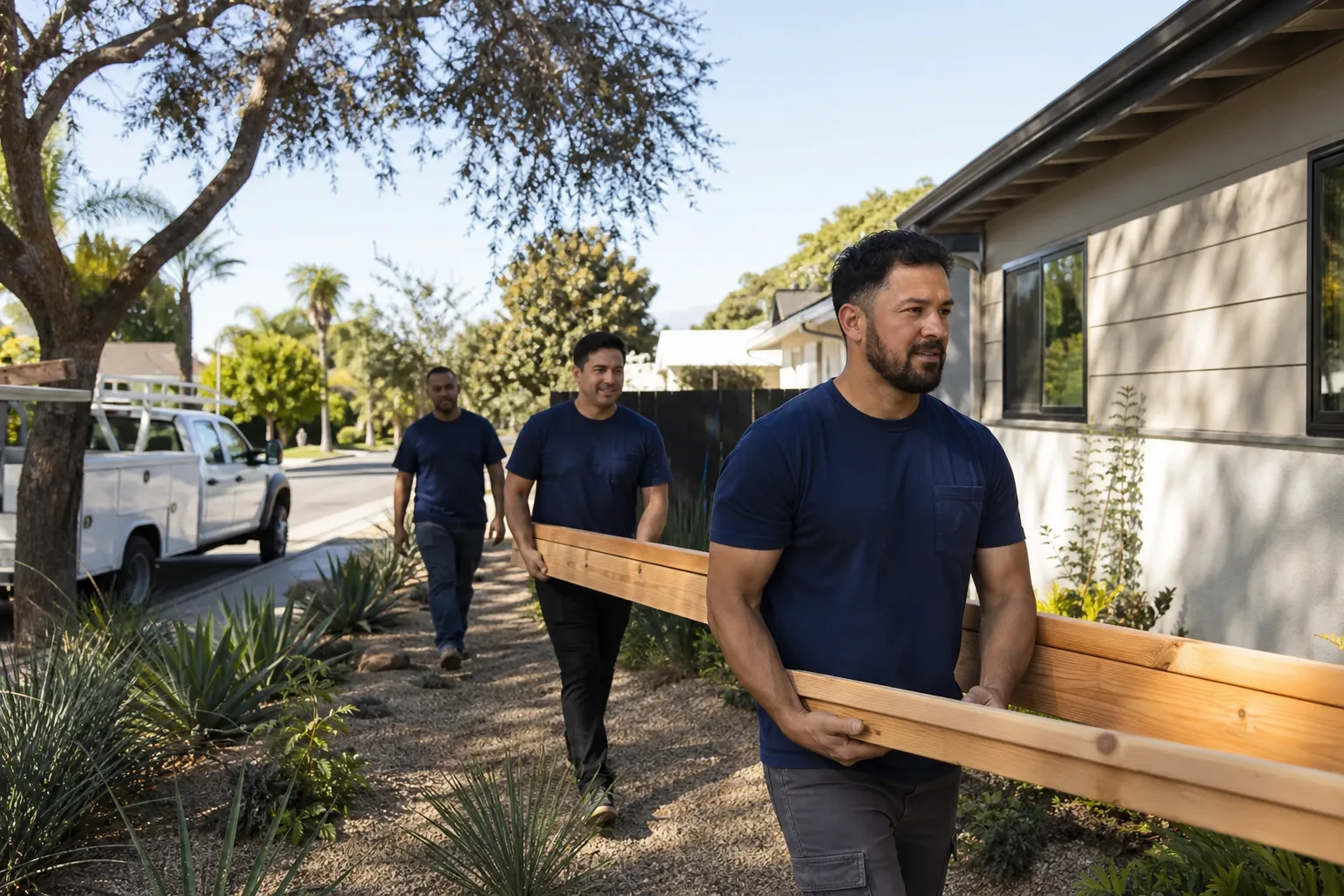
Most Los Angeles homeowners we talk to aren’t worried about whether the panels are square. They’re worried about who’s going to be in their backyard for two months. That’s a fair worry, and we built our company around it. Every technician who works on your Cover addition is background-checked, identity-verified, and photo-badged under the Threshold Verified standard. Their name and photo are sent to you before they arrive. They show up in a clean marked uniform and hand you a photo ID at the door. Every time.
The name Sutton, for what it’s worth, is an old English word for a south farm. Adding a second structure to your lot is exactly that kind of settled, rooted decision, and we don’t treat it lightly. We’ve been in business since 2006, and we’ve been working on ADUs and room additions in this city long enough to know which corners can be cut and which can’t. We don’t do the first kind. And if we know the Abodu and Dvele lines as well as the Cover system, it’s because Los Angeles homeowners deserve a contractor who can tell them honestly which panel system actually fits their lot and budget, not just the one they happened to learn first.
FAQs
No. As an independent Cover service provider, our work is covered by our 365-Day Done Right Promise, which covers defects in workmanship for one full calendar year from project completion. We recommend that you keep any warranty claims involving Cover’s original manufacturing defects separate from our work, and we’ll document our scope clearly so there’s no ambiguity with the manufacturer.
Realistically, site work can begin within 3 to 6 weeks of a signed contract and approved permits, depending on the Los Angeles Department of Building and Safety queue and Cover’s panel delivery schedule. We don’t work without permits, and we won’t promise a speed that contradicts the reality of LA’s permitting system.
Your written price is the price, unless you change the scope or we find a condition that couldn’t have been known before demolition, like an undersized existing slab or a live termite tube inside a wall cavity. We’ll show you the issue, explain what it costs to fix, and get your written sign-off before adding a dollar. Our fixed pricing model means no silent scope creep.
For an exact quote on your Cover room addition in Los Angeles, call (472) 248-8213 and talk to Miles or a member of his team. The estimate is free, the written price is real, and the 365-Day Done Right Promise is stamped on every project we close.
Written by Miles Hartwell, Owner, Sutton ADU Builders at Sutton ADU Builders, serving Los Angeles and nearby areas.