Dvele ADU Builders in Los Angeles: What to Know First
We build, install, and service Dvele ADUs as an independent Dvele service provider in Los Angeles, with most full installations completed in 4 to 7 months depending on site prep and permitting. You’ll get a written price before any work starts, and our 365-Day Done Right Promise covers the completed build for a full year. If you own a Dvele unit or you’re considering one, call us at (472) 248-8213 and we’ll tell you honestly whether Dvele is the right fit for your lot, your budget, and your timeline.
This page is for Los Angeles homeowners who’ve already bought a Dvele ADU and need an experienced builder to handle site work, installation, or post-install corrections, and for those still deciding. If you’ve got a Dvele unit sitting unpermitted or half-installed, start here.
Key Takeaways
- We’re independent Dvele-experienced ADU builders in Los Angeles, not a Dvele-authorized dealer, which means we give you straight answers about what the brand does well and where it struggles.
- Dvele’s panelized construction creates specific failure modes around flashing, seam sealing, and MEP routing that differ from stick-built or fully modular ADUs.
- Written price before work starts. Always. No exceptions.
- Every tech who shows up is background-checked, identity-verified, and photo-badged under the Threshold Standard.
- Call (472) 248-8213 for a free estimate, and we’ll give you real numbers, not a vague range.
How Dvele Products Fail – and How We Fix Them
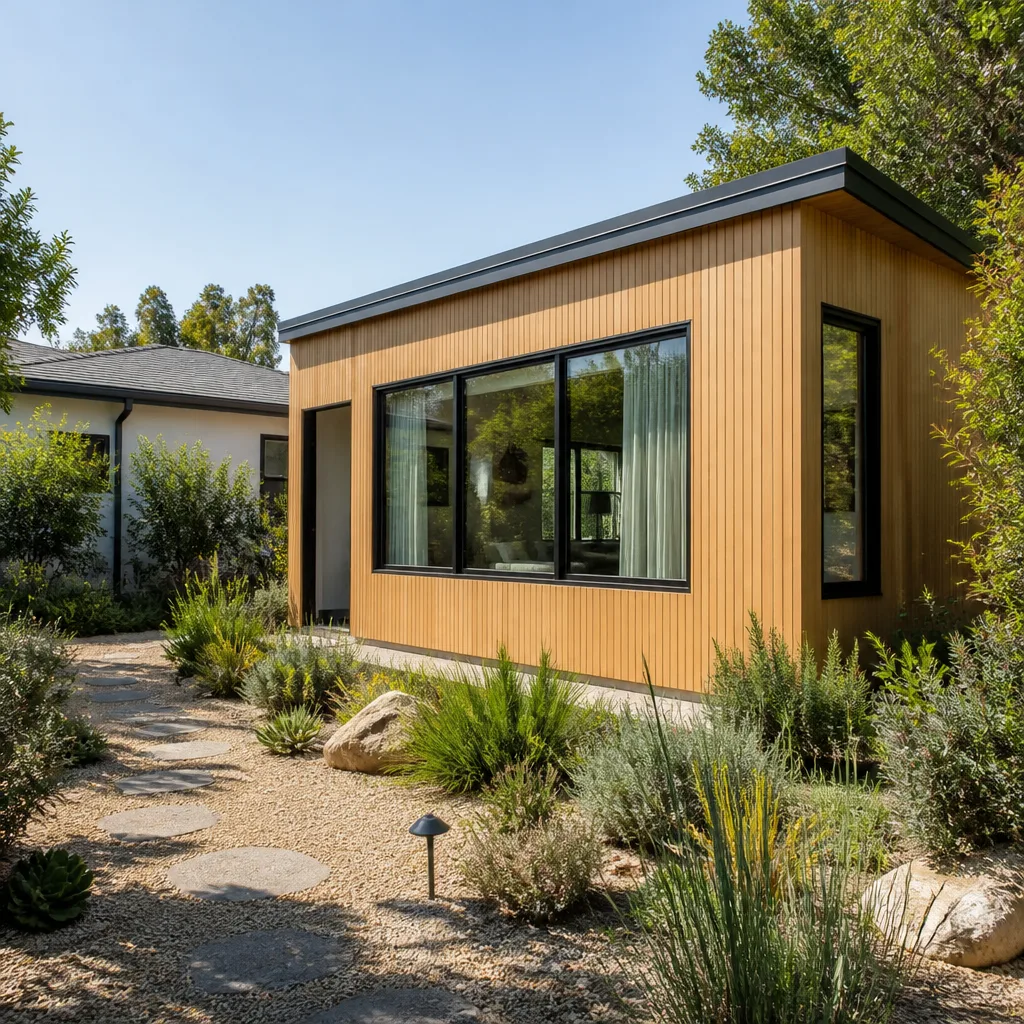
Dvele builds panelized, high-performance homes in a factory in Loma Linda, then ships flat-pack panels to your Los Angeles lot for assembly. The engineering is solid. The on-site execution is where things go wrong. Here are the failure modes we see most often on Dvele ADUs in Los Angeles, and how we address them:
- Wall panel seam separation at the top plate. Dvele’s wall panels arrive with factory-installed weather barriers, but the seam between panels depends on a field-applied tape and sealant that degrades faster in Los Angeles UV exposure than in coastal climates. We’ve seen hairline gaps open within 18 months, especially on south-facing elevations. Our fix: remove the failed tape, inspect for moisture damage behind the barrier, re-flash with a commercial-grade butyl tape, and install a rainscreen gap on the exterior cladding if it hasn’t been done.
- Window flashing failures on the Dvele Series 100 and Series 200 floor plans. The factory cuts window rough openings precisely, but the installation crew still has to integrate the window flange with Dvele’s wall assembly. If the crew uses a generic flashing method instead of Dvele’s specified head-flap sequence, you get slow leaks that show up as staining around interior window trim a year later. We re-flash windows using the correct shingled sequence and test with a water spray before closing the wall back up.
- HVAC ductwork pinched behind the mechanical chase. Dvele panels include pre-cut chases for MEP runs, but the tolerances are tight. On more than one Los Angeles job, we’ve found flex duct compressed to half its diameter where it passes through a panel penetration, cutting airflow to the bedroom zone of the ADU. The homeowner notices one room never reaches temperature. We open the chase, re-route duct with rigid elbows at the transitions, and seal the penetration properly.
- Exterior cladding attachment issues with James Hardie siding over Dvele’s ZIP-style sheathing. Dvele’s panel exteriors are dense, and the correct fastener schedule for hardie cladding matters. Rushed installs leave nails overdriven into the sheathing, which causes cracks at panel edges within the first year. We re-secure the cladding with the proper screw schedule and replace cracked boards before they become water intrusion points.
- Electrical panel overcrowding from post-install additions. Dvele’s standard electrical panel is sized for the original specification. If a previous owner added a mini-split, an EV charger, or a hot tub circuit, we’ve found panels double-lugged or breakers jammed beyond the panel’s rated capacity. In Los Angeles, where many Dvele units serve as full-time rentals, this is a code violation waiting to get flagged. We load-calculate, re-balance circuits, and upgrade the panel if required, pulling the permit through LADBS.
These aren’t theoretical problems. They’re what we see on our Los Angeles service calls for Dvele units built by crews who didn’t take the time to read the installation manual cover to cover.
Our Dvele ADU Builders Process
When you call us about a Dvele build or repair, here’s what happens step by step:
- 1
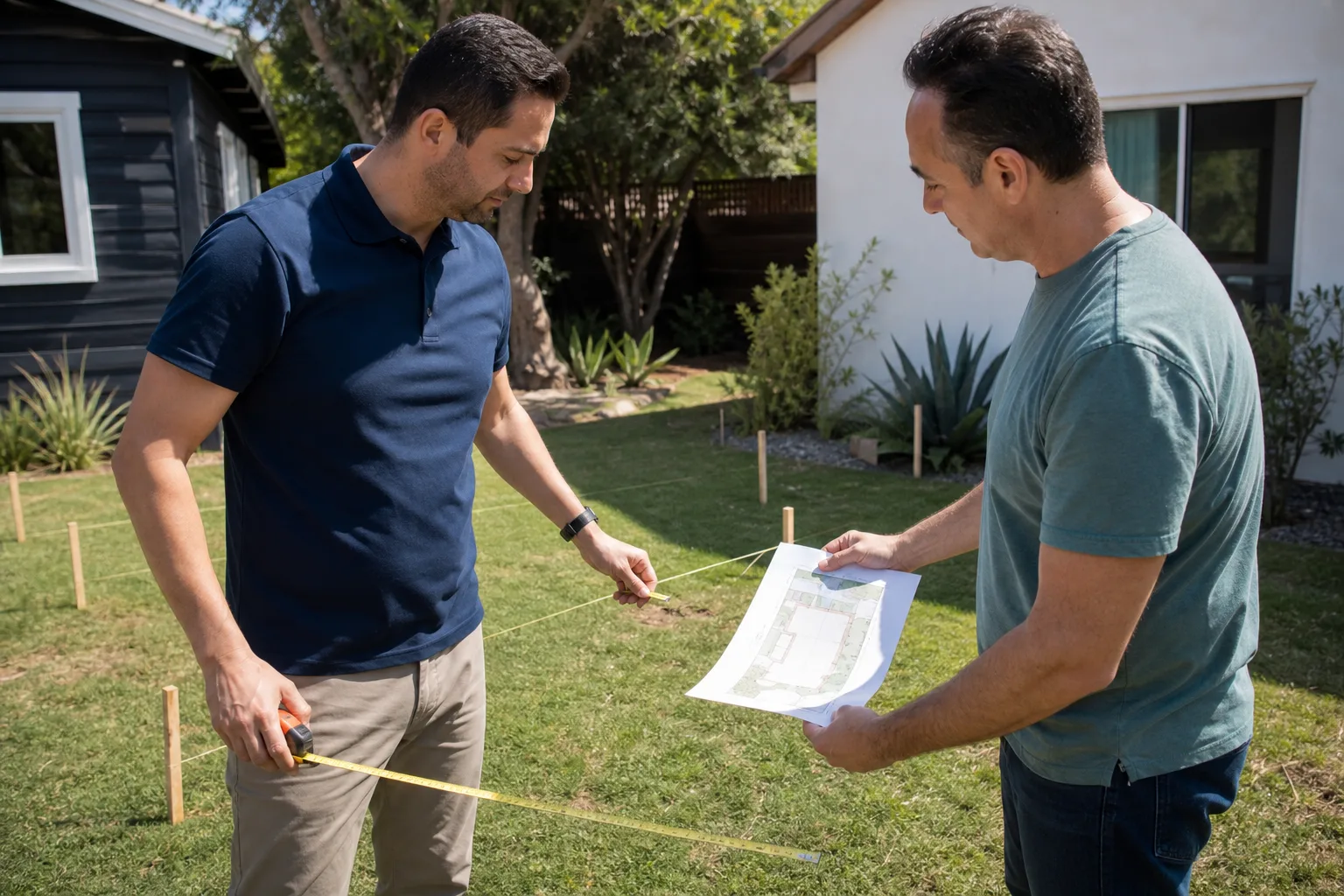
Site walk and honest assessment. We walk your Los Angeles lot with you, measure access, check setbacks (the required gap between your structure and the property line), look at soil conditions, and tell you whether a Dvele ADU makes sense on your specific parcel. If it doesn’t, we say so, and we’ll tell you what would work instead.
- 2
Written price, fixed before work starts. You get a line-item quote that includes materials, labor, site prep, and an allowance for the Dvele factory price. No lowball estimate to win the contract, no surprise invoice at the end.
- 3
Permit assembly and LADBS filing. We assemble the permit package: site plan, structural calculations, Title 24 energy compliance, and Dvele’s factory engineering docs. Los Angeles permitting for ADUs runs 3 to 6 months for a standard detached unit, depending on the district office and whether your lot has any flagged conditions.
- 4
Site prep and foundation. Before the Dvele panels arrive, we complete grading, compaction, and the foundation system. Dvele’s panelized walls require a slab within a tighter flatness tolerance than a standard ADU foundation, so we check it with a laser level and correct any deviation before the factory delivery date.
- 5
Panel assembly, MEP, and finishes. The Dvele panels arrive flat-packed on a flatbed, and we crane them into place. Our crew then handles the full mechanical, electrical, and plumbing buildout, plus drywall, flooring, paint, and the exterior cladding. We install the windows and flash them correctly the first time.
- 6
Testing, inspection, and the 365-Day Promise. Before the city inspector signs off, we run our own test: water spray on every opening, airflow balance on every register, and a GFCI/AFCI check on every circuit. Then you get the Done Right Promise in writing: if anything we built fails within a full calendar year, we come back and fix it, no haggling.
What Dvele ADU Builders Costs in Los Angeles
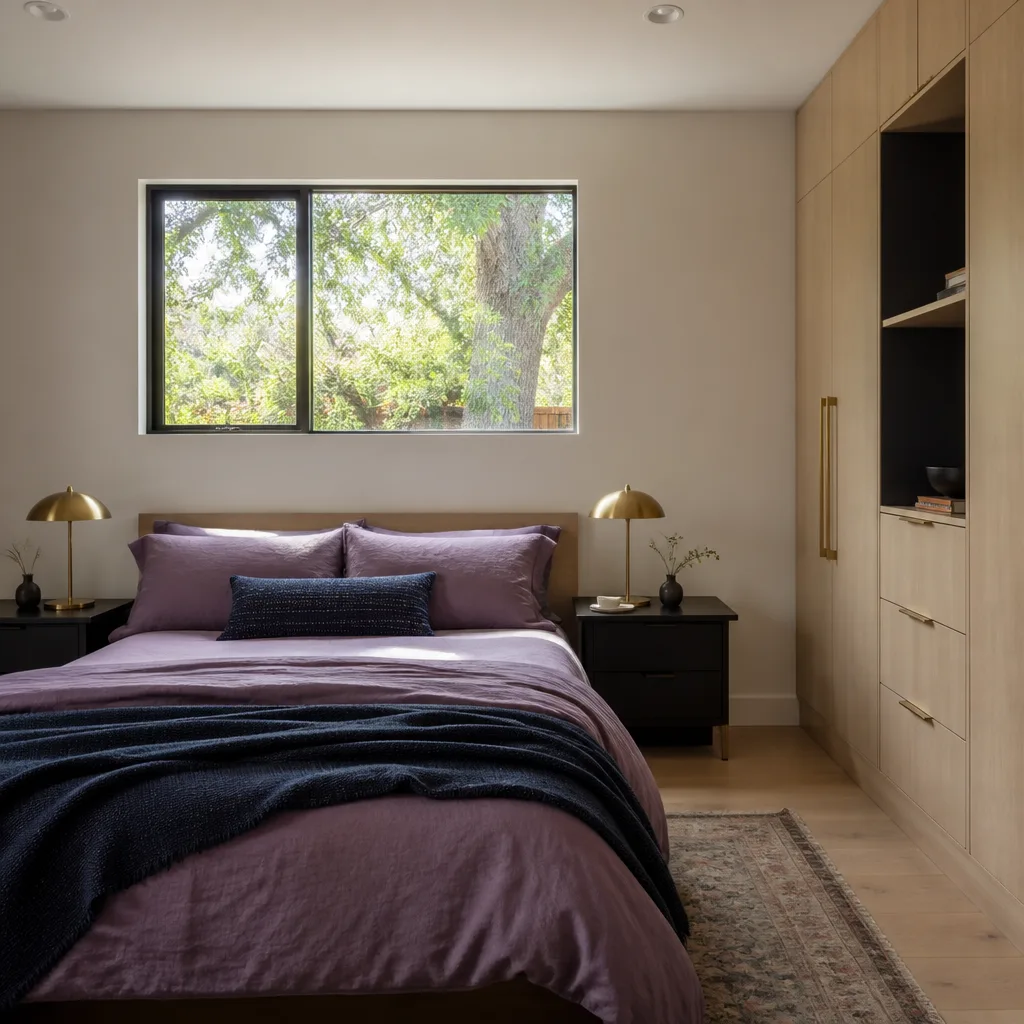
Here’s what Dvele work in Los Angeles runs, based on the projects we’ve completed:
| Project Type | Typical Cost Range (Los Angeles) | What’s Included |
|---|---|---|
| Studio Dvele ADU (approx. 400 sq ft) | $180,000 – $260,000 | Factory shell, foundation, full MEP, standard finishes, one bathroom, kitchenette |
| One-bedroom Dvele ADU (approx. 600 sq ft) | $240,000 – $350,000 | All of the above plus a full kitchen, increased glazing, upgraded exterior cladding |
| Two-bedroom Dvele ADU (approx. 800+ sq ft) | $320,000 – $460,000 | Larger panel package, upgraded electrical service if required, full appliance set |
| Repair or correction work on existing Dvele unit | $1,200 – $12,000 | Flashing remediation, seam re-sealing, HVAC re-routing, panel upgrades, cladding fixes |
What moves the price: your lot access (crane reach matters), soil conditions, whether you need a new electrical service drop from LADWP, and how much site work your specific Los Angeles hillside or flat-lot location requires. Site work alone can add $20,000 to $60,000 on a difficult lot. That’s not Dvele’s price problem; it’s the reality of building in Los Angeles. Call (472) 248-8213 with your address, and we’ll give you a written price that includes every line item up front.
Why Los Angeles Homeowners Call Sutton ADU Builders for Dvele Work
Miles Hartwell grew up in Eagle Rock before it had a coffee shop on every corner, and he never really left. He learned construction fundamentals at Los Angeles Trade-Technical College downtown, then spent years working through every phase of residential building before narrowing his focus to ADUs about a decade ago. When you call us about a Dvele project, you’re getting someone who can tell you what a project will actually cost and why, not a vague estimate and a hand-off to an unfamiliar crew.
Under the Threshold Standard, every technician who steps onto your Los Angeles property is background-checked, identity-verified, and photo-badged. Their name and photo are sent to you before the visit. They arrive in a clean, marked uniform and show a photo ID badge at the door. Every time. That matters when you’re letting a construction crew onto your property for a four-month build.
We also work with Abodu and Cover, the other leading prefab ADU brands in the Los Angeles market. If Dvele’s panelized approach turns out not to be the right fit for your lot or timeline, we’ll tell you that honestly and walk you through the alternatives. We’d rather steer you toward the right product than lock you into the wrong one.
And when Miles says, “Tell me what you actually need, and I’ll tell you what it actually costs,” that’s the whole business model in one sentence.
FAQs
No, we’re an independent Dvele service provider. We’re not employed by or authorized by Dvele, which means we can tell you honestly when a Dvele product fits your needs and when another brand like Abodu or Cover would serve you better. It also means our workmanship warranty, the 365-Day Done Right Promise, comes from us, not from the manufacturer.
Dvele’s factory warranty covers defects in the factory-built panels and components. Your site work, foundation, MEP connections, and finish work are typically outside that warranty regardless of who installs them, and our correction work follows Dvele’s specified installation methods so the factory warranty remains intact. If you have a specific warranty question, call (472) 248-8213 and we’ll help you read the fine print.
Yes, we pull every required permit through LADBS and handle all inspections through final sign-off. Los Angeles has specific ADU ordinance provisions that affect setbacks, height limits, and parking requirements, and we make sure your build complies before the first panel is ordered.
For a standard detached Dvele ADU, expect 4 to 7 months total, with permitting running 3 to 6 months and on-site construction running 8 to 16 weeks depending on site complexity and inspection scheduling. Dvele’s factory lead time is typically 3 to 4 months from order to delivery, so the smart move is to order the unit early in the permitting process. Call (472) 248-8213 and we’ll map out a realistic timeline for your specific lot.
Wall panel seam separation and window flashing failures, almost always from field installation shortcuts rather than factory defects. Los Angeles UV exposure and our winter rain patterns are hard on exterior seals. If you’re seeing staining around windows, peeling tape at panel joints, or a room that won’t hold temperature, call us at (472) 248-8213 and we’ll diagnose it. Estimates are free.
Written by Miles Hartwell, Owner, Sutton ADU Builders at Sutton ADU Builders, serving Los Angeles and nearby areas.