Plant Prefab Site Prep & Utilities: The Los Angeles Owner’s Guide
Site prep and utility work for a Plant Prefab unit in Los Angeles typically costs $22,000 – $58,000 installed, depending on your lot’s slope, soil conditions, and how far your utility connections need to run. We stock and install the full range of Plant Prefab-compatible site work (foundation systems, trenching, water, sewer, electrical service, and grading), and most utility trenching on a standard flat LA lot is done within three to five working days. The most common way owners discover a site work problem is after the fact: a cracked foundation corner, a sewer line that backs up during the first rainy season, or a main panel that trips when the ADU’s heat pump kicks on because the feeder wire was undersized on the original install. If you’re holding a Plant Prefab product and the ground underneath it or the utilities feeding it are failing, this page tells you exactly what to look for, what it costs to fix here in Los Angeles, and how to make sure the repair doesn’t become a second repair six months later.
Which Plant Prefab Models This Applies To
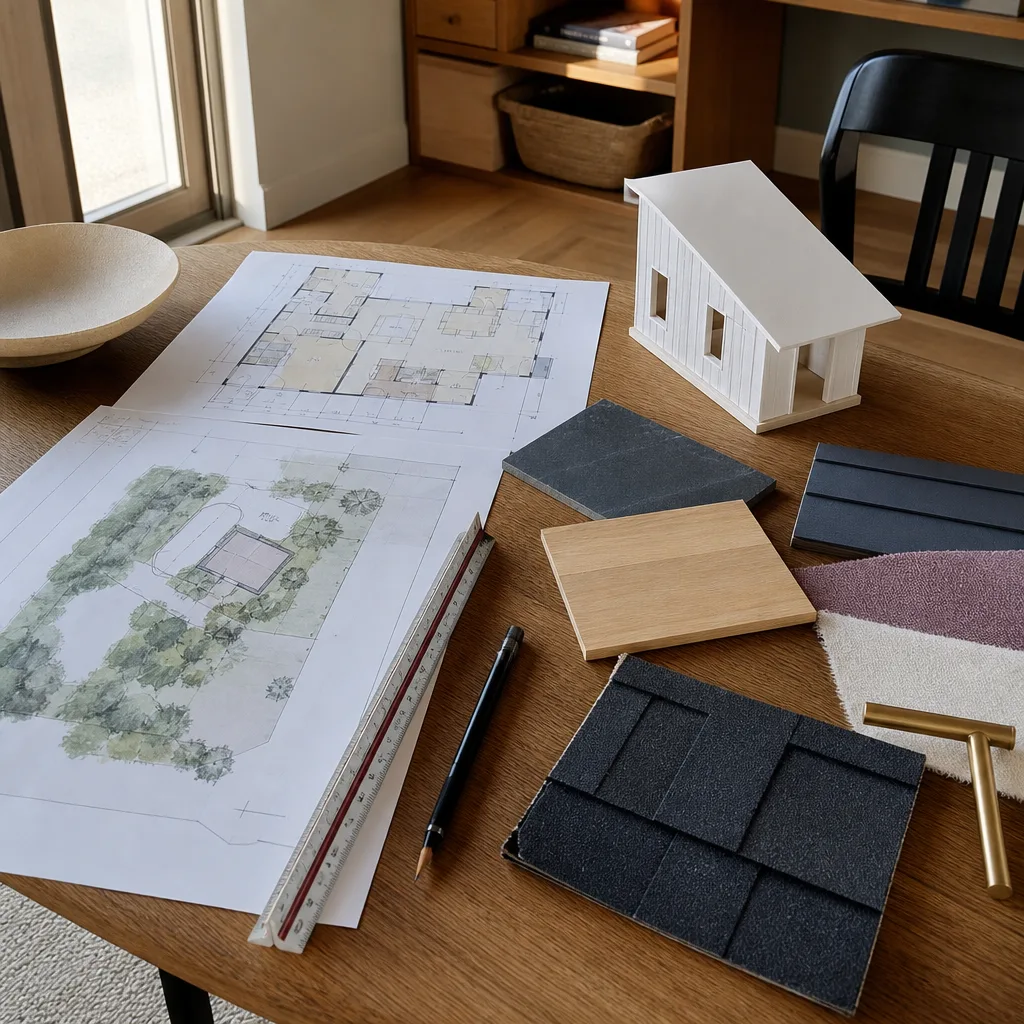
Our Los Angeles crews handle site prep and utility work for Plant Prefab’s LivingHome series (the YB1, YB2, YB3, and the larger LivingHome 10 and LivingHome 20 models) as well as their custom multi-module designs. The site work requirements differ meaningfully between models: the smaller YB series units typically arrive on a standard steel or concrete pier foundation system with a compact utility corridor, while the larger multi-module LivingHomes need deeper footings, more precise grading, and a larger electrical service drop because the home itself draws significantly more load. That’s the compatibility gotcha we see most often in Los Angeles: a homeowner or a previous contractor specs the site and utility package for a single-module unit, then upgrades to a two-module Plant Prefab later and nobody re-sizes the feeder wire, the sewer lateral, or the foundation piers. If you’re checking compatibility, the model plate on your Plant Prefab documentation will list the module count, and our rule of thumb is that every module needs its own load calculation and its own foundation bearing check, no exceptions.
A word on OEM versus aftermarket: for most Plant Prefab site and utility components, the original factory-supplied parts (the steel pier brackets, the utility wall penetrations, the main disconnect housing) are worth paying for because they’re spec-matched to the module’s exact dimensions and load path. But for the civil work itself (concrete, drain rock, conduit, ABS sewer pipe, schedule 40 copper or PEX water lines), quality Los Angeles local equivalents are every bit as good and usually cost 20 – 30% less than the branded material markup you sometimes see. We write line-item quotes that show you exactly where the OEM part makes sense and where a code-compliant local equivalent does the same job for less.
Signs Your Plant Prefab Site Prep & Utilities Is Failing
- Cracks propagating from the foundation corners or pier connections. This almost always traces back to either insufficient compaction of the subgrade before the piers were set or a drainage problem that’s washing soil out from under the load path. In Los Angeles, the freeze-thaw cycle isn’t your enemy; it’s water moving through expansive clay soils during winter rains.
- Slow drains or a sewer smell near the unit after heavy rain. Plant Prefab modules are built tight, but the sewer lateral that connects them to the city main is often the weak point, especially on older Los Angeles lots where clay or cast-iron pipe from the 1950s is still in the ground. Root intrusion and belly sag in the line are the two most common faults we excavate.
- Your main panel trips or the ADU’s lights dim when the heat pump starts. This is the classic undersized-feeder symptom. It’s especially common on retrofit sites where the original electrical service was specced for a smaller room addition, then a Plant Prefab unit was installed without re-running the home run to the main panel.
- Water pressure inside the ADU drops when someone flushes a toilet or runs a washing machine in the main house. That points to an undersized water main from the street or a shared branch line that should have been split into a dedicated run. Some 1/2-inch lines simply can’t serve two dwelling units on the same lot.
- Standing water pooling near the foundation perimeter or under the module after rain. Site prep isn’t just about setting the unit level; it’s about grading the water away from it. A Plant Prefab unit with a low-side drain swale that was never cut will sit in water, and that water will find its way into the utility trench and under the piers eventually.
Replacement Cost & What’s Included
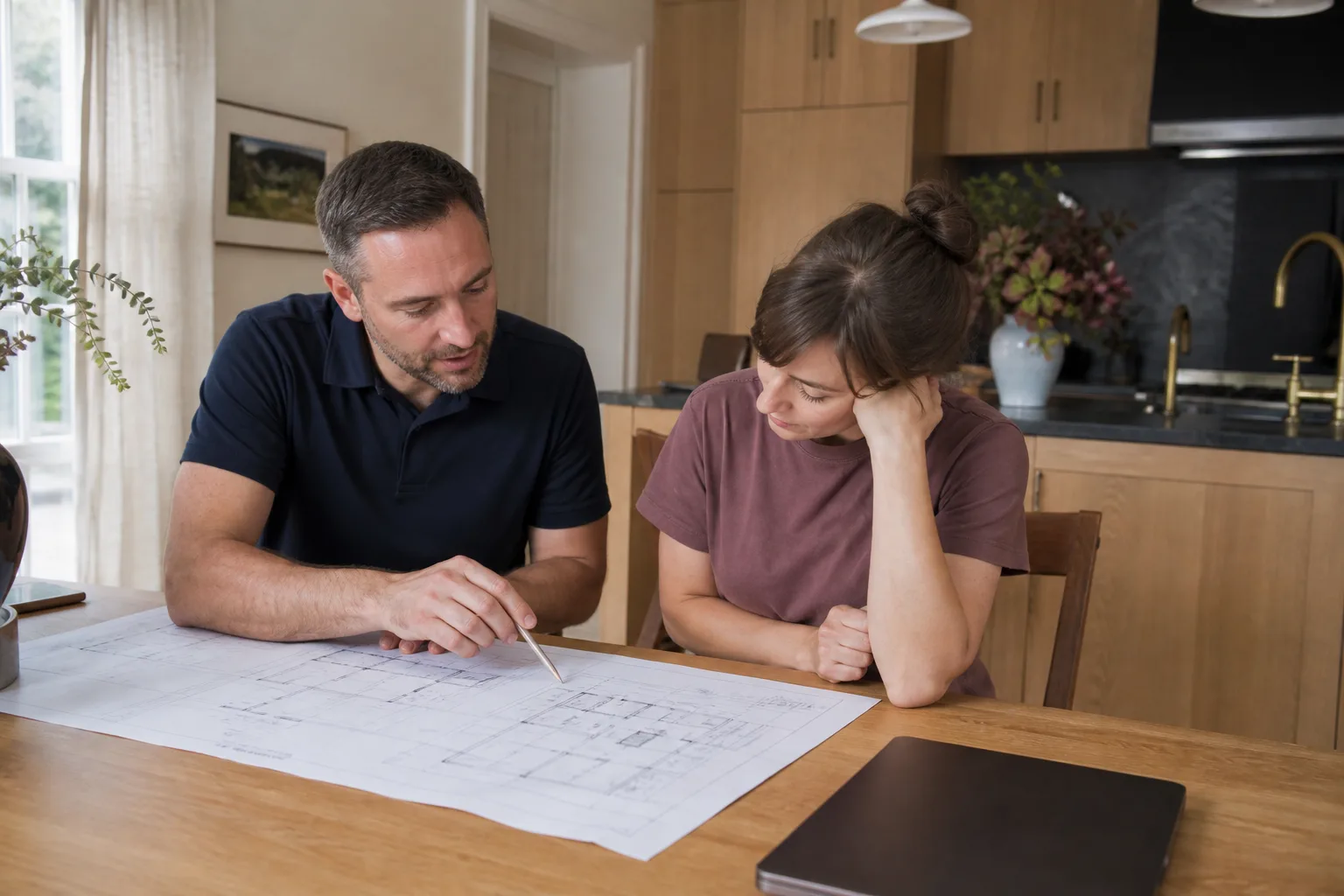
For Los Angeles lots, here’s what we tell owners to budget for the most common Plant Prefab site and utility repairs:
- Foundation pier reset or leveling (single module): $4,800 – $11,500, depending on how many piers need to be re-shimmed and whether we’re pulling soils for a compaction test first.
- Sewer lateral replacement or spot repair: $6,200 – $14,800, driven mostly by depth of the line and whether LADBS requires a new cleanout at the property line.
- Electrical feeder upgrade (100A to 200A from main panel to ADU): $5,400 – $12,700, including the wire, conduit, disconnect, and LADWP inspection.
- Water main split and dedicated ADU line: $4,200 – $9,600, including trenching, new shutoff valve, and a pressure regulator if your street pressure is over 80 psi.
- Full regrade and drainage correction around the module: $7,800 – $19,000, with the spread depending on how much soil we’re moving and whether we’re installing a French drain or a surface swale.
Every one of those numbers includes the parts, labor, trenching or excavation, haul-away of spoils, and the city inspection. We write the price before we start, and that’s the price you pay unless you change the scope. The 365-Day Done Right Promise covers defects in workmanship for one full calendar year from project completion, so if a trench settles or a connection we made leaks within that year, we come back and fix it without a second invoice.
DIY or Call Us?
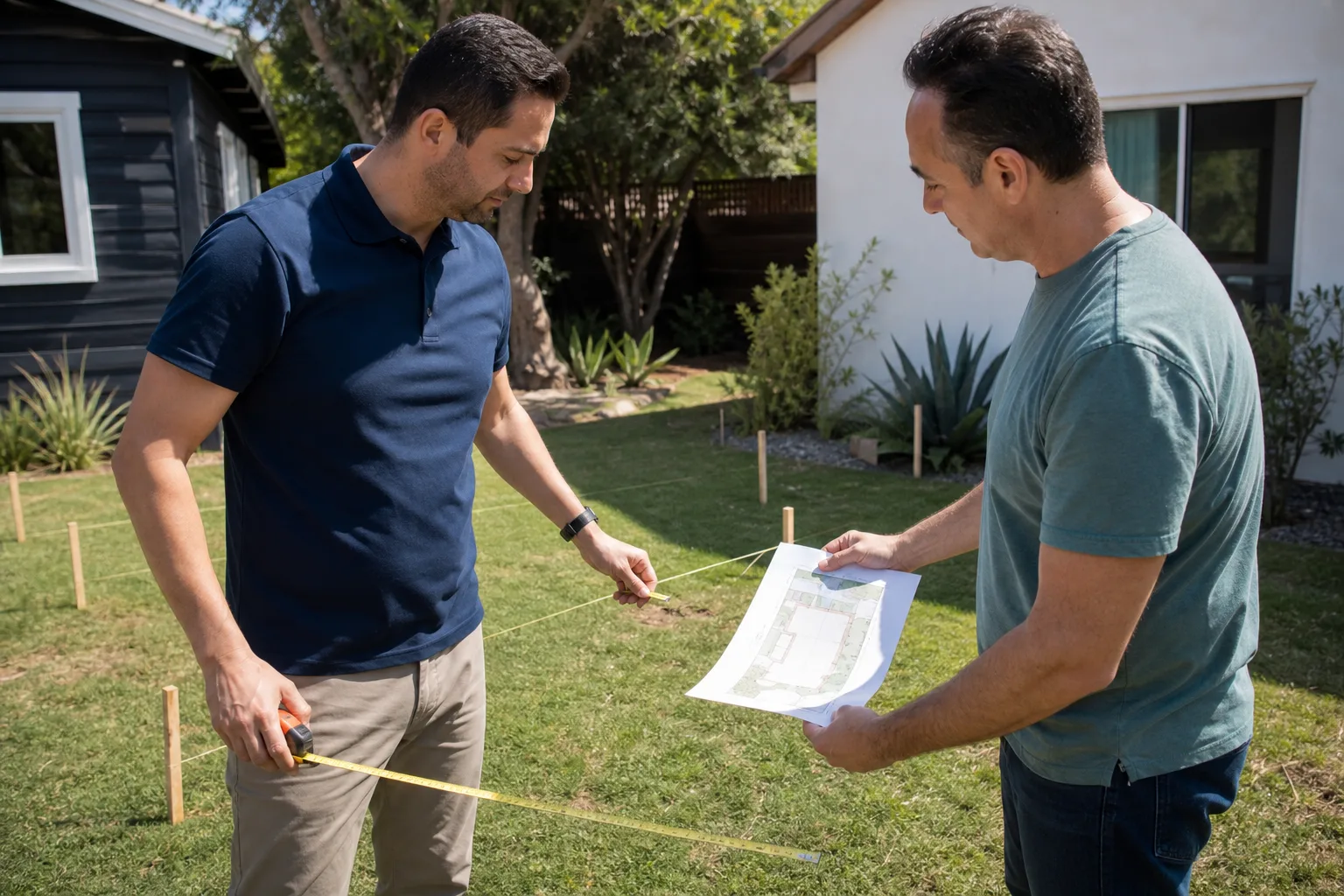
There’s an honest split here. You can absolutely do your own visual inspection: walk the perimeter of your Plant Prefab module, check the pier connections for rust or shifted shims, look for standing water after a rain, and run the tub or a hose to see if the sewer line backs up. Those observations help you describe the problem when you call us. But once the work involves trenching, excavating, cutting into live sewer or water lines, or opening a main electrical panel, this is not a weekend project. An energized panel and a buried gas or water line wrong guesses in Los Angeles soil can cause serious injury or worse, and LADBS won’t sign off on owner-performed utility work anyway because these systems require a licensed contractor and an inspection. If the symptom is electrical or gas-related, call (472) 248-8213 and describe what you’re seeing; Miles Hartwell will walk you through what’s safe to check at the panel before one of our photo-badged technicians arrives to do the real work.
FAQs
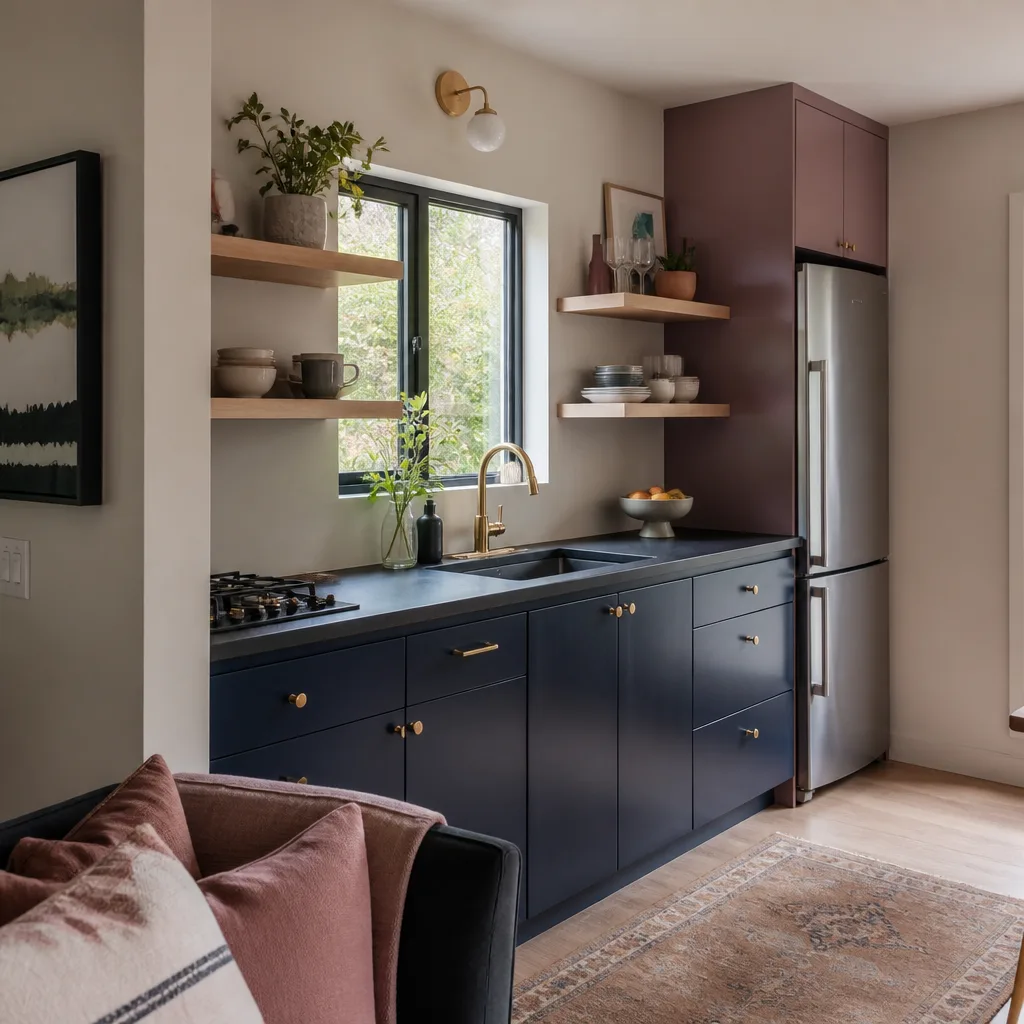
A correctly installed foundation system and utility package should last the life of the ADU, which in Los Angeles means 50+ years for the concrete, 30 – 50 years for the sewer lateral, and 25 – 40 years for the electrical feeder. The failure we see most often isn’t age, it’s shortcut installation: undersized wire, un-compacted subgrade, or trench lines that didn’t get a proper bedding layer before they were backfilled.
Sometimes yes, and we’ll tell you honestly which side of that line you’re on. A single shifted pier can often be re-shimmed and re-leveled without touching the rest of the foundation. A sewer lateral with one bellied section can sometimes be spot-repaired rather than fully replaced. But a panel that’s been feeding an undersized circuit for years, or a foundation that’s losing bearing capacity, usually needs full replacement. Call (472) 248-8213 for a written assessment that tells you exactly what’s repairable and what isn’t, with a fixed price for either path.
Most single-system repairs (one pier reset, a sewer lateral spot repair, or a water main split) take one to three working days on site in Los Angeles. A full utility package for a new or relocated Plant Prefab unit typically runs three to five working days for trenching and installation, plus whatever time LADWP and LADBS take to schedule the inspection. We’ll give you a day-by-day schedule in your written quote, and if a city inspection adds delay, we’ll tell you the moment we know.
We keep common Plant Prefab-compatible parts on our Los Angeles trucks and in our yard: steel pier brackets spec’d for Plant Prefab module loads, 200-amp disconnects, 2-inch ABS and cast-iron sewer fittings, PEX and copper water line in the common sizes, and the conduit bodies and rain-tight connectors that LADWP inspectors here like to see. For parts we don’t stock, we source them through local supply houses in the San Fernando Valley and Vernon, usually with next-day pickup. Tell me what you actually need, and we’ll tell you what it actually costs to get it on your lot.
Talk to Us About Your Plant Prefab Site Work
If your Plant Prefab unit is sitting on failing ground or running on failing utilities, you want the fix done right the first time, by people whose names you know before the truck pulls up. That’s exactly how we operate. Every technician who arrives at your Los Angeles property is background-checked, identity-verified, and photo-badged under the Threshold Verified standard, and we send you their name and photo before they arrive. We work with Plant Prefab modules alongside Abodu, Cover, and Dvele units, so we know how these systems tie together and where the weak points live. Call (472) 248-8213 to schedule a free estimate. You’ll get a written price before any dirt moves, and a one-year written promise on everything we touch.
Written by Miles Hartwell, Owner, Sutton ADU Builders at Sutton ADU Builders, serving Los Angeles and nearby areas.