Last updated October 9, 2026
ADU Cost Breakdown: The Los Angeles Homeowner’s Reference for 2026
Most Los Angeles homeowners walk into an ADU project with a number in their head that a single sewer lateral, a 200-amp panel, or a grading correction can erase in one afternoon. We’ve watched bids climb $40,000 between a first conversation and a signed contract, not because anyone was dishonest, but because the initial estimate never mentioned the six cost triggers that LA’s specific geography and code actually impose. This guide breaks down where the money goes, what the wide ranges hide, and how to read a contractor’s bid so the number you budget in January is the number you pay in November.
Quick Answer
An ADU in Los Angeles costs between $60,000 for a basic garage conversion and $400,000 for a high-end detached new build in 2026, with most homeowners landing in the $180,000 – $320,000 range before soft costs. The single largest hidden variable is sewer lateral replacement, which can add $20,000 – $60,000 and almost never appears in a first-pass estimate. Design, engineering, permits, and fees typically add 12 – 18% on top of the hard construction cost.
Table of Contents
- Hard Cost Ranges by ADU Type
- The Six Hidden Cost Triggers in Los Angeles
- Soft Costs Most Estimates Leave Out
- How to Read a Contractor’s Line-Item Bid
- Rental Income vs. Build Cost: The Break-Even Math
- Permitting Timeline and What It Costs
- Financing Realities in 2026
- Common Mistakes to Avoid
- When to Call a Professional
- Frequently Asked Questions
Hard Cost Ranges by ADU Type
Hard costs are what you pay for labor, materials, and the physical construction. They do not include design, permits, or fees. In Los Angeles, where union labor rates for finish carpenters run $65 – $95 per hour and electricians bill $110 – $160 per hour, labor is roughly 55 – 65% of any build.
| ADU Type | Typical Size | 2026 Cost Range | Cost Per Sq Ft |
|---|---|---|---|
| JADU conversion (existing space) | 300 – 500 sq ft | $60,000 – $120,000 | $200 – $240 |
| Garage conversion | 400 – 600 sq ft | $80,000 – $150,000 | $200 – $250 |
| Attached addition | 600 – 900 sq ft | $150,000 – $250,000 | $250 – $280 |
| Detached new build | 600 – 1,200 sq ft | $200,000 – $400,000 | $300 – $350 |
Why does a detached build run $50 – $100 more per square foot than a garage conversion? Foundations, utility trenching, and a full kitchen and bath rough-in are the main drivers. A garage already has a slab, walls, and a roof; a detached ADU needs all of those built from scratch, plus separate utility connections that require trenching across your yard. In hillside neighborhoods like Mount Washington or Echo Park, add $25 – $50 per square foot for pier foundations or retaining work. In flatlands like Westchester or the Valley, you’ll pay less for grading but often more for sewer depth.
Modular and prefab options compress some of these ranges. A Sutton ADU Builders project using an Abodu or Cover unit can shave 4 – 8 weeks off the construction timeline, though the unit cost itself is comparable to site-built framing. Where prefab really saves money is in the soft costs: fewer change orders, fewer weather delays, fewer inspections triggered by on-site framing errors.
The Six Hidden Cost Triggers in Los Angeles
These are the line items that turn a $250,000 project into a $320,000 project. Every one of them is specific to how Los Angeles is built and regulated. A competent contractor will flag them in the first walkthrough; a vague one will let you discover them at the permit counter.
- Sewer and water lateral upgrades: $20,000 – $60,000. If the city determines your existing lateral cannot handle an additional dwelling unit, you will pay to replace it. In older neighborhoods like West Adams or Highland Park where clay pipe from the 1920s is common, this is closer to a certainty than a risk. The cost depends on depth, street type, and whether the city requires a new connection at the main.
- Electrical panel upgrade: $3,500 – $8,000. A 100-amp panel from the 1960s cannot run a second kitchen, laundry, and HVAC system. Most ADUs require a 200-amp service upgrade. If your power lines are overhead, this is straightforward. If they’re underground in a neighborhood like Sherman Oaks, expect higher labor costs for trenching.
- Grading and drainage: $5,000 – $25,000. Los Angeles has hillside ordinances that require engineered drainage plans for any lot with a slope greater than 10%. A flat lot in Torrance won’t face this. A canyon property in Laurel Canyon absolutely will, plus retaining wall costs if the build changes the natural grade.
- Soil reports: $3,000 – $7,000. The city requires a geotechnical report for most new ADUs. Expansive clay soils common in parts of the San Fernando Valley can trigger deeper footings or post-tension slabs, adding $5,000 – $15,000 to foundation work.
- Fire sprinklers: $8,000 – $15,000. California building code requires fire sprinklers in new ADUs unless the primary residence already has them. This is not optional and not negotiable, no matter who your contractor is.
- School fees: $4 – $6 per square foot. Los Angeles Unified School District assesses developer fees on new residential square footage, including ADUs. On an 800-square-foot detached unit, that’s roughly $3,200 – $4,800. Many bids leave this out entirely because it’s paid directly to the district, not to the contractor.
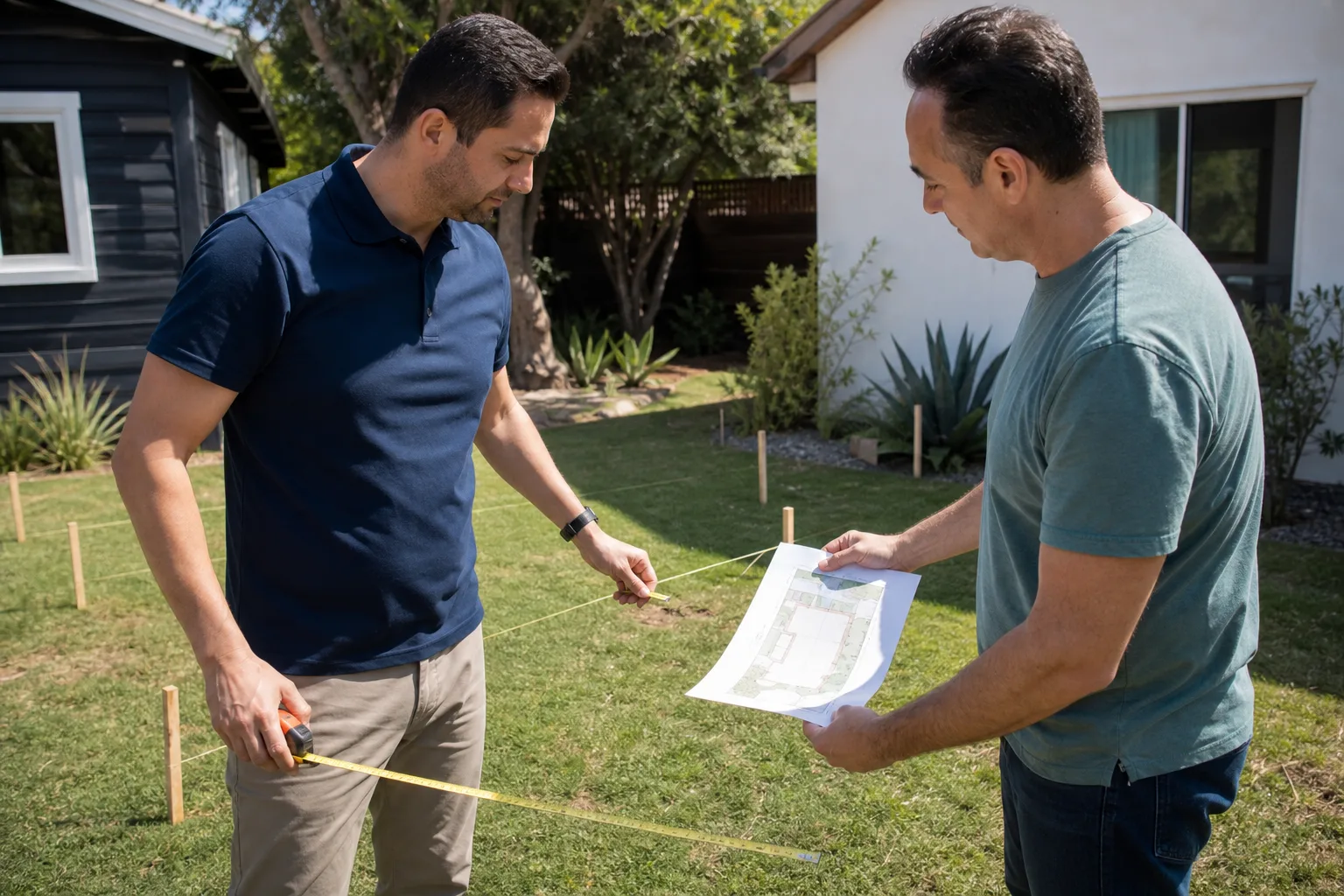
None of these are surprises to an experienced Los Angeles ADU contractor. At Sutton ADU Builders, we include a written site assessment that flags all six triggers before we give you a price, because the written price is the price. If it’s on the property, it’s in the bid. That’s the Sutton ADU Builders standard, and it’s what separates a real quote from a conversation starter.
Soft Costs Most Estimates Leave Out
Soft costs are everything you pay that isn’t lumber, concrete, or labor. They typically run 12 – 18% of hard costs, and they’re where even honest estimates often go thin.
Design and engineering: 8 – 12% of hard costs. This covers architectural drawings, structural engineering, title-24 energy calculations, and the site plan. In Los Angeles, where the Department of Building and Safety reviews plans with a level of detail that surprises out-of-state homeowners, you want a designer who understands ADU Permits, Codes & Inspections in CA: What You Need to Know and has pulled permits in your specific jurisdiction. A drawn-from-scratch set of plans for a detached ADU runs $12,000 – $30,000; plan sets from prefab providers like Cover or Abodu are often included in the unit price, which is one reason modular ADUs pencil out.
Permit fees: $4,000 – $12,000 depending on jurisdiction and project scope. The City of Los Angeles charges plan check fees, building permit fees, electrical and plumbing permits, and a school district fee. Cities like Santa Monica, Pasadena, and Burbank have their own schedules that run comparable or slightly higher. If your property is in a historic district, add $2,000 – $5,000 for preservation review.
Carry costs: if you’re financing the project, you’re paying interest during construction. On a $250,000 construction loan at 7.5% drawn gradually over 10 months, carry costs run $9,000 – $12,000. If your build goes long because of permit delays or change orders, this number grows. Few contractors mention it because it’s not their line item, but it’s your money.
Survey and site plans: $1,500 – $3,500. A boundary survey is required for any detached structure.
Utility connection fees: $2,000 – $6,000. LADWP charges separate fees for new water and power connections, and if you need a gas line extension from SoCalGas, that’s another line item.
When we write a bid at Sutton ADU Builders, soft costs are listed as separate, checkable line items. You should see the design fee, the permit fee estimate, the survey cost, and the utility connection charges spelled out before you sign anything. A bid that just says “permits included” without a number attached is a placeholder, not a price.
How to Read a Contractor’s Line-Item Bid
Most Los Angeles ADU bids are 10 – 30 line items long, and the line items are where cost gets hidden. Here’s what to look for, in order:
- Look for the word “allowance.” An allowance is a guessed number, not a quote. “Tile allowance: $8,000” means the contractor will spend up to $8,000, but if the tile you pick costs $14,000, that’s a change order. Allowances for finishes, fixtures, and appliances are where a $250,000 bid becomes $290,000. Ask for every allowance to be replaced with a specified material and model number before you sign.
- Check whether site work is itemized. Demolition, tree removal, trenching, and debris hauling should each have a separate line. If they’re bundled into a single “site preparation” number, ask for the breakdown. Site work is the second-most-common place for cost creep after allowances.
- Verify the contract type. A fixed-price bid means the number is the number. A cost-plus bid means you pay actual costs plus a markup, which is legitimate for some projects but requires a not-to-exceed cap in writing. Home addition contractors in Los Angeles who work cost-plus without a cap are asking you to finance their estimating.
- Compare line items across bids, not just bottom lines. If one bid is $30,000 lower, the difference is almost always in omitted scope, not superior efficiency.
- Confirm who pulls permits and who is named on them. The contractor should pull the permit under their license number, and their name should appear on the permit documents. If a bid tells you to pull the permit yourself as an owner-builder, that’s a red flag for liability issues down the line.
Sutton was an old English name for a south farm, a second home on land you already own. That’s the mindset a good Los Angeles ADU bid should reflect: this is a settled decision, not a gamble. A written price, itemized line by line, with allowances called out or eliminated, is the only kind of bid we write.
Rental Income vs. Build Cost: The Break-Even Math
The common pitch is that an ADU “pays for itself.” In Los Angeles, that’s true in some neighborhoods and false in others, and the difference comes down to rents, build cost, and financing terms. Here’s the honest math for a detached 800-square-foot ADU built in 2026.
Build cost, all-in: $320,000 for a standard-finished detached unit in a mid-tier neighborhood. That includes hard costs, soft costs, and the six triggers, assuming one or two of them apply.
Rent scenario, conservative: $2,600/month for a one-bedroom ADU in a neighborhood like Reseda or Westchester. Annual gross: $31,200. Net after property tax increase, insurance, management, and maintenance: roughly $24,000. At a 6.5% mortgage rate on the construction loan, annual debt service runs around $21,000. You’re cash-flow positive by about $3,000 a year, and the real return is the appreciation on the added square footage.
Rent scenario, optimistic: $3,800/month in a neighborhood like Echo Park, Highland Park, or parts of the Westside. Annual gross: $45,600. Net after costs: roughly $36,000. Same debt service. You’re clearing $15,000 a year, and the unit pays for itself in roughly 20 years before appreciation.
The break-even point in Los Angeles in 2026 is about $2,800/month in rent: below that, you’re building for appreciation, family use, or long-term wealth rather than cash flow. In neighborhoods where rents consistently clear $3,500, the ADU is a genuine income property. In most of the Valley and South LA, it’s a long-horizon investment. Both are legitimate reasons to build; you just need to know which one you’re making.
Permitting Timeline and What It Costs
Los Angeles has streamlined ADU permitting in the last several years, but “streamlined” in LA still means something different than it does in Phoenix or Denver, so see our ADU Emergency Preparedness Guide for Los Angeles Homes for related planning considerations. Here’s the realistic 2026 timeline for a standard detached ADU:
- Design and plan check prep: 2 – 5 months. Your designer drafts the plans, runs title-24, and submits to LADBS. If you’re using a prefab product like Cover or Abodu, their pre-reviewed plan sets can cut this stage to 6 – 8 weeks.
- LADBS plan check: 4 – 10 weeks. The city is faster than it was in 2020 but still slower than anyone wants. Expect at least one round of comments and corrections.
- Utility reviews: 2 – 6 weeks, running concurrently with plan check. LADWP reviews electrical service, SoCalGas reviews gas line extensions if applicable.
- Permit issuance: 1 – 2 weeks after final plan approval and fee payment.
- Construction: 6 – 10 months for a detached build, 4 – 6 months for a garage conversion, 3 – 6 months for a prefab unit after foundation work.
Total from first call to certificate of occupancy: 12 – 18 months for a typical detached ADU. If you’re converting an existing garage, 8 – 12 months. If you’re using a factory-built unit from Abodu or Cover, 8 – 14 months. This timeline matters because it affects your carry costs and your rental income start date. A project that finishes in May rents differently than one that finishes in November, when LA’s rental market cools.
At Sutton ADU Builders, we’ve completed both site-built and factory-built ADUs across Los Angeles. The flooring systems from James Hardie and converted Tuff Shed structures work for some budgets, but the serious decision is usually between a custom site-built ADU and a modular unit from a recognized brand. We’ll walk you through both with real numbers for your specific lot, because the right answer depends on your slope, your sewer lateral, and your timeline, not on a brochure.
Financing Realities in 2026
Financing an ADU in Los Angeles in 2026 means choosing among four real options, each with different costs and constraints.
HELOC or home equity loan: if you’ve owned your home since before 2020, you likely have significant equity. Rates on HELOCs run 7 – 9% in 2026, higher than mortgages but lower than unsecured construction loans. Interest may be deductible if the ADU adds value to the primary residence.
Cash-out refinance: rate depends on your current mortgage and market conditions, but this gives you a lump sum at first-mortgage rates. Best for homeowners with a low existing rate who want to avoid a second lien.
Renovation or construction loan: banks and credit unions offer construction-to-permanent loans that convert to a standard mortgage when the build completes. Rates run 6.5 – 8%, and the lender requires detailed plans, a fixed-price contract, and a contractor with a verifiable track record. The written-price requirement at Sutton ADU Builders makes these loans easier to close, because the lender knows the number won’t move.
Prefab financing: companies like Abodu and Cover have partner lenders who offer product-specific loans with quicker approvals, though rates run slightly higher than traditional construction loans. The trade-off is speed.
Whichever path you choose, the financing cost is a real line item in your total project cost. A $300,000 project financed at 7.5% over 15 years costs about $65,000 in interest over the life of the loan. That’s the cost of not waiting another five years, and for many Los Angeles homeowners, especially those whose adult children need housing or whose aging parents need to be nearby, it’s money well spent.
Common Mistakes to Avoid
- Budgeting from a national average. “The average ADU costs $150,000” is a national number. In Los Angeles, where seismic codes, fire sprinkler requirements, and labor rates all run higher than the national baseline, a realistic budget for new construction starts at $200,000 and goes up from there. Budget for Los Angeles, not for Arizona.
- Skipping the sewer lateral question. The most expensive surprise in LA ADU construction is a sewer lateral that fails city requirements. Ask any contractor you interview to look at your lateral and give you a written assessment on day one. If they won’t, that’s information.
- Accepting allowances without specifications. An allowance is not a price. Insist that every finish, fixture, and appliance be specified with a brand and model number, or at minimum a fixed dollar amount with a signed acknowledgment that overages require your written approval.
- Forgetting about property tax reassessment. Your ADU will trigger a supplemental assessment on the new square footage. In Los Angeles County, this typically adds $1,000 – $3,000 annually to your property tax bill, depending on the build cost and your tax rate.
- Choosing a contractor before understanding the bid. The contractor you can’t see clearly before they arrive is a risk you don’t need to take. The Threshold Verified standard at Sutton ADU Builders means every technician’s name and photo is sent to you before the visit, and every one of them arrives in uniform with a photo ID badge at your door. If a builder won’t tell you who’s coming to your property, that’s the first phone call to end.
- Assuming the permit process will be quick. Los Angeles ADU permits are faster than they were, but “faster” still means weeks to months. Build your timeline around the permit office, not around when you’d like the unit rented.
When to Call a Professional
You should call a contractor when you’re ready to talk about your specific property, not when you’re still deciding whether an ADU makes sense. But there are moments when waiting costs you money. If your lot has a slope steeper than 10%, if your home’s electrical panel is under 200 amps, if your sewer line is original to a pre-1960 house, or if you’re within 18 months of wanting the unit occupied, you need a site assessment now. These conditions each carry costs that only get more expensive as you wait, and a professional walkthrough will tell you which ones apply to your lot. Sutton ADU Builders offers free estimates in Los Angeles, and the written price you receive is the price you’ll pay if you move forward. Call (472) 248-8213 to schedule yours.
Frequently Asked Questions
A realistic all-in budget for an ADU in Los Angeles ranges from $60,000 for a basic JADU conversion to $400,000 for a high-end detached new build, with most projects landing between $180,000 and $320,000 including soft costs but excluding financing. The actual number depends on your lot conditions, the six hidden cost triggers, and the finish level you choose. For more guides & resources on budgeting and planning, visit our blog. Call (472) 248-8213 for a free, written estimate specific to your property.
The sewer lateral upgrade is the biggest hidden cost, running $20,000 – $60,000 when the city determines your existing lateral cannot support an additional unit. Homes built before 1960 in neighborhoods like Highland Park, West Adams, and parts of the Valley are most likely to trigger this requirement.
Plan for 12 – 18 months from first design meeting to certificate of occupancy for a detached ADU, 8 – 12 months for a garage conversion, and 8 – 14 months for a prefab unit. The permitting phase alone typically runs 4 – 6 months in the City of Los Angeles.
Yes, California building code requires fire sprinklers in new ADUs unless the primary residence already has a sprinkler system. This requirement is not optional and typically adds $8,000 – $15,000 to the build cost.
It shouldn’t, if you have a fixed-price contract with specified materials and no open allowances. At Sutton ADU Builders, every project starts with a written price that is the price, and our 365-Day Done Right Promise covers workmanship for a full calendar year after completion. If an element of the build fails, a second visit is free, no haggling.
It depends on your neighborhood’s rental market. In areas where one-bedroom ADUs rent for $3,500 or more, like Echo Park or the Westside, you can clear $10,000 – $15,000 annually after costs. In neighborhoods where rents run $2,600 – $2,800, you’re building primarily for appreciation and family use, with modest cash flow. Call (472) 248-8213 and we’ll run rental comps for your specific street before you commit to a build.
The Bottom Line
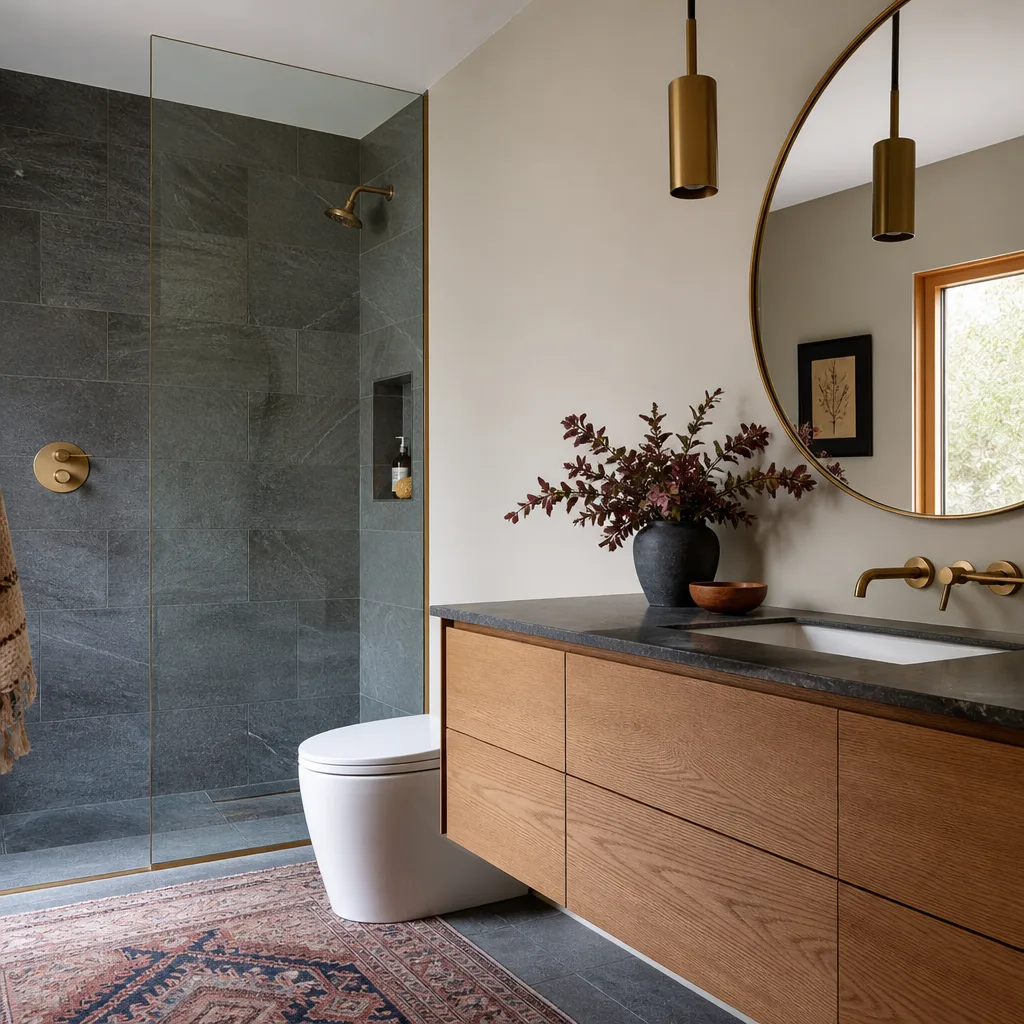
An ADU in Los Angeles is a six-figure decision, and the number that matters isn’t the one in a national article or a contractor’s verbal estimate. It’s the written price that accounts for your sewer lateral, your electrical panel, your slope, your finishes, and your permits. In a city where most ADU budgets inflate 15 – 25% between first conversation and final invoice, the most valuable thing a contractor can give you is a fixed number in writing and a crew you can verify at the door. Sutton ADU Builders has been doing both since 2006, through the Threshold Standard: a written price before work begins, a 365-Day Done Right Promise on completed work, and every technician background-checked, identity-verified, and photo-badged before they ever step onto your property. Call (472) 248-8213 to schedule your free estimate.
Written by Miles Hartwell, Owner at Sutton ADU Builders, serving Los Angeles since 2006.