Last updated October 9, 2026
The Complete ADU Builders Guide for Los Angeles Homeowners
Since 2017, California has passed more than a dozen pieces of ADU legislation. The setback rules, owner-occupancy requirements, and utility connection fees that applied when your neighbor built their ADU may have no bearing on what applies to you today. In Los Angeles, where the Department of Building and Safety issues thousands of ADU permits annually, the gap between outdated advice and current code is wider than most homeowners realize. This guide closes that gap. You’ll learn exactly how Los Angeles zoning works for ADUs in 2025, what a realistic budget looks like line by line, and how to vet a builder so thoroughly that opening your door feels like a formality, not a risk.
Quick Answer
Building an ADU in Los Angeles in 2025 means working within California’s by-right framework, which removes most discretionary review if your project meets state-mandated size, height, and setback limits. A realistic budget for a detached ADU in Los Angeles runs $250,000 to $420,000 all-in, including soft costs that many contractor quotes omit. You can build up to 1,000 square feet on most single-family lots with an 800-square-foot or 16-foot height limit depending on your lot size, and the approval timeline runs 3 to 18 months depending on whether your property triggers additional review.
Table of Contents
- Current Los Angeles ADU Rules: What Actually Applies in 2025
- How to Read Your LA Zoning Map Before Calling a Contractor
- What ‘By-Right’ Approval Means and How to Qualify
- The Real Cost Breakdown: Soft Costs Contractors Leave Out
- How to Evaluate an ADU Builder in Los Angeles
- Prefab ADUs: Abodu, Cover, Dvele, and Mighty Buildings Explained
- The Los Angeles ADU Timeline: From First Call to Certificate of Occupancy
- Common Mistakes to Avoid
- When to Call a Professional
- Frequently Asked Questions
- The Bottom Line
Current Los Angeles ADU Rules: What Actually Applies in 2025
Los Angeles ADU regulations are a layered document. California state law sets the floor. The City of Los Angeles adds local refinements. And your specific lot, whether it’s in Sherman Oaks, Mar Vista, or El Sereno, determines what you can actually build. Here’s what’s true today.
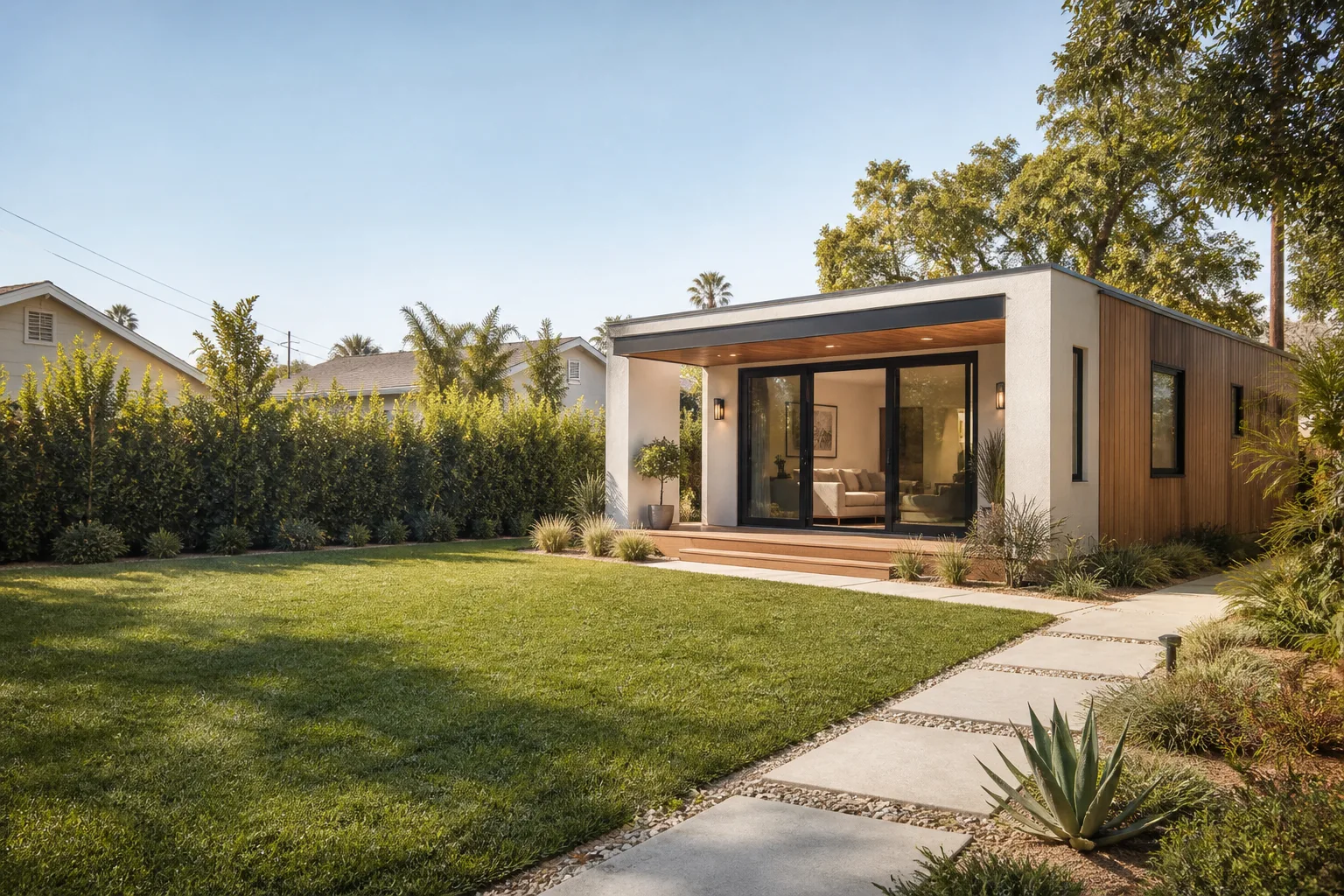
On a single-family lot in Los Angeles, you can build a detached ADU up to 1,000 square feet, with a maximum height of 16 feet. If your lot is larger than half an acre, that height allowance rises to 18 feet. The side and rear setbacks for a new detached structure are 4 feet. An attached ADU, meaning one that shares a wall with your main house, can be up to 50 percent of the existing home’s square footage or 1,000 square feet, whichever is less. Converting a garage or accessory structure? The 4-foot setback requirement disappears entirely, because the footprint already exists.
For lots zoned multi-family, the rules shift. You can add up to two detached ADUs on a multi-family property. Conversion of existing non-livable space, like a storage room or carport, counts separately from those two detached units, so a creative homeowner can sometimes add three units to a single multi-family lot. Most Los Angeles homeowners in single-family zones won’t face this complexity, but if you own a duplex or small apartment building, this changes your math significantly.
Height, lot coverage, and parking are the three areas where outdated online guides most often lead homeowners astray. Since 2020, Los Angeles has exempted ADUs from minimum parking requirements if the property is within half a mile of a public transit stop or in a historic district. That’s a narrow exemption, but it applies to a surprising number of LA neighborhoods. Also worth knowing: you cannot be forced to add parking if you’re converting a garage, and ADU square footage does not count against your lot’s maximum floor area ratio. We’ve worked with homeowners across Los Angeles who were told by neighbors, or by contractors working from pre-2020 rulebooks, that their project was dead on arrival. It wasn’t. The rules had simply moved.
How to Read Your LA Zoning Map Before Calling a Contractor
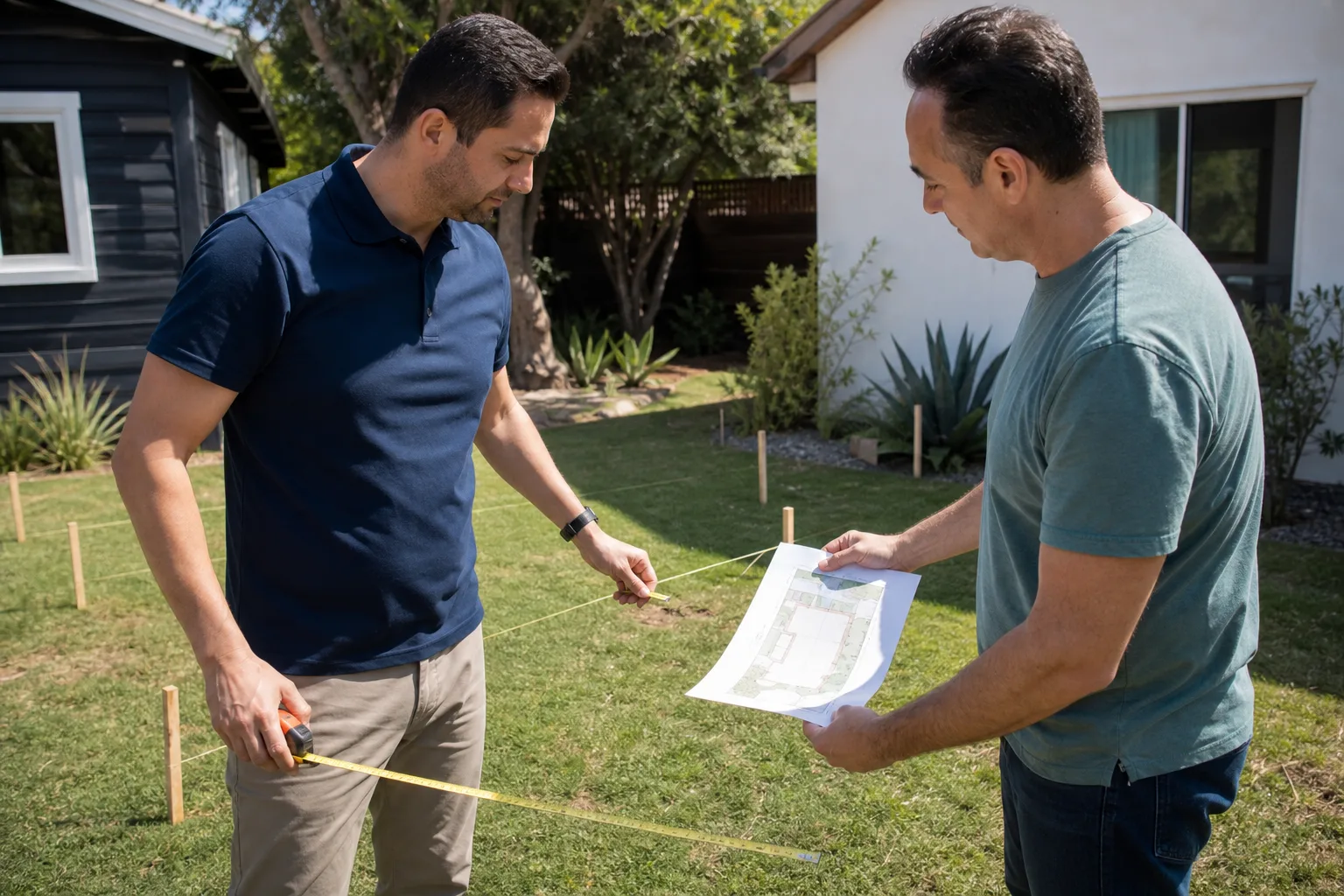
Before you talk to any builder, learn your property’s zoning designation. This is a 10-minute task that saves you weeks of confusion and makes you a sharper negotiator when quotes arrive. Los Angeles uses a zoning code like R1, R2, RD1.5, or LAR2. The letter tells you the general use: R stands for residential, RD for residential duplex, and so on. The number indicates density and lot size expectations.
Here’s how to look it up:
- Go to the Los Angeles Department of City Planning’s Zone Information and Map Access System, known as ZIMAS.
- Enter your address. Your zone designation appears on the left panel.
- Click the “Planning” tab and look for “ADU” or “Accessory Dwelling Unit” under the Zoning Information heading.
- Confirm your lot dimensions, because ADU height limits change at the half-acre threshold.
- Check the “Hillside Area” designation. Hillside lots in Los Angeles face stricter grading and foundation requirements that can add $30,000 to $80,000 to your project.
Understanding your zone does more than tell you what you can build. It tells you which exemptions you qualify for. In Los Angeles, single-family residential zones in the flatlands of the San Fernando Valley, the Westside, and South LA generally follow the state-mandated ADU allowances we covered above. Hillside zones, coastal zones, and neighborhoods with historic overlay designations add layers of review that change your timeline and budget. If ZIMAS shows a Historic Preservation Overlay Zone, or HPOZ, plan for additional design review that can stretch approvals by 4 to 6 months. No builder can make an HPOZ disappear, but experienced ADU Builders services will know which HPOZ boards are collaborative and which demand revisions.
We advise every Los Angeles homeowner to pull their zoning designation and lot dimensions before the first phone call. It’s the difference between asking a builder “what can I do?” and telling a builder “here’s what my lot allows.” The second conversation gets you an honest number faster.
What ‘By-Right’ Approval Means and How to Qualify
By-right approval is the single most valuable concept in Los Angeles ADU construction, and it’s the term most generic guides gloss over. When a project qualifies as by-right, the city must approve it if it meets the stated requirements. No public hearing. No discretionary judgment from a planning commissioner who may not like your design. No appeal window where a neighbor can stall you for another six months. You submit, the city verifies compliance, and the permit issues.
To qualify for by-right approval on a single-family lot in Los Angeles under the 2024-2025 rules:
- Keep your detached ADU at or under 1,000 square feet.
- Keep the structure at or under 16 feet in height, measured from the existing grade to the top plate.
- Maintain at least 4-foot side and rear setbacks unless converting an existing structure.
- Avoid triggering fire sprinkler requirements where possible; since 2020, ADUs do not require sprinklers if the primary residence doesn’t have them.
- Stay out of any HPOZ or Coastal Zone unless you’re prepared for the corresponding review layers.
Here’s the thing most homeowners don’t hear: by-right approval doesn’t mean no one at the city will push back. Los Angeles plan checkers sometimes issue corrections that exceed state law. A builder who has processed dozens of Los Angeles ADU permits knows which corrections to accept and which to challenge with a citation to the relevant state statute. That’s the difference between a 4-month approval and a 10-month approval. We’ve seen identical ADU plans take wildly different approval paths depending on who was handling the correspondence. Experience matters in ways that don’t show up on a quote.
One more detail that belongs in this section: a lot of Los Angeles homeowners worry that an ADU will force them into a full re-assessment of their property taxes. It won’t. Under Proposition 13, the ADU addition triggers a reassessment only of the new square footage value, not the entire property. The tax increase is real, but it’s incremental, and a good builder can estimate it before you commit.
The Real Cost Breakdown: Soft Costs Contractors Leave Out
Here’s the number nobody puts on the first page of their website. In Los Angeles, a detached ADU of 600 to 800 square feet built to code with a kitchen and bathroom will run you $250,000 to $420,000 all-in. Not $150,000. That $150,000 headline you’ve seen on prefab marketing pages is the factory cost of the structure before site work, permits, and utility connections. Los Angeles adds layers, and honest builders include them.
Here’s a typical line-item breakdown for a 750-square-foot detached ADU in a flatland Los Angeles neighborhood:
- Design and structural engineering: $12,000 to $25,000. This includes architectural drawings, structural calculations, and Title 24 energy compliance.
- City of Los Angeles permit fees: $8,000 to $18,000 depending on valuation and school district fees.
- Site preparation and foundation: $30,000 to $60,000. This includes excavation, grading, concrete or pier and beam foundations, and any retaining walls required by slope.
- Utility connections: $15,000 to $40,000. LADWP power drops, gas line extensions, sewer lateral connections, and water meter upgrades if needed. A new sewer lateral in Los Angeles can cost $10,000 alone, and many older homes have laterals that fail inspection.
- Structure and finish work: $120,000 to $220,000 for a stick-built unit. This is framing, roofing, drywall, windows, flooring, cabinetry, appliances, and paint. Prefab units from companies like Abodu or Cover fall in a similar range but shift cost from labor to the factory floor.
- Landscaping and hardscape restoration: $5,000 to $15,000. Construction damages yards. The city requires drainage plans in many cases. Budget for it.
- Contingency: $20,000 to $40,000. Los Angeles soil conditions, termite discoveries, and plan check corrections are real variables. Honest builders tell you this up front.
What we’ve just shown you is the all-in number that experienced Los Angeles ADU builders carry in their heads but rarely put in writing. The written price we deliver before any work begins includes every line item above. No exclusions hiding in the fine print. No “site work to be determined.” You’ll find our full breakdown at ADU Builders in Los Angeles.
How to Evaluate an ADU Builder in Los Angeles
Choosing a builder in Los Angeles is harder than in most markets, which is why our The Complete Home Addition Contractor Guide for Los Angeles Homeowners recommends checking whether the boom since 2017 has drawn contractors from adjacent trades who’ve never pulled an ADU permit on their own. A general contractor who spent 15 years remodeling kitchens does not automatically understand Los Angeles ADU setbacks, HPOZ reviews, or LADWP utility coordination. You need to see specific proof.
Here’s our checklist for evaluating any Los Angeles ADU builder:
- Permit history you can verify. Ask for the addresses of three completed ADU projects in Los Angeles. Then verify permits on the city’s Building and Safety portal. If they hesitate, move on.
- Written pricing before work starts. Not an estimate. A written price. The difference matters. An estimate is a guess. A written price is a commitment. If a builder won’t put a number in writing before you sign, expect that number to change.
- A named warranty term. Ours is the 365-Day Done Right Promise: if the work isn’t right within a full year, Sutton makes it right. Ask other builders to put their warranty term in writing. Many won’t.
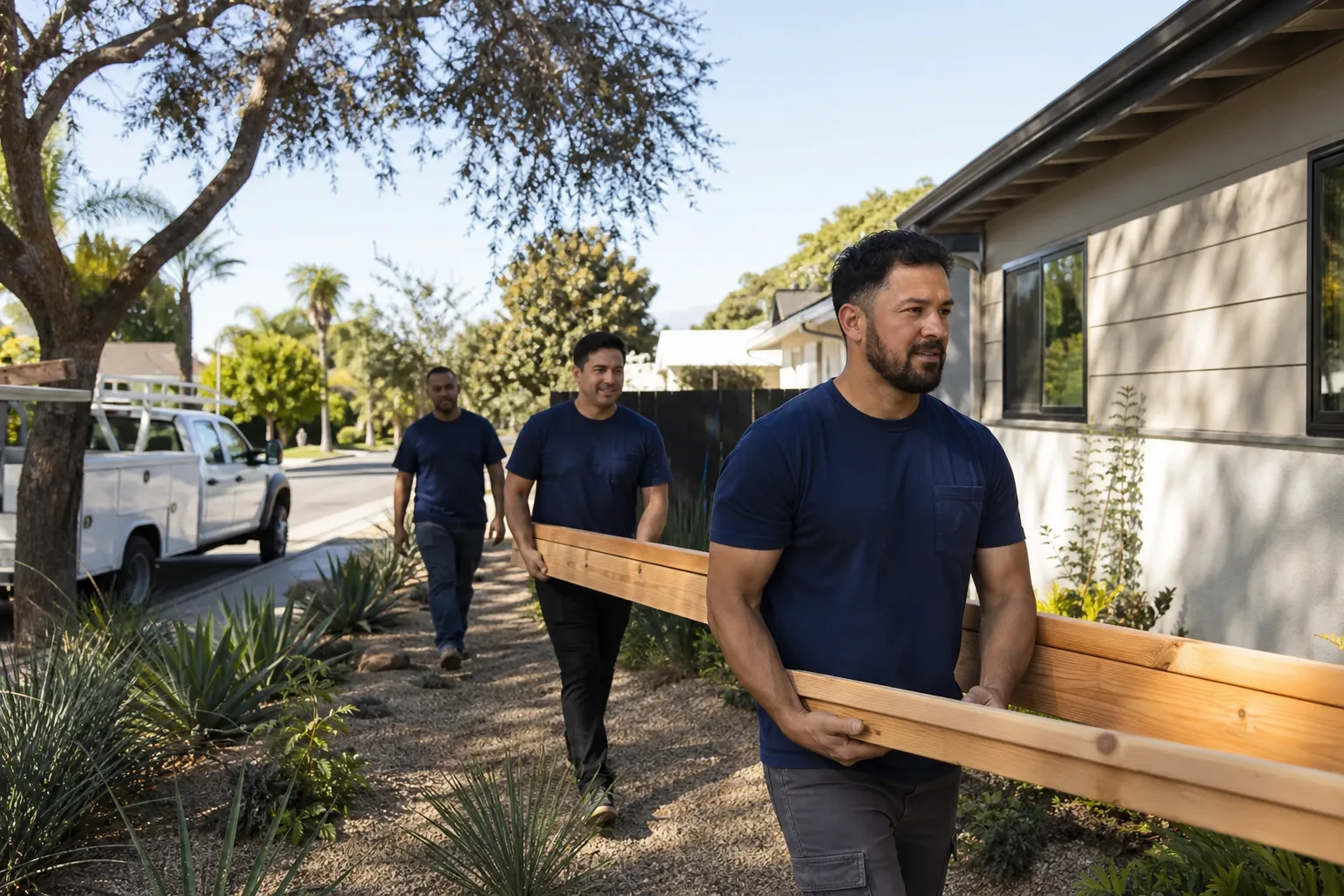
- Crew vetting you can see. You’re not just hiring a builder. You’re letting people onto your property, often while you’re at work or your kids are home from school. Ask who will be on site, and whether that answer comes with a name and a photo before the first visit. Under the Threshold Standard, every technician who works on our Los Angeles projects is background-checked, identity-verified, uniformed, and photo-badged. Their name and photo are sent to you before they arrive. The person at your door matches the photo. Every time.
- Fluency with prefab brand realities. A builder who only does stick-frame work can’t honestly compare your options with Abodu or Cover. A builder who only sells prefab can’t honestly tell you when stick-frame makes more sense on your lot. You want someone who works in both worlds.
Ask every builder the same five questions, in writing. Then compare answers. The ones who answer specifically, with numbers and timelines, are the ones you want on your property. The ones who answer vaguely are the ones who will test your patience for the next 12 months. You can read more about how we approach vetting at Home Addition Contractor in Los Angeles.
Prefab ADUs: Abodu, Cover, Dvele, and Mighty Buildings Explained
Los Angeles has become a national laboratory for prefab ADUs, and that’s a good thing. Factory-built units solve site problems that plague stick-frame construction: unpredictable weather delays, noisy months of on-site work, and quality control that depends on whichever framing crew showed up that Tuesday. A prefab unit is built indoors, inspected in the factory, and delivered to your lot on a truck. The on-site phase shrinks from months to weeks.
Here’s our honest read on the brands Los Angeles homeowners ask us about most often:
- Abodu produces a tight range of ADU models with a streamlined delivery process. They’re a good fit for straightforward lots with easy crane access and minimal grading. Budget $280,000 to $400,000 all-in for a two-bedroom model on a typical Los Angeles lot.
- Cover builds precision-engineered panels in their Los Angeles-area factory, which shortens lead times for local homeowners. Their approach favors small lots where a crane can’t maneuver a full modular box. Expect $300,000 to $450,000 depending on finishes.
- Dvele positions themselves at the high end, with a focus on health and energy performance that exceeds California’s already strict Title 24 standards. Their units start around $400,000 and climb quickly with customization.
- Mighty Buildings uses 3D-printed composite panels, which is genuinely new technology. The panel material is fire-resistant and dimensionally precise. Costs are competitive for the material story you get: figure $250,000 to $380,000 all-in on a flat Los Angeles lot.
Prefab isn’t automatically cheaper, and it isn’t automatically faster. What it does reliably in Los Angeles is reduce the number of on-site days when strangers are walking through your yard. For homeowners who are home alone, parents with young children, or older adults who’d rather not host a construction crew for six months, that’s a real advantage. We work with these product lines when they fit the lot and the budget, and we’ll tell you when they don’t. For a deeper look at how we build in the city, visit our Sutton ADU Builders home page.
The Los Angeles ADU Timeline: From First Call to Certificate of Occupancy
Every homeowner asks how long this will take. The honest answer: 12 to 24 months from first call to move-in day, with the wide range driven by design revisions, permitting, utility coordination, and the builder’s schedule. Here’s a realistic Los Angeles timeline with no sugarcoating.
- Design and feasibility (1 to 3 months): This includes zoning verification, site measurements, architectural drawings, and engineering. If you’re in an HPOZ, add time for design review.
- Plan check and permitting (3 to 8 months): The City of Los Angeles has reduced average ADU permit turnaround in recent years, but plan check corrections still add weeks. Utility approvals from LADWP run on a separate track.
- Site preparation (2 to 4 weeks): Demolition of an existing garage, grading, and foundation work. This is the noisiest phase, and the one where your neighbors will notice the project.
- Vertical construction (3 to 6 months for stick-frame, 1 to 3 months for prefab): This is building the structure itself, running plumbing and electrical, installing drywall and finishes.
- Inspections and Certificate of Occupancy (2 to 6 weeks): Multiple inspections from Building and Safety, plus LADWP sign-offs. The final inspection is the one that matters. Then you get your certificate and the unit is legal to rent.
Prefab compresses phase 4 dramatically, but phases 1 and 2 don’t move as much as homeowners expect. The permitting bottleneck in Los Angeles is not the building; it’s the paperwork. A builder with deep experience in Los Angeles ADU permitting keeps your project moving during phases 1 and 2 by anticipating corrections before they arrive. That’s one of the quiet ways experience shows up on a timeline.
Common Mistakes to Avoid
- Budgeting from the factory price. Prefab companies quote structure-only prices. Your site work, permits, utility connections, and foundation in Los Angeles can add $100,000 or more. Always ask for the all-in written price.
- Trusting a pre-2020 ADU guide. Setback exemptions, parking rules, and owner-occupancy requirements have all changed. If the guide doesn’t cite 2024-2025 Los Angeles building code, it’s stale.
- Ignoring your zoning designation. Building an ADU on an R1 lot in the Valley is not the same as building in a Hillside zone or an HPOZ. Know your zone before your first builder conversation.
- Underestimating utility connection costs. Sewer laterals, LADWP power drops, and gas line extensions drive five-figure surprises in Los Angeles. Make sure your written price includes them.
- Skipping the builder’s permit history check. A contractor without three verifiable Los Angeles ADU permits is learning on your property. You’re not paying tuition.
- Assuming all crews are safe to invite onto your property. Ask whether the builder background-checks and identity-verifies every worker, and whether you’ll receive names and photos before arrival. If the answer is no, consider what that means for your household.
- Signing a contract without a named warranty term. A verbal “we’ll take care of you” is not a warranty. Get the terms in writing, with the time period stated plainly.
When to Call a Professional
Any ADU project in Los Angeles requires a general contractor, and most require an architect or designer plus a structural engineer. The question is when to make the first call. We recommend doing it before you’ve done too much independent research. A good builder will verify your zoning, flag issues with your lot that aren’t visible on ZIMAS, and give you a realistic all-in price range in the first conversation. That data changes your planning decisions. Sutton ADU Builders offers free estimates in Los Angeles. Call (472) 248-8213 to get a written price range for your lot, your zoning designation, and your goals. Our room addition work is detailed at Room Addition Contractor in Los Angeles if you’re considering an attached expansion instead of a detached unit.
Frequently Asked Questions
A realistic all-in budget for a detached ADU in Los Angeles runs $250,000 to $420,000, including design, engineering, permits, utility connections, foundation, construction, and contingency. Prefab structures from companies like Abodu or Mighty Buildings fall in a similar range once site work is included. Call (472) 248-8213 for a written price on your specific lot.
Yes. California eliminated owner-occupancy requirements for ADUs in 2020, meaning you can build an ADU without living on the property at all. Los Angeles follows state law here, so renters are allowed as long as the unit meets all code requirements and receives its Certificate of Occupancy.
Plan check and permitting in Los Angeles typically takes 3 to 8 months for a standard by-right ADU on a flatland lot. HPOZ properties and hillside lots extend the timeline by several additional months. The total project from design to move-in generally lands between 12 and 24 months.
Los Angeles waives ADU parking requirements if your property is within half a mile of public transit or in a historic district. Converting an existing garage also eliminates any parking requirement, because state law protects the existing footprint from additional parking mandates.
Yes, but incrementally. Under Proposition 13 rules, the ADU addition triggers reassessment of the new square footage value only, not the entire property’s market value. Your existing base year value stays intact. A builder can estimate the annual tax increase before you commit.
Prefab works well on flat lots with crane access and straightforward utility connections, and it dramatically reduces on-site construction days. Stick-frame works better on hillside lots, constrained access points, or when the design requires custom dimensions. An honest builder will tell you which one fits your lot rather than selling you whichever one they happen to build.
The Bottom Line
Los Angeles is the most ADU-friendly major city in California right now, and the rules have only gotten more permissive since 2017. The by-right framework, the setback reductions, and the elimination of owner-occupancy requirements mean most single-family homeowners in Los Angeles can build a rentable unit without discretionary review. What separates a successful build from an 18-month headache is the same thing that matters in every construction project: accurate information before you start, and a builder you can trust at your door. Get your zone designation, demand a written all-in price, verify permit history, and ask what happens if something isn’t right a year from now. The answer to that last question tells you more than any marketing page or more guides & resources ever will.
Written by Miles Hartwell, Owner at Sutton ADU Builders, serving Los Angeles since 2006.