Last updated October 9, 2026
Home Addition Contractor Warning Signs Every Homeowner Should Know
The Contractors State License Board logged more than 18,000 complaints against California contractors in a single recent year. Reading through those complaints, one pattern appears again and again: the homeowner noticed something odd early on, talked themselves out of it, and paid for that decision months later. In Los Angeles, where Home Addition Contractor services routinely cost between $180,000 and $400,000, the stakes are higher than in almost any other market in the country. This guide walks through the warning signs that show up at the first meeting, in the estimate, and at the front door, and explains what each one actually means for your money, your schedule, and your family’s safety.
Quick Answer
The most reliable warning signs that a home addition contractor will cause problems are these: they ask for more than 10% down or $1,000 before signing a contract in California, they offer to pull permits as “owner-builder” on your behalf, they cannot tell you who exactly will be standing in your backyard, and their estimate is vague enough that the final price could double without technically violating the contract. A contractor who clears these four honest signals on the first visit, with a written price in hand, is one you can proceed with carefully.
Table of Contents
- The Vague Estimate: What ‘We’ll Handle It’ Actually Costs You
- The Owner-Builder Permit Offer: A Favor That Isn’t
- Payment Schedules That Signal an Undercapitalized Contractor
- When You Don’t Know Who’s Coming to Your Door
- How to Verify a CSLB License in Under Two Minutes
- License Classifications: What a Contractor Is Actually Allowed to Build
- The Bid That’s Too Good to Be True
- Demanding a Written Price That Sticks
The Vague Estimate: What ‘We’ll Handle It’ Actually Costs You
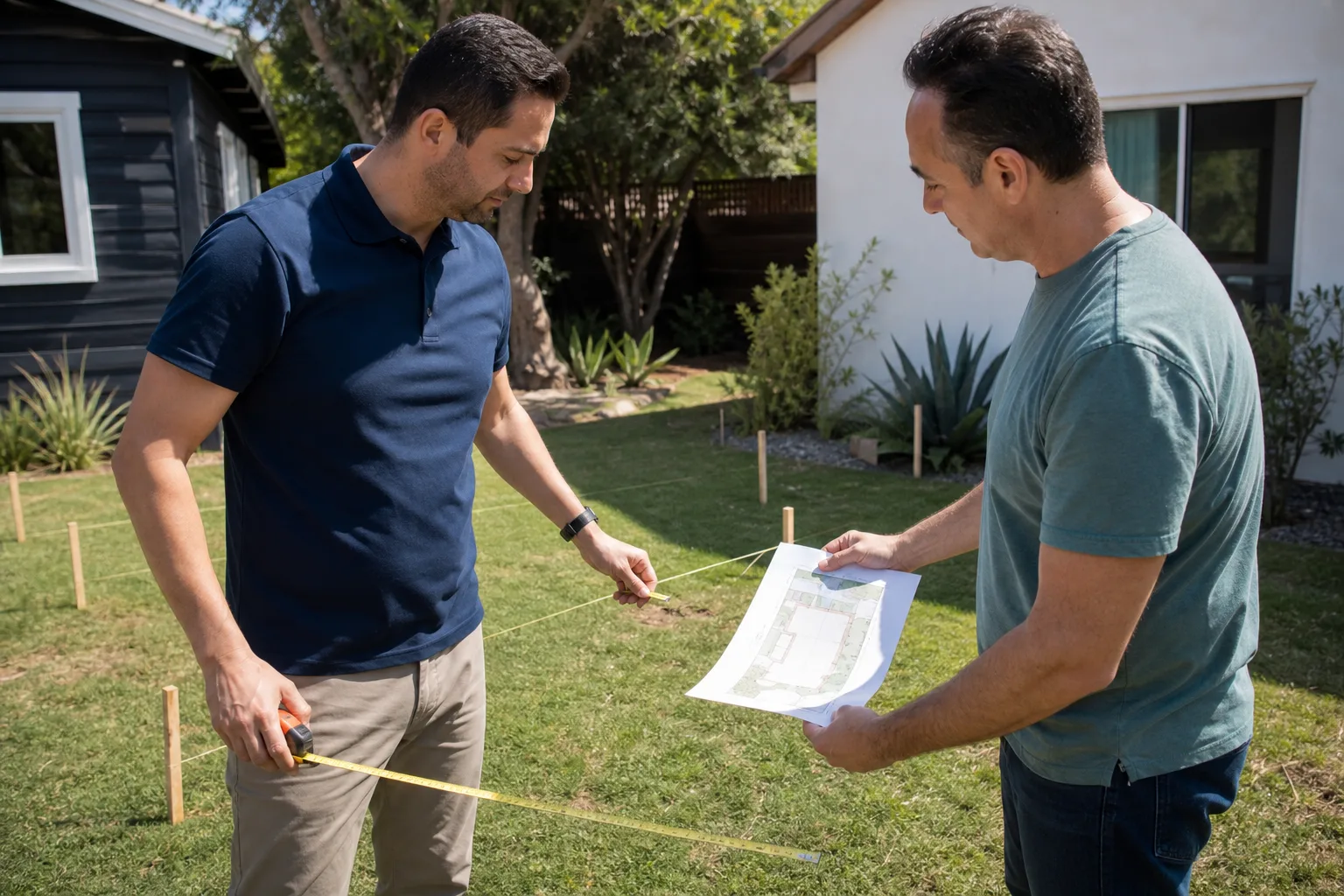
You ask for a breakdown. You get a paragraph. “Full ADU per plan, including all fixtures, finishes, and site work: $265,000.” No line items, no allowances for tile or flooring, no excavation assumptions. When you push for detail, the contractor says, “We’ll handle it.” Here’s what that sentence means in practice: you are now financing whatever the contractor decides “it” includes, and you have no written basis to dispute it later. In Los Angeles, where soil conditions vary dramatically from neighborhood to neighborhood, a vague site-work allowance alone can swing a project by $20,000 to $50,000. A hillside lot in Echo Park behaves nothing like flat fill in the Valley. If the estimate does not name your specific soil condition, your specific setback requirements, and your specific utility connection distances, the number is not a price. For context on realistic schedules, see our guide on How Long Does ADU Builders Take? Timelines and What to Expect. It’s a guess, and you’ll be the one covering the gap. We’ve watched homeowners sit across a table while a contractor waves a hand and says the word “contingency” like it’s a comfort word. It isn’t. It’s a blank check written by you. Insist on a written, line-item estimate before any work begins. If a contractor refuses, that is your answer about how the entire project will go.
The Owner-Builder Permit Offer: A Favor That Isn’t
At some point during the bidding process, a contractor may lean in and say: “We can pull the permits as owner-builder. It’s faster, and it’ll save you money.” What he’s actually telling you is that he wants to do work under your legal name, with your liability, while he operates outside the responsibility structure that exists to protect you. Under California law, an owner-builder is someone who is genuinely building for themselves, or who has a close, ongoing relationship with the people doing the work: family, a tenant, someone they employ directly. A contractor who suggests this arrangement is asking you to stand in as the responsible party for code violations, worker injuries, and construction defects. If a worker falls off your new second-story addition and the contractor has no workers’ compensation coverage on the job, that worker’s claim lands on you. If the project fails a Los Angeles Department of Building and Safety inspection, it’s your name on the permit, your correction notice, your liability. A licensed contractor who pulls permits under his own license number carries his own insurance, his own bond, and his own professional risk. When someone offers to shift that risk onto you and calls it a favor, the savings he’s selling are pennies against the exposure he’s handing you. This is one of the few warning signs that is always, without exception, a reason to end the conversation.
Payment Schedules That Signal an Undercapitalized Contractor
California caps the down payment a contractor can legally collect at 10% of the project total or $1,000, whichever is less. That’s not a courtesy. It’s a statute, written specifically to keep contractors from using homeowner deposits to fund their operations. Because here’s the uncomfortable reality: an undercapitalized contractor is not stealing your deposit to buy materials. He’s using it to pay the subs from his last job, or his own rent, or the truck payment he can’t make. Then your project stalls while he chases the next deposit to keep things moving. You can see this coming in the payment schedule. A deposit of 30 or 40%, even if the contractor calls it a “mobilization fee,” is illegal and telltale. Progress payments tied to vague milestones, like “35% upon completion of phase one,” with no definition of phase one, are another signal. Legitimate schedules name specific work: foundation poured, framing passed inspection, rough mechanical complete. They release money only for work that exists and can be verified. In Los Angeles, where a detached ADU typically takes four to nine months, a contractor who has collected 60% of the contract by the end of month two has very little incentive to finish before his next job starts. Demand a schedule tied to completed, inspected milestones. And know the 10% rule cold before you sign anything.
When You Don’t Know Who’s Coming to Your Door
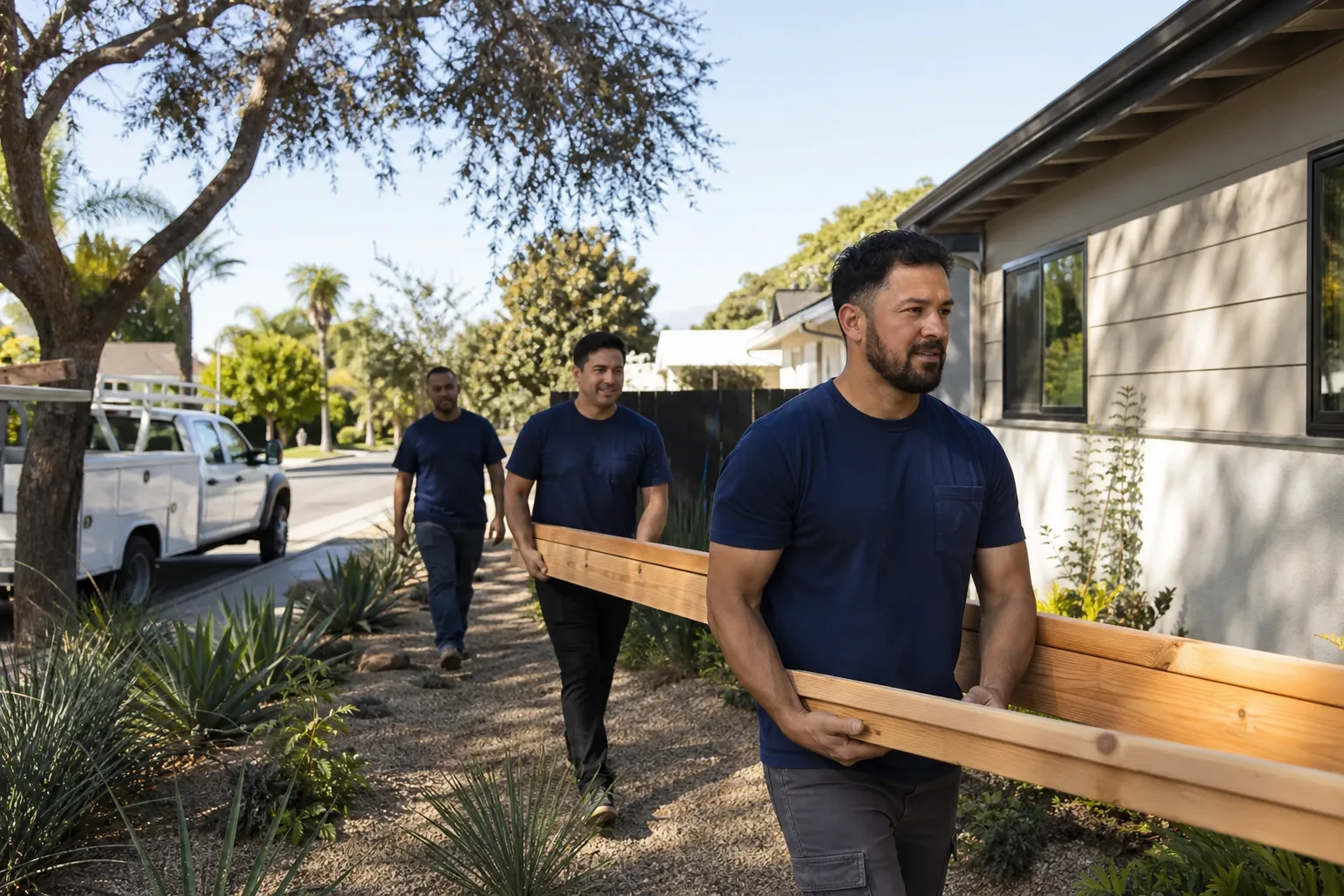
Ask a contractor a simple question: “Who exactly will be at my house, and can you send me their names before they arrive?” Many will look at you like you’ve asked something unreasonable. That reaction is the warning sign. A home addition is not a quick service call. It is months of people you have never met walking through your property, using your bathroom, and knowing your family’s schedule. In Los Angeles especially, where many addition projects happen on properties shared with children or older parents, an unknown crew is not a minor inconvenience. It’s a practical safety problem. We hear this from homeowners constantly, and it’s why the Sutton ADU Builders home sets a hard rule: every technician is background-checked and identity-verified before they ever set foot on a job site. Their name and photo are sent to the homeowner before arrival. They arrive in a marked uniform and show a photo ID badge at the door, every single time. That standard has a name: the Threshold Standard. If a contractor cannot tell you the names of the people coming to your property, or seems annoyed that you asked, what you’re hearing is that they haven’t thought about who those people are either. And if they haven’t thought about it, they haven’t vetted them. And if they haven’t vetted them, you’re opening your gate to strangers with no chain of accountability. You wouldn’t hand a house key to someone whose name you don’t know. Hiring a contractor is handing over the whole house, for months. The standard should be higher, not lower.
How to Verify a CSLB License in Under Two Minutes
Before you sign anything, before you pay anything, and ideally before you let anyone onto your property for an estimate, verify the contractor’s license. The State of California makes this genuinely easy, and a contractor who hesitates when you ask for the license number is giving you the fastest possible answer. Here’s the process:
- Go to cslb.ca.gov and click “Check a License.”
- Enter the six-digit license number the contractor gave you. If he hasn’t given you one yet, search by business name or by the owner’s name.
- Confirm that the license is active, not suspended, expired, or revoked.
- Confirm the business name on the license matches the name on the contract you’re signing. Not similar. Exact.
- Look at the “Workers’ Comp” field. It should show coverage in effect. If it says “exempt” and the contractor has any employees at all, that’s a red flag you’ll want to press on.
- Check the bond amount and the insurance carrier. Call the carrier if you want certainty. They’ll confirm coverage in one phone call.
This takes two minutes. In Los Angeles, where the Department of Building and Safety is particular about who files what, an active license in good standing is the bare minimum, not the finish line. A contractor who is licensed under a name that differs from the one on his proposal is someone you should not hire under any circumstances. That mismatch often means the contractor is operating under someone else’s license, a practice called “renting a license,” which is illegal and leaves you with no recourse against the actual company doing the work. Two minutes. That’s the whole cost of knowing you’re hiring a real, accountable business.
License Classifications: What a Contractor Is Actually Allowed to Build
The CSLB does not issue a generic “contractor license.” It issues classifications, and each classification defines exactly what kind of work the holder is legally allowed to perform. A contractor holding a “B – General Building” classification can take on framing, foundations, and additions, and can subcontract the specialty trades. A “C-5” is a framing and rough carpentry specialty license. A “C-6” is cabinet and millwork. A “C-36” is plumbing. A “C-10” is electrical. None of the specialty licenses authorize the holder to act as the general contractor on a whole addition. If you’re building a detached ADU in Los Angeles, you need a B license holder at the head of the job, with C-license specialty subs doing the plumbing, electrical, and HVAC work. A contractor who holds only a C license and offers to run your whole project is offering to operate outside his legal scope. That means his insurance will not cover the work, his contract is not enforceable in the same way, and any permit filed under his license number is invalid from the start. This is the kind of detail that sounds like paperwork and turns out to be the entire ballgame when something goes wrong. Ask for the license number, then note the classification, then confirm that the classification matches the job. It’s a two-minute check that eliminates an entire category of bad outcomes.
The Bid That’s Too Good to Be True
Everyone wants a good price. But an ADU or room addition bid that comes in dramatically below every other estimate is not a deal. It’s a data point telling you something is being left out. In Los Angeles, where labor costs are high, materials have specific seismic requirements, and the Department of Building and Safety plan check process is not fast, a detached ADU from a licensed, insured contractor is going to land in a real, knowable range. A garage conversion might run $120,000 to $220,000. A new detached ADU from a prefab line like Abodu or Cover might start in the mid-$200,000s and climb with site work. A custom build can run past $400,000. When someone bids a new detached ADU at $140,000 all-in, what you’re actually looking at is one of three things: he hasn’t included the site work, he hasn’t included the utility connections, or he’s planning to make up the difference with change orders once you’re too far in to walk away. The change order play is the oldest one in the book, and in Los Angeles it works especially well because the building department is genuinely unpredictable. The contractor knows that. He knows there will be a foundation over-excavation requirement, or a retaining wall condition, or a title 24 energy correction. He knows these things will appear, and he knows you don’t have the expertise to see them coming. So he bids low, wins the job, and then hands you a series of “unforeseen conditions” that the contract technically allows him to bill for. The number you end up paying is not lower than the other bids. It’s usually higher, and you found out after your walls were opened up. A real contractor tells you what’s included. A written, fixed price with no silent scope creep is not a premium feature of a bid. It is the bid.
Demanding a Written Price That Sticks
Here’s the simplest way to protect yourself from almost every warning sign in this guide, in one move: require a written price before any work begins. Not a verbal estimate. Not a number scrawled on the back of a business card. A written document that names the scope of work, the materials, the allowances, the timeline, and the total price, with a clause stating that any change to that price must be approved by you in writing before the work is performed. That last part matters more than the number. In our experience with Los Angeles additions, the projects that go badly are almost always projects where the homeowner signed something that allowed the contractor to bill for whatever happened next. The projects that go well have a fixed price and a simple rule: no change orders without a written approval. At ADU Builders in Los Angeles, that’s how every job is structured. The written price is delivered before any work starts, and the 365-Day Done Right Promise covers defects in workmanship for one full calendar year from completion. If something isn’t right within that year, we return and make it right. No haggling, no fee. That guarantee is written into the contract, not promised over a handshake. A contractor who won’t put the price in writing, or who won’t stand behind the work for a defined period, is telling you something important. The question is whether you’re listening.
Common Mistakes to Avoid
- Signing before verifying the license. The two-minute CSLB check catches suspended licenses, mismatched business names, and missing workers’ comp coverage. Skipping it means discovering these problems after you’ve paid a deposit.
- Accepting an owner-builder permit arrangement. This transfers legal and financial liability for the entire project onto you, even for work you never touched. It is never a favor.
- Paying more than 10% down. California law caps the initial deposit at 10% or $1,000, whichever is less. Anything beyond that is both illegal and a sign the contractor is using your money to float his business.
- Letting “we’ll handle it” stand in for a line item. If the estimate doesn’t name your soil condition, setback requirements, and utility distances, the number on the page isn’t a price. It’s a placeholder.
- Hiring without knowing the crew. Months of strangers in your home without names, background checks, or accountability is a real risk to your family and property. Ask who’s coming and demand proof.
- Chasing the lowest bid. A Los Angeles ADU priced far under the market range is a change-order machine in disguise. The low number wins the job; the surprises win the contract.
- Skipping the written guarantee. If the contractor won’t put a workmanship warranty in writing with a defined term, you have no enforceable promise. A verbal “we stand behind our work” is not a guarantee.
When to Call a Professional
If you’re planning a home addition in Los Angeles and you’ve been collecting bids that feel more like warnings than plans, it’s time to talk to someone who will put things in writing. A professional should be able to tell you, before you commit, the name and background of every person who will show up, the exact price you’ll pay, and what happens if something isn’t done right. If you’re comparing prefab ADU lines like Abodu or Cover against a custom build, or weighing a Tuff Shed conversion against a detached unit, a contractor with real experience across those product lines can tell you honestly which path fits your lot and budget. Explore more guides & resources to prepare for your project. Sutton ADU Builders offers free estimates in Los Angeles, call (472) 248-8213. We’ll send a written price before any work begins, and you’ll know who’s coming to your door before they arrive.
Frequently Asked Questions
A garage conversion in Los Angeles typically runs $120,000 to $220,000, while a new detached ADU from a reputable builder usually lands between $250,000 and $400,000 with site work included. Structure type, soil conditions, and utility connection distances are the three biggest variables. Call (472) 248-8213 for a written, line-item estimate specific to your lot.
Yes. California law caps a contractor’s down payment at 10% of the project total or $1,000, whichever is less. Any contractor asking for more before work begins is breaking state law. Insist on a payment schedule tied to completed, inspected milestones instead.
A contractor who suggests an owner-builder permit is trying to move liability onto you while keeping the profits. Under that arrangement, the contractor’s insurance and license classification no longer protect you the same way, and you become legally responsible for the project. This is a hard stop, not a negotiation point.
Visit cslb.ca.gov and enter the contractor’s six-digit license number in the “Check a License” tool. Confirm the license is active, the business name matches the contract exactly, workers’ comp coverage is in effect, and the classification (typically “B – General Building” for a full addition) matches the scope of work. The whole process takes about two minutes.
The 365-Day Done Right Promise is a written guarantee covering defects in workmanship for one full calendar year from project completion. If something isn’t right within that year, the contractor returns and makes it right without haggling. It’s part of how Home Addition Contractor in Los Angeles projects are structured, and any contractor you’re seriously considering should offer something comparable in writing.
Only if the contract allows it, which is why the contract language matters more than the quote. A properly structured project has a fixed written price, and any change requires your signed approval before work proceeds. Vague allowance language and “unforeseen condition” clauses are how low bids become expensive builds. For a Room Addition Contractor in Los Angeles that locks the price in writing, call (472) 248-8213 for a free estimate.
The Bottom Line
The contractor who will cause you serious problems almost always announces himself at the first meeting. The signs are there: a vague estimate, an illegal down payment request, an owner-builder permit offer, a crew no one can name, a license that doesn’t match the business card. The homeowners in those 18,000 CSLB complaints talked themselves out of what they saw. You don’t have to. In Los Angeles, a home addition is a six-figure decision made over months, and the entire outcome hinges on what happens in that first conversation. A written price before work begins, a named and vetted crew, and a guarantee in writing: if a contractor can’t offer those three things on day one, thank him for his time and move on.
Written by Miles Hartwell, Owner at Sutton ADU Builders, serving Los Angeles since 2006.