Last updated October 9, 2026
How Long Does Home Addition Contractor Take? Timelines and What to Expect
Here’s the counterintuitive truth about home addition timelines in Los Angeles: the people swinging hammers are almost never the reason your project runs late. In our experience across two decades of builds, the single biggest schedule killer is the gap between “plans are drawn” and “permit is issued” – a stretch that can swallow three to six months without a single nail being driven. Most contractors quote you a build timeline that starts the moment their crew arrives and quietly omits this bureaucratic waiting room entirely. This guide walks you through what actually happens, phase by phase, so you can hold any home addition contractor to a schedule that reflects reality, not optimism.
Quick Answer
A home addition in Los Angeles typically takes 9 to 16 months from the day you sign a design agreement to the day you receive your final inspection sign-off. The construction phase itself usually runs 4 to 8 months, but LADBS plan check, permit issuance, utility coordination, and material lead times add 3 to 6 months of non-construction time that most contractors conveniently leave out of their first estimate. Prefab or panelized additions from companies like Abodu or Cover can compress the construction window to 3 to 5 months, but the permit timeline remains the same.
Table of Contents
- Phase One: Design and Drawings (4 to 10 Weeks)
- Phase Two: LADBS Plan Check and Permits (3 Weeks to 6 Months)
- Phase Three: Pre-Construction and Site Prep (2 to 6 Weeks)
- Phase Four: Framing Through Drywall (6 to 16 Weeks)
- Phase Five: Finishes, Inspections, and Sign-Off (4 to 10 Weeks)
- What a Legitimate Construction Schedule Looks Like
- Who Is Actually Late: Contractor, City, or Supply Chain?
- Prefab and Modular Timelines: What Actually Changes
Phase One: Design and Drawings (4 to 10 Weeks)
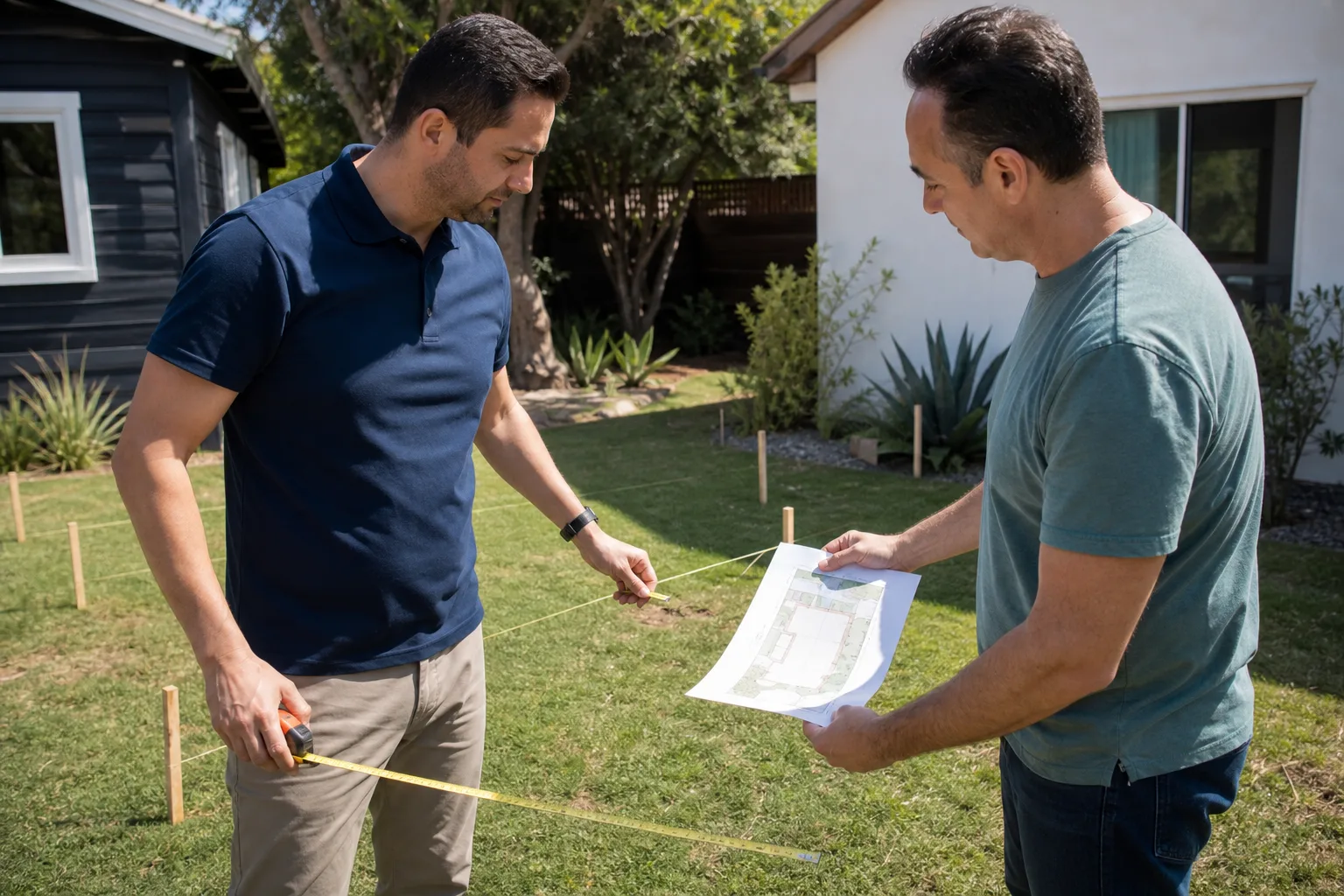
Before anyone can submit anything to the city, you need a set of drawings that LADBS will accept. This phase starts with a site survey to verify property lines, existing structure locations, and any easements or utility conflicts. A survey in Los Angeles typically takes 1 to 2 weeks to schedule and complete, and it costs $1,500 to $3,500 depending on lot size and the surveyor’s backlog.
From there, an architect or designer produces schematic drawings, then construction documents. If your addition is a straightforward room bump-out or garage conversion, expect 4 to 6 weeks of design time. A detached ADU with custom detailing or a second-story addition may run 8 to 10 weeks. The number of design revisions – and how quickly you respond to them – drives most of the variance.
One thing that speeds this up considerably: working with a design-build contractor who has templates for common Los Angeles addition types. We’ve seen the design phase cut nearly in half when the team already has LADBS-compliant base drawings for the exact project type, whether that’s a 400-square-foot garage conversion or a 1,000-square-foot detached ADU. The savings come from not redrawing the same standard details a city plan checker has already seen and approved dozens of times.
Phase Two: LADBS Plan Check and Permits (3 Weeks to 6 Months)
This is the phase nobody warns you about, and it’s where most Los Angeles home addition timelines go to die. LADBS plan check alone – before a single nail is driven – can take anywhere from three weeks to six months depending on project type, application completeness, and whether you know to request an over-the-counter review. Here’s how the different LADBS paths break down:
- Over-the-counter plan check: For simple, standard projects – think a small room addition with no structural changes to the existing roofline – you can sometimes get same-day or 1-week approval if your drawings are clean and complete. Not every project qualifies, and your designer needs to know which counter to visit.
- Regular plan check: Most additions land here. Expect 4 to 12 weeks for first-pass comments, then another 2 to 4 weeks for each resubmission cycle. A typical project goes through two to three cycles. Do the math: 3 to 5 months is common.
- Expedited plan check: LADBS offers expedited review for a fee – typically 2x to 3x the standard plan check fee – with turnaround in 2 to 4 weeks. The fee for a single-family addition often runs $3,000 to $8,000 beyond the standard cost. If your schedule matters more than the premium, this is one of the few LADBS levers you can actually pull.
Permit issuance after plan check approval adds another 1 to 3 weeks, assuming your contractor has submitted a complete application with structural calculations, Title 24 energy reports, and site plans. In our experience, incomplete applications account for more delay than any other single factor in Los Angeles. A contractor who’s been through LADBS a hundred times knows which drawings trigger which comments, and that knowledge is worth months.
Phase Three: Pre-Construction and Site Prep (2 to 6 Weeks)
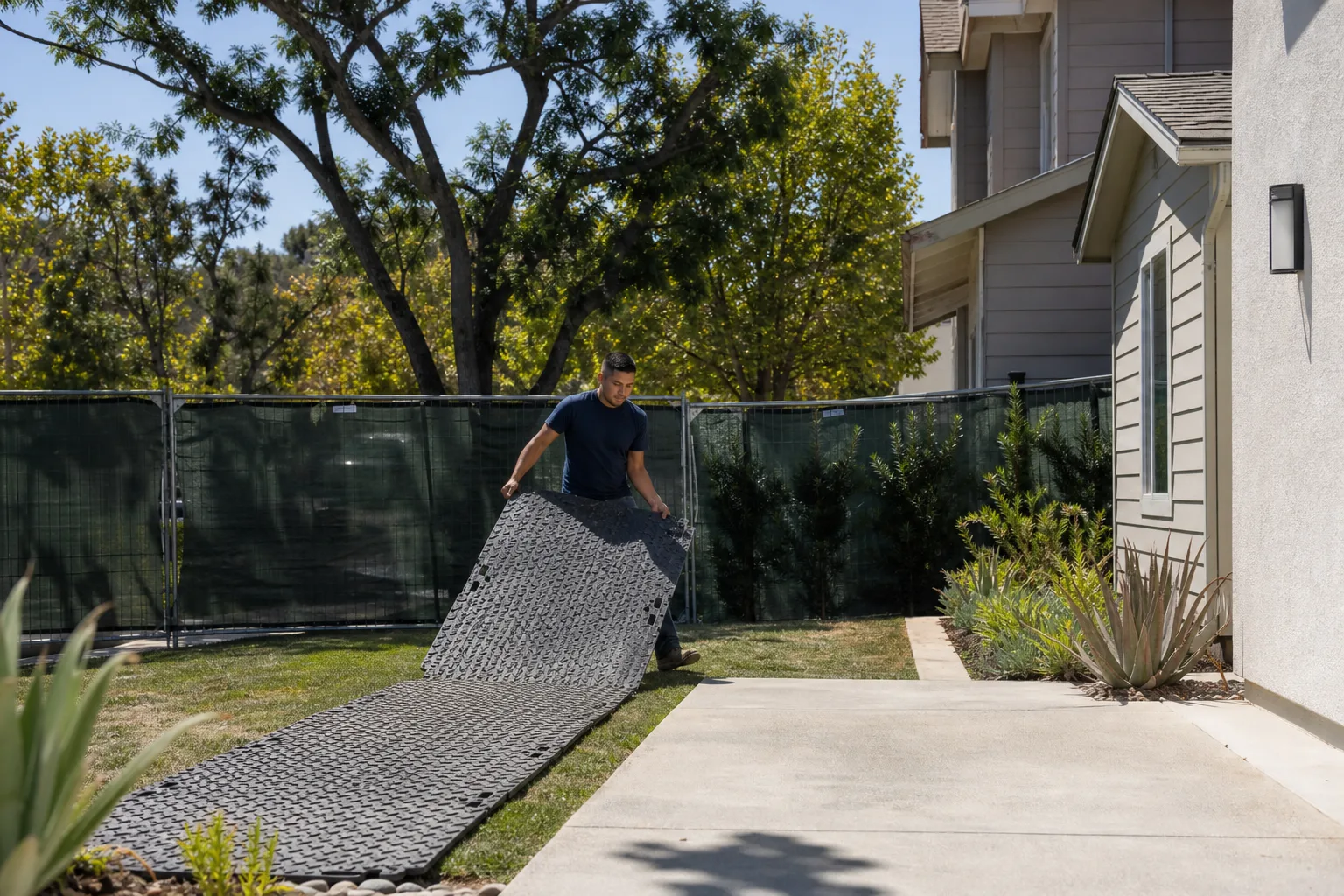
Once permits are in hand, the work before the work begins. This phase includes utility locates (calling 811 to mark underground lines), protective fencing, temporary power, tree protection if required, and any soft demolition. For a garage conversion, soft demo – stripping drywall, removing the garage door, capping plumbing – usually takes under a week. For a ground-up ADU, site prep includes excavation, foundation formwork, and underground utility trenches, which runs 2 to 4 weeks on a typical flat Los Angeles lot (learn how to hire the right ADU contractor).
Two things bite homeowners in this phase. First, if your lot has a hillside condition, a retaining wall requirement, or unpermitted prior work that surfaces during inspection, pre-construction can stretch well beyond the estimate. Second, contractor sequencing matters: a crew that starts site prep before all materials are ordered is a crew that’ll hit a wall at framing. The best-run projects in Los Angeles order windows, doors, and engineered lumber during the permit phase, not after.
Phase Four: Framing Through Drywall (6 to 16 Weeks)
This is the most visible phase and the one where progress feels fastest. Framing for a standard single-story addition usually takes 1 to 3 weeks. The roof goes on in a week. Then rough mechanical, electrical, and plumbing (MEP) runs 2 to 4 weeks, followed by insulation and drywall at 1 to 2 weeks each.
Los Angeles specific note: the city requires in-wall inspections at multiple points in this phase – rough framing, rough electrical, rough plumbing – and each inspection stop adds 2 to 5 days of scheduling friction. A contractor who knows how to sequence inspections to avoid re-opens can save you a month here. One failed inspection early in the sequence can cascade into two weeks of lost time as corrections are made and the inspector returns.
Material lead times remain wild cards in 2025. Engineered lumber (LVL beams, I-joists) is typically 2 to 4 weeks out. Custom or oversized windows can run 8 to 16 weeks, which is why ordering them before permits are issued is non-negotiable practice. Electrical panels, particularly 200-amp service upgrades that many additions require, can be 4 to 12 weeks out depending on the manufacturer and your local utility’s approval queue. A smart contractor builds 2 to 3 weeks of buffer into this phase for exactly these items.
Phase Five: Finishes, Inspections, and Sign-Off (4 to 10 Weeks)
Finishes – paint, flooring, cabinetry, trim, fixtures – typically run 3 to 6 weeks for a home addition in Los Angeles, depending on finish level and whether you’re using custom or stock materials. This phase is slower than it looks because every trade works sequentially in the same space: paint before floors before cabinets before countertops. There’s no parallel extraction of time here.
The final inspection sequence adds another 1 to 3 weeks. LADBS requires a final building inspection, and depending on your project, separate final inspections for electrical, plumbing, and mechanical. Each one is its own scheduling event. A failed final inspection – often triggered by something small like missing smoke detector documentation or an unlabeled electrical panel – resets the clock on that item for another week.
After final sign-off, you’ll receive your Certificate of Occupancy. For an accessory dwelling unit, that certificate is the document that legally makes the space rentable or live-in-able. Don’t move anyone in before it’s issued. In Los Angeles, unpermitted occupancy of a new structure can trigger code enforcement issues that are expensive to unwind.
What a Legitimate Construction Schedule Looks Like
Any contractor can hand you a one-page timeline with phases and dates. A legitimate schedule is a different document entirely. Here’s what it should include so you can measure slippage week by week:
- Phase-level milestones with dates: Not “framing: about 3 weeks,” but “framing starts week of March 3, anticipated completion March 21.” Dates force accountability. Ranges don’t.
- Permit and inspection sub-milestones: LADBS submission date, anticipated plan check approval window, exact inspections required in sequence (with LADBS form names where relevant).
- Material order dates and lead times: When windows, doors, structural lumber, and the electrical panel are ordered – and the vendor-confirmed lead time for each. If your contractor can’t show you a confirmed order date, assume it hasn’t been ordered.
- Critical path identification: The sequence of tasks where any single delay extends the whole project. A contractor who can’t tell you which tasks are on the critical path hasn’t actually scheduled your project.
- Owner decision deadlines: When you need to have selected tile, paint colors, light fixtures, and appliances. Owner indecision is the quietest schedule killer in residential construction. Your schedule should include dates by which your selections are due – not just afterthoughts.
- Buffer allocation: Where the contractor has built in intentional slack for weather, inspection rescheduling, or material surprises. Buffers should be visible, not hidden. If a schedule has no buffer, it’s not a schedule, it’s a wish.
Ask for this document before you sign a contract, and ask to see it updated weekly once work begins. A contractor who resists providing a real schedule generally resists being measured against one.
Who Is Actually Late: Contractor, City, or Supply Chain?
When a project slips – and nearly every project slips somewhere – the important question is who owns the delay. In Los Angeles, delays fall into three buckets, and your contract should handle each differently:
- Contractor-caused delay: The crew doesn’t show, materials weren’t ordered on time, a subcontractor was double-booked. These delays should carry a cost to the contractor, either through a liquidated damages clause or through your willingness to terminate. If your contract has no consequence for contractor lateness, the contractor has no financial incentive to manage your calendar.
- City-caused delay: LADBS plan check runs long, an inspector cancels, the utility takes six weeks to approve a panel upgrade. No contractor can control the city, and no contractor should be financially penalized for it. The professional response is communication: a contractor who tells you in week 2 that plan check is running long, rather than discovering it in month 3, is doing their job.
- Supply chain delay: The 2024-2025 reality in Los Angeles is that certain materials – electrical panels, custom windows, specific engineered lumber profiles – are still subject to lead times that were unthinkable in 2019. Again, the contractor can’t control the factory, but they can control order timing. A delay from a material that was ordered in week one is an act of God. A delay from a material that was ordered in week twelve is contractor negligence.
We’ve seen too many projects in Los Angeles where a contractor blamed “the city” for what was actually an incomplete application, or blamed “supply chain” for what was actually a forgotten order. The fix is simple: your schedule document should include order dates, submission dates, and confirmation numbers. If the contractor can show you the paper trail, the delay is real. If they can’t, start asking harder questions.
Prefab and Modular Timelines: What Actually Changes
If you’re considering a prefab or panelized addition from a company like Abodu, Cover, or Dvele, the timeline math shifts – but not where most people expect. The construction timeline compresses meaningfully. A panelized system can go from slab to weathertight in two to three weeks, versus six to ten for traditional framing. Total construction time for a prefab ADU often lands at 3 to 5 months instead of 5 to 8.
What doesn’t compress is the permit process. LADBS reviews prefab and modular projects through the same plan check pipeline as stick-built additions, with the added requirement of reviewing the manufacturer’s engineering, which may come from out of state. Some prefab manufacturers have pre-approved LADBS filings that can speed things up – Abodu, for example, has obtained pre-approval on certain standard models – but expect the same 3 to 5 month permitting window regardless. The honest way to think about prefab is this: you’re buying a shorter construction window and a more predictable product, not a faster path through City Hall.
One more consideration: site work doesn’t change. Foundation, utilities, grading, drainage – the dirt doesn’t care whether your walls arrive on a truck or get built stick by stick. A prefab addition on a flat, accessible Los Angeles lot with a straightforward foundation is a genuine timeline win. A prefab unit on a hillside lot with a retaining wall requirement and a narrow access road is not.
Common Mistakes to Avoid
- Signing a contract without a written schedule. If your contractor won’t put dates on paper before you sign, they won’t be accountable to dates after you sign. This is the single most common mistake we see in Los Angeles additions.
- Believing a verbal timeline. “We’ll have you in by summer” is not a schedule. Get phase dates, inspection dates, and material order dates in writing. If the contractor balks, walk away.
- Ordering materials late because you wanted to “shop around” finishes. Custom windows and specialty tile have 8 to 16 week lead times. Every week you delay selection is a week added to the project. Make finish selections on the schedule your contractor gives you, not on your own timeline.
- Assuming one contractor’s timeline is as good as another’s. In Los Angeles, the difference between a contractor who files clean permit applications and one who files incomplete ones can be months of plan check cycles. Ask how many LADBS submissions the contractor has completed in the last two years, and ask to see their first-pass approval rate.
- Starting site work before permits are issued. Some contractors offer to “get a head start” on site prep while permits are pending. In Los Angeles, this creates risk: unpermitted work discovered during inspection can trigger a stop-work order and a full plan review reset. Don’t do it.
- Hiring the low bid without checking the schedule logic. A contractor who bid 20% below everyone else is often bidding a timeline with zero buffer and no contingency. When the inevitable delay hits, they’ll either cut corners to catch up or hit you with change orders. Cheap bids are expensive schedules.
When to Call a Professional
If you’re planning a home addition in Los Angeles and want a contractor who will give you a written price before work starts, a named 365-Day Done Right Promise covering workmanship for a full year, and a schedule you can measure against weekly, we’d like to talk. Every Sutton ADU Builders technician is background-checked, identity-verified, uniformed, and photo-badged, and we send you their name and photo before they arrive at your door. We’ve been serving Los Angeles since 2006, and we work with leading prefab systems including Abodu, Cover, Dvele, and James Hardie exterior cladding. Call (472) 248-8213 for a free estimate.
Frequently Asked Questions
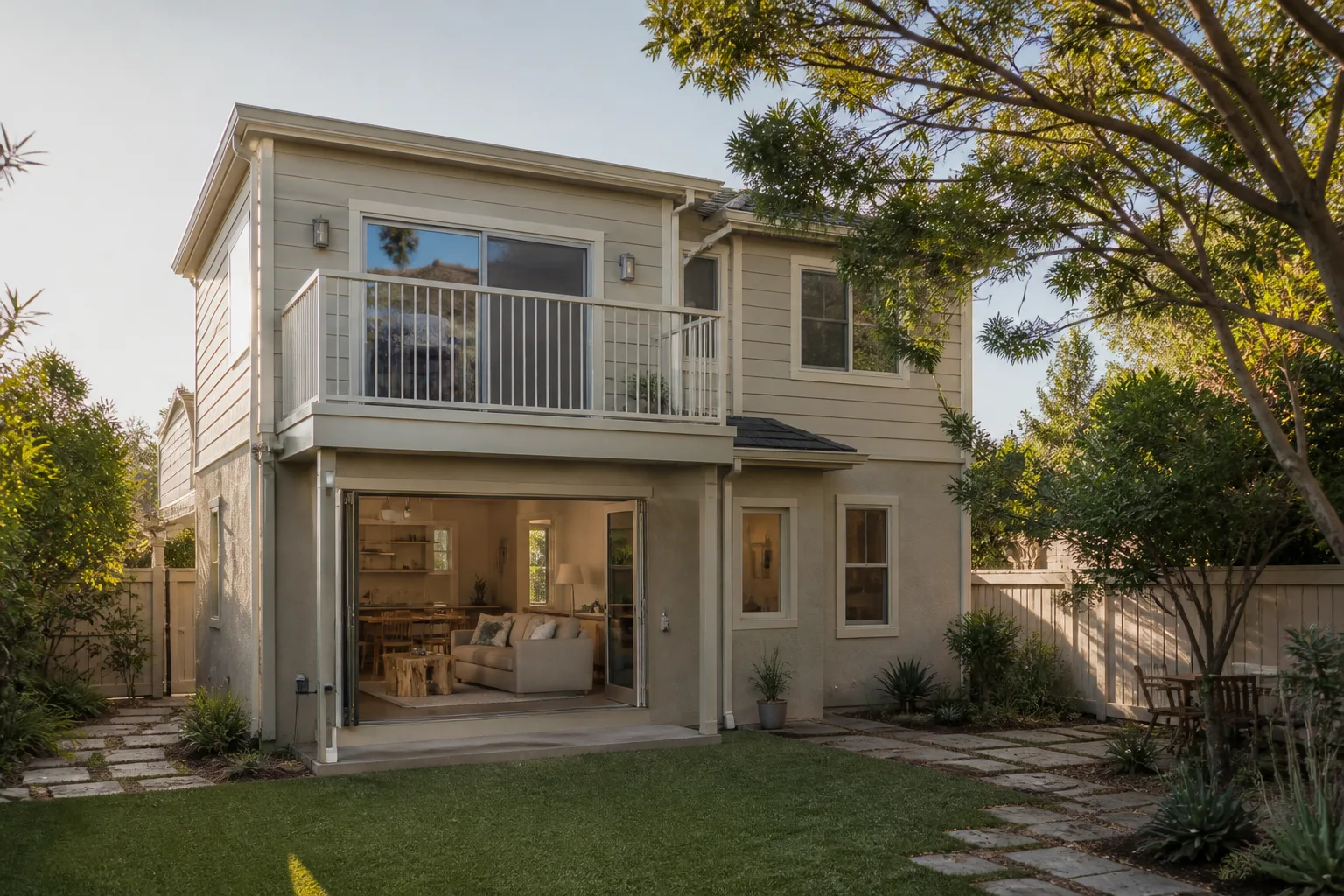
Most home additions in Los Angeles take 9 to 16 months from design agreement to final inspection sign-off. Construction itself runs 4 to 8 months, while design (4 to 10 weeks), LADBS plan check and permits (3 weeks to 6 months), and pre-construction prep (2 to 6 weeks) add the rest. Prefab systems like Abodu or Cover can shorten construction to 3 to 5 months, but the permitting window stays the same. Call (472) 248-8213 to get a specific schedule for your project.
LADBS plan check runs 3 weeks to 6 months because every submitted plan set is reviewed by human plan checkers working through a queue, and most applications go through two to three comment-resubmission cycles before approval. Incomplete applications are the biggest driver of delay in Los Angeles. Expedited plan check can shorten review to 2 to 4 weeks for a fee of $3,000 to $8,000 on typical additions. A contractor with deep LADBS experience can dramatically reduce cycle time by submitting clean, complete drawings the first time.
A small, simple addition with an over-the-counter plan check approval and zero material lead time issues can sometimes be completed in 6 to 7 months if everything goes perfectly. That means you select finishes on time, inspections pass first-attempt, and the city’s queue is moving quickly. It’s possible, but it’s not the typical experience. Most Los Angeles additions land in the 9 to 14 month range. Anyone promising you a finished addition in under 6 months should be asked to show you the documented schedule that supports that claim.
Home additions in Los Angeles currently run $350 to $550 per square foot for stick-built construction, with detached ADUs typically falling in the $400 to $600 per square foot range depending on finishes, site conditions, and structural requirements. A 500-square-foot addition therefore lands roughly $175,000 to $275,000, while a 1,000-square-foot detached ADU commonly runs $350,000 to $550,000 all-in. Prefab systems vary by manufacturer and model. Call (472) 248-8213 for written pricing on your specific scope – no estimate ranges, no surprises.
It should not. A legitimate contractor in Los Angeles will provide a written, line-item price before any work begins, and that price should hold unless you change the scope. The way to protect yourself is to read the contract’s change order provisions before signing. At Sutton ADU Builders, every project gets a written price before work starts, and we do not pass scope creep silently to your bill. If something changes, you approve the change before the work proceeds.
Any legitimate home addition contractor in Los Angeles pulls the permits for the project. Permits are issued to the contractor of record, and the contractor is responsible for scheduling and passing all inspections. If a contractor suggests you pull permits yourself as the homeowner, that’s a red flag – it usually means they’re not licensed for the work they’re doing or they’re trying to offload liability. Sutton ADU Builders handles the entire LADBS process from submission through final inspection on every project.
The Bottom Line
A home addition in Los Angeles takes 9 to 16 months, and the construction portion is only about half of that. The rest is design, LADBS plan check, permits, and material lead times – the bureaucratic and supply chain machinery that no contractor can eliminate but a good one can compress. Get a written schedule with dates before you sign, verify material orders during the permit phase, make finish selections on time, and hold your contractor accountable for the delays they own while giving grace for the ones they don’t. Los Angeles is a hard city to build in. The right contractor makes it predictable. The wrong contractor makes it a story you tell people to warn them. For more guides & resources on navigating the process, visit our blog.
Ready to talk about your addition? Call (472) 248-8213 for a free estimate. We’ll give you a written price, a real schedule, and the name and photo of every technician before they arrive at your door. That’s the way Sutton ADU Builders home has done it since 2006, and it’s the way we’ll do it for your home addition in Los Angeles. For ADU-specific timelines and pricing, or room addition scopes, we’re one call away.
Written by Miles Hartwell, Owner at Sutton ADU Builders, serving Los Angeles since 2006.