Last updated October 9, 2026
The Complete Guide to ADU in Los Angeles
Los Angeles permitted more than 22,000 ADUs in 2023 alone. Yet city records show a striking pattern: a meaningful share of applicants abandon the process mid-permit. The reason is almost never the construction itself. It’s that they spent $40,000 on architectural drawings before confirming their lot could actually support what they designed. This guide walks you through the right sequence, the real costs in Los Angeles, and the mistakes that turn a 6-month project into a 14-month ordeal, with more guides & resources available on our blog. You’ll learn how to run a feasibility check before spending a dollar on design, what Los Angeles County labor actually costs, which city programs still waive fees, and what a realistic week-by-week timeline looks like from first phone call to certificate of occupancy.
Quick Answer
A complete ADU project in Los Angeles runs 9 to 14 months from first assessment to certificate of occupancy, with most detached units in the 400 – 800 square foot range costing $180,000 – $320,000 before site work, depending on finish level and site conditions. Garage conversions typically land between $90,000 and $160,000. The single most important move is running a zoning and lot-feasibility check first, before design, because setbacks, slope, utility access, and parking requirements determine what you can build, and reversing a design after the fact is where budgets quietly bleed.
Table of Contents
- The Three Decisions You’re Actually Making
- Lot Feasibility: The $0 Step That Saves $40,000
- Real Cost Bands by ADU Type in Los Angeles
- The Correct Order of Operations: Zoning, Design, Financing, Permits, Construction
- Los Angeles Programs That Actually Save You Money
- A Realistic 12-Month Timeline, Week by Week
- Prefab vs. Custom Build in Los Angeles
The Three Decisions You’re Actually Making
Most LA homeowners treat an ADU as a construction project. It isn’t. It’s a legal decision, a financial decision, and a design decision that happens to involve construction last. Getting those three in the right order is what separates a smooth build from a nightmare.
The legal decision comes first: your lot is either zoned for what you want, or it isn’t. Setbacks (the required gap between your new structure and the property line), height limits, lot coverage maximums, and parking requirements are set by the city before you draw a single line. The financial decision comes second: whether you’re paying cash, pulling equity, or using one of Los Angeles County’s financing programs. The design decision comes third, because what you can afford and what zoning allows together determine what the drawings should show.
We’ve watched homeowners reverse this order repeatedly. They get excited about a design, pay an architect, then discover the site can’t support it. The architect re-draws. You pay twice. This is why our process at Sutton ADU Builders always starts with a feasibility review, not a sketch.
In Los Angeles specifically, this order matters even more because the city’s zoning code has been rewritten multiple times since 2020 to encourage ADU development. Rules that applied three years ago may not apply today. A builder who last pulled an ADU permit in 2021 may be working from outdated assumptions.
Lot Feasibility: The $0 Step That Saves $40,000
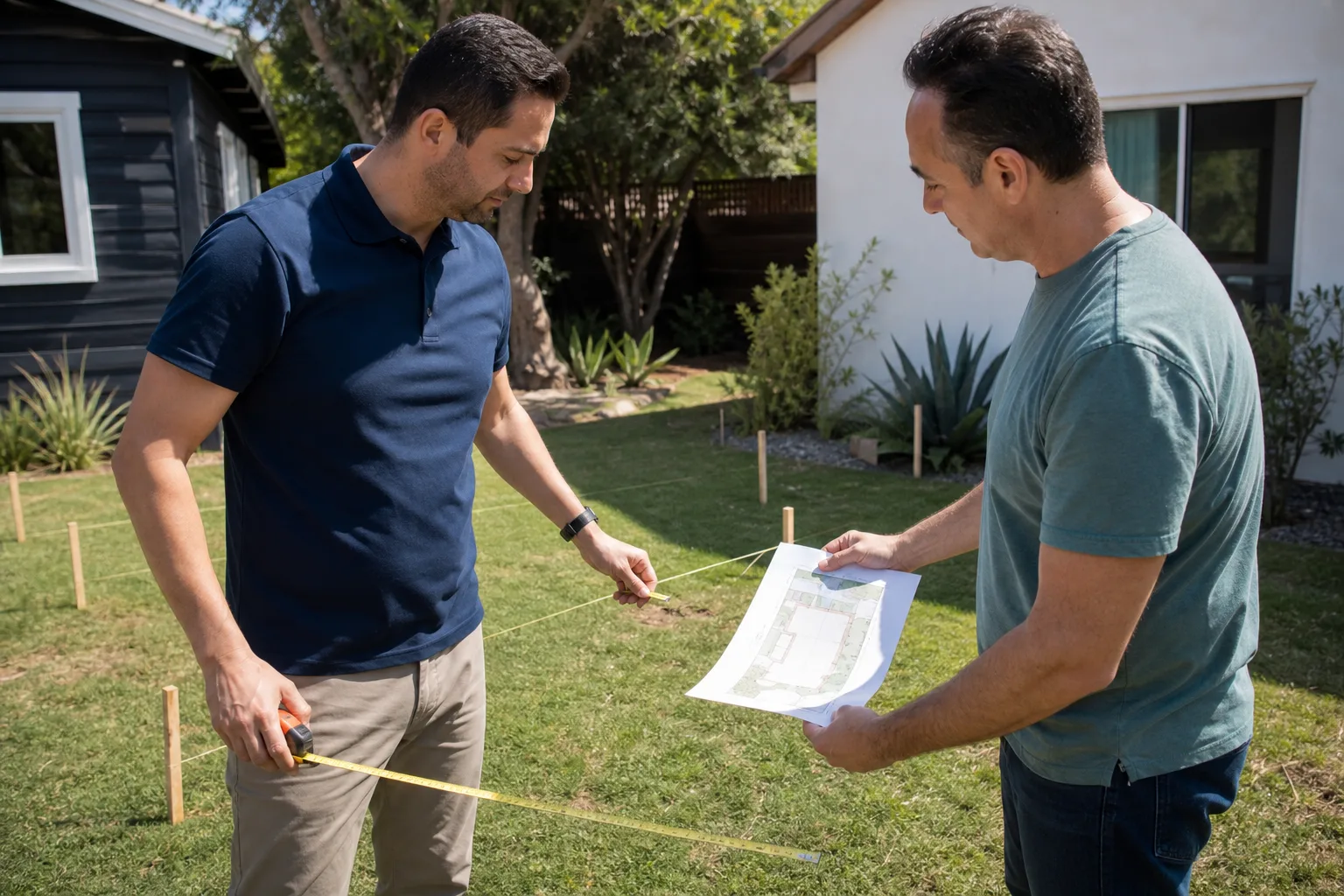
Before you hire a designer, before you fall in love with a floor plan, run a feasibility check on your specific parcel. This is the step most guides skip. Here’s exactly what to look at, in order of how often it kills a project in Los Angeles.
- Setbacks. Detached ADUs in Los Angeles generally require a 4-foot side and rear setback, though some lots qualify for reduced setbacks under recent state law. Corner lots and flag lots have their own rules. Don’t assume; check your parcel’s specific zoning designation.
- Slope. Hillside lots in neighborhoods like Mount Washington, Echo Park, and Studio City often carry hillside-grading ordinances. A 15% slope can add $30,000 – $60,000 in foundation and retaining work. Walk the site with a contractor who understands grading, not just framing.
- Existing utilities. Where does your sewer line run? Is your electrical panel sized for a second dwelling, or will you need a 200-amp upgrade? In Los Angeles, a panel upgrade alone runs $4,000 – $8,000, and if LADWP needs to trench to the street, that number climbs.
- Parking. State law has relaxed ADU parking requirements significantly, but if your property is outside a half-mile of a transit stop, one off-street space may still be required. A new concrete parking pad in Los Angeles runs $5,000 – $9,000 depending on access.
- Lot coverage. Los Angeles caps total lot coverage, typically 40 – 50% of the lot depending on zone. Your house, garage, and new ADU together must stay under that number. This one surprises homeowners more than any other.
Run every one of these checks before you commit a dollar. A proper feasibility review takes a few hours and costs nothing if you work with a builder who offers it as part of the estimate process. The alternative is paying an architect to design something the city will never approve.
Real Cost Bands by ADU Type in Los Angeles
Los Angeles construction costs run roughly 20 – 30% above the national average, driven by labor rates, permit fees, and material logistics. These are the numbers we see on the ground in 2025, not theoretical ranges from a national cost calculator.
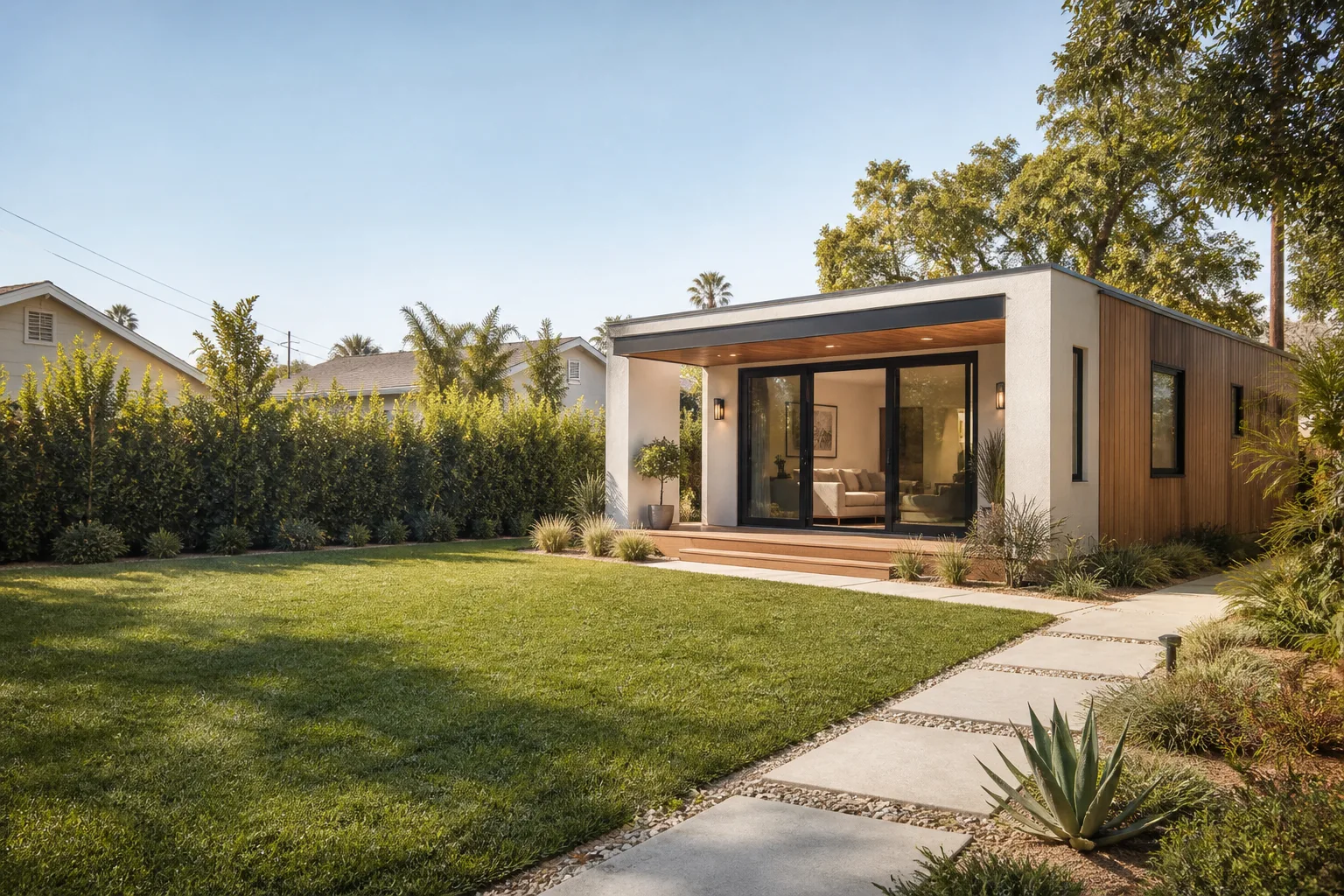
- Detached ADU (400 – 600 sq ft): $180,000 – $260,000. This is the sweet spot. Two bed, one bath, kitchenette, independent entrance. Site work adds $15,000 – $40,000 depending on utility runs and grading.
- Detached ADU (600 – 800 sq ft): $240,000 – $320,000. Larger living areas, full kitchens, sometimes laundry. The upper band reflects finish level; a premium kitchen and bath can add $25,000 alone.
- Detached ADU (800 – 1,000+ sq ft): $300,000 – $420,000. These compete with small houses. At this size, site work and foundation type drive variance more than square footage.
- Garage conversion (attached, 300 – 500 sq ft): $90,000 – $160,000. Cheapest per square foot because the shell exists. But Los Angeles garage conversions often require seismic retrofitting, termite work, and full electrical re-wiring, so the range is wider than people expect.
- Attached ADU (addition to existing home, 400 – 700 sq ft): $150,000 – $250,000. Shares one wall, which reduces foundation and exterior costs. Design is the variable: blending rooflines and matching stucco or siding can add $10,000 – $20,000 in architectural fees.
- Junior ADU (JADU, 150 – 500 sq ft within existing home): $50,000 – $120,000. A converted bedroom or attached space with a separate entrance. In Los Angeles, JADUs have the least permitting friction and the fastest timeline.
These ranges assume a licensed general contractor pulling permits, not an owner-builder. If you’re considering acting as your own general contractor to save 15 – 20%, read our breakdown of DIY vs Professional ADU Builders: What’s Safe to Do Yourself first, and know that Los Angeles Building and Safety requires owner-builders to sign a declaration that they understand the liability, and lenders rarely finance an owner-builder project.
The Correct Order of Operations: Zoning, Design, Financing, Permits, Construction
We’ve said it once. Here’s the full sequence, in the only order that doesn’t cost you money.
- Zoning and feasibility review (weeks 1 – 2). Confirm what your lot can support. Setbacks, lot coverage, slope, utility capacity, parking. This step is cheap or free and determines everything after it.
- Design (weeks 3 – 10). Only after feasibility. If you’re using a pre-approved plan or a prefab system, this compresses dramatically. If you’re going custom architectural, expect 6 – 8 weeks for concept, revisions, and construction drawings.
- Financing (weeks 4 – 12). You can run financing in parallel with design. Options in Los Angeles include conventional HELOC, cash-out refinance, ADU-specific construction loans, and LACDA programs (details below). Most lenders want a full cost breakdown before closing, which requires design completion.
- Permits (weeks 8 – 16). Los Angeles Building and Safety (LADBS) has improved ADU turnaround, but plan check still runs 4 – 12 weeks depending on scope and whether corrections are requested. A clean submittal from a builder who knows LADBS reviewers is the difference here.
- Construction (weeks 16 – 48). Garage conversions run 3 – 5 months. Detached ADUs run 5 – 8 months. Site work, weather, and inspections all push this number.
- Close-out (weeks 48 – 52). Final inspection, certificate of occupancy, utility connection. This is the finish line.
Reversing any step costs money. Financing before design means you’re borrowing against a guess. Permits before feasibility means rejection. And construction before a locked permit means stop-work orders. In Los Angeles, LADBS inspectors have been more aggressive with unpermitted ADU work since the 2021 state law crackdowns.
Los Angeles Programs That Actually Save You Money
Los Angeles County and the City of Los Angeles have rolled out several ADU incentives. Some are active, some are winding down, and some only apply in unincorporated county areas. Here’s what’s actually available.
- Pre-approved ADU plan program. LADBS maintains a catalog of pre-approved, pre-reviewed ADU plans. Using one skips the most time-consuming part of plan check, and some of these plans have had their fees waived entirely. This is the fastest path to a permit in the city.
- ADU fee waivers. The City of Los Angeles waives certain development impact fees for ADUs under 800 square feet. This can save $10,000 – $25,000 depending on your lot. Confirm current status with LADBS, because these programs shift with budget cycles.
- LACDA ADU financing. The Los Angeles County Development Authority runs a program offering loans to income-qualified homeowners for ADU construction, with deferred or forgivable components in some cases. It’s income-restricted, so eligibility depends on household income relative to county median.
- Utility rebates. LADWP and Southern California Edison both offer programs for energy-efficient ADU construction. A qualified heat pump, upgraded insulation, or solar-ready ADU may qualify for rebates that offset $2,000 – $6,000 of cost.
What these programs don’t cover: design fees, site work, grading, or utility trenching. Package them together and you might save $20,000 – $40,000 on a detached unit, but don’t expect a fee-free build. The savings are real, not transformational.
A Realistic 12-Month Timeline, Week by Week
Here’s what a typical detached ADU in Los Angeles looks like on the calendar, from first call to certificate of occupancy. This assumes no major surprises, which is an assumption you should not make.
- Weeks 1 – 2: Initial consultation and lot feasibility review. Setbacks checked, zoning confirmed, utilities assessed. You learn what’s possible and what it will cost.
- Weeks 3 – 10: Design phase. Pre-approved plan or prefab system? Weeks 3 – 6. Custom architectural? Weeks 3 – 10.
- Weeks 8 – 14: Financing. Lenders underwrite during design. If you’re paying cash, skip this phase entirely.
- Weeks 12 – 20: LADBS plan check and permitting. The pre-approved plan program shortens this to 4 – 6 weeks. A complex custom design can stretch it to 12+.
- Weeks 16 – 20: Permit issuance and pre-construction meeting. Your builder walks the site, confirms the scope against the approved plans, and schedules inspections.
- Weeks 20 – 44: Construction. Foundation, framing, rough-in (electrical, plumbing, HVAC), insulation, drywall, finishes. Inspections happen at each milestone: foundation, framing, rough, final.
- Weeks 44 – 48: Close-out. Final inspection, corrections if any, utility connection, certificate of occupancy.
- Week 52: You’re a year out from your first call and the ADU is generating rent or housing family.
Garage conversions and JADUs compress this materially: 5 – 8 months total is realistic because the shell already exists and the permit path is simpler. Detached unit with site work and utility trenching? Plan on the full year.
Prefab vs. Custom Build in Los Angeles
Los Angeles has become a national test lab for factory-built ADUs, and for good reason. Our team has worked across most of the recognized product lines, including Abodu, Cover, and Dvele, and the honest version of the pitch is this: prefab trades design flexibility for schedule certainty.
Abodu units target the 400 – 600 square foot range and are engineered to navigate California’s permitting process quickly. Cover builds panelized units that arrive on a truck and assemble in weeks, not months. Dvele operates at the higher end, with a whole-home approach and a higher price point to match. Each has specific lot requirements, and not every Los Angeles lot can accept a crane-set unit.
A custom site-built ADU, by contrast, can fit an irregular lot, a tricky hillside, or a homeowner with very specific design taste. The trade is time and money: custom builds run 20 – 30% higher cost and 3 – 6 months longer in our experience.
James Hardie exterior systems appear across both paths. Their fiber cement siding is a common spec for Los Angeles ADUs because it handles the dry summers and the wet winters without warping or fading the way vinyl does. It’s not a brand decision that makes or breaks a project, but it’s worth knowing what’s actually being specified when you compare bids.
Common Mistakes to Avoid
- Designing before checking feasibility. This is the $40,000 mistake. Confirm setbacks, slope, and utilities first. If you’re in a hillside neighborhood like Silver Lake or Highland Park, this matters even more.
- Underestimating site work. The quotes you see for the structure itself don’t include trenching, grading, retaining walls, or utility upgrades. In Los Angeles, site work routinely adds 15 – 25% to a project total.
- Treating the permit process as a rubber stamp. LADBS plan check is a negotiation with a city engineer. A builder who submits clean drawings with a track record of first-pass approvals saves you months. A sloppy submittal costs you resubmittal fees and queue time.
- Skipping the panel upgrade. If your electrical panel can’t handle a second dwelling, the ADU is just an expensive shed. Check capacity in the feasibility phase, not during construction.
- Choosing the cheapest bid without checking who actually shows up. Los Angeles has thousands of licensed contractors. It also has unverified subcontractors, undocumented crews, and name-only “project managers” who never visit the site. Ask who will be on your property, and ask for proof before work begins.
- Financing last. The LACDA program and most ADU-specific construction loans take 6 – 8 weeks to process. Start the conversation early or you’ll be staring at approved plans and no funding.
- Ignoring the rent math. An ADU in Los Angeles rents for $2,000 – $3,200 per month depending on neighborhood. A $250,000 build that rents at $2,600 monthly yields roughly a 12% gross yield before expenses. That math should shape your design and finish level from day one.
When to Call a Professional
If your lot has any slope, any setback question, any utility distance over 30 feet from the main house, or any existing unpermitted structure, call a professional before you do anything else. These are the conditions where a feasibility mistake costs five figures, and they’re remarkably common in Los Angeles. If you’re planning a detached ADU with site work, you want a builder who has pulled Los Angeles permits recently, not a handyman who frames garages. For larger projects, see The Complete Home Addition Contractor Guide for Los Angeles Homeowners. If you’re financing the project, your lender will require a licensed contractor anyway. Sutton ADU Builders offers free estimates in Los Angeles – call (472) 248-8213 to schedule a feasibility review and get a written price before any work begins.
Frequently Asked Questions
A detached ADU in Los Angeles costs $180,000 – $320,000 for the typical 400 – 800 square foot range, with site work adding $15,000 – $40,000. Garage conversions run $90,000 – $160,000. Junior ADUs run $50,000 – $120,000. Call (472) 248-8213 for a written estimate specific to your lot – Sutton ADU Builders provides pricing before any work starts.
Plan on 9 – 14 months from first feasibility review to certificate of occupancy for a detached ADU. Garage conversions and JADUs can complete in 5 – 8 months. The biggest variables are LADBS plan check time, site work complexity, and whether you use a pre-approved plan.
Most single-family lots in Los Angeles can accommodate at least one ADU under state law, but setbacks, slope, lot coverage, and utility access determine what’s actually buildable. A feasibility review answers this question definitively before you spend money on design.
Yes. Every ADU in Los Angeles requires a building permit through LADBS, and unpermitted ADUs are a growing enforcement target. Work done without a permit cannot be financed, insured, or legally rented, and title companies now flag unpermitted additions during sale.
A JADU (Junior Accessory Dwelling Unit) is a smaller unit created entirely within the existing footprint of your home, typically 150 – 500 square feet with a separate entrance and a small kitchen. It’s faster and cheaper to permit than a detached ADU or even a typical room addition. Call (472) 248-8213 if you’re not sure which applies to your lot.
Yes. Options include HELOCs, cash-out refinances, ADU-specific construction loans, and the LACDA program for income-qualified homeowners. The right option depends on your equity, income, and timeline, and most lenders require a detailed cost breakdown before closing.
The Bottom Line
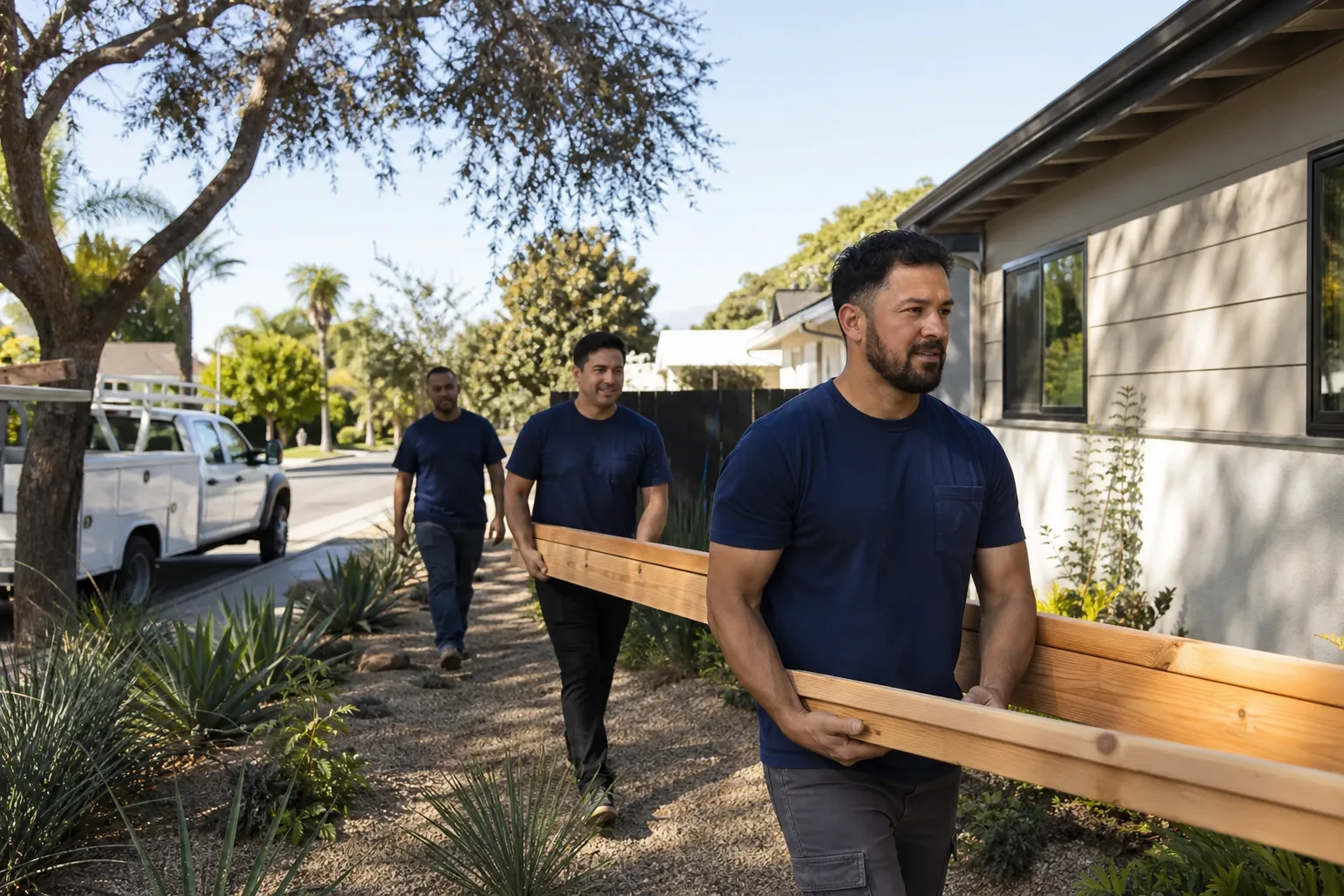
An ADU in Los Angeles is a better financial move than most homeowners realize, but only if you sequence the decisions correctly. Feasibility before design. Financing before permits. Permits before construction. Skip the order and you’ll pay for it twice. Real costs run $90,000 for a garage conversion to $320,000+ for a larger detached unit, with site work and utility upgrades as the silent line-item that surprises people. Los Angeles has the programs, the pre-approved plans, and the builder ecosystem to make this work. The variable is whether the person who shows up at your door is the person you vetted. At Sutton ADU Builders, you get a written price first, a named crew with photo badges, and a 365-Day Done Right Promise in writing. That’s the standard we’ve operated under since 2006.
Written by Miles Hartwell, Owner at Sutton ADU Builders, serving Los Angeles since 2006. More on our approach: Sutton ADU Builders home, ADU Builders in Los Angeles, Home Addition Contractor in Los Angeles, Room Addition Contractor in Los Angeles.