Last updated October 9, 2026
How Long Does ADU Builders Take? Timelines and What to Expect
Most homeowners in Los Angeles start their ADU journey assuming it’s a six-month project. Then month seven arrives, the structure is framed and roofed, but there’s no power connected because a DWP meter application is sitting in a queue nobody mentioned. The honest answer to “how long does it take” is rarely about construction speed. It’s about the bureaucratic steps that have nothing to do with hammering nails. This guide walks through the five phases of an ADU build, which ones you can actually influence, and what a realistic calendar looks like in Los Angeles right now.
Quick Answer
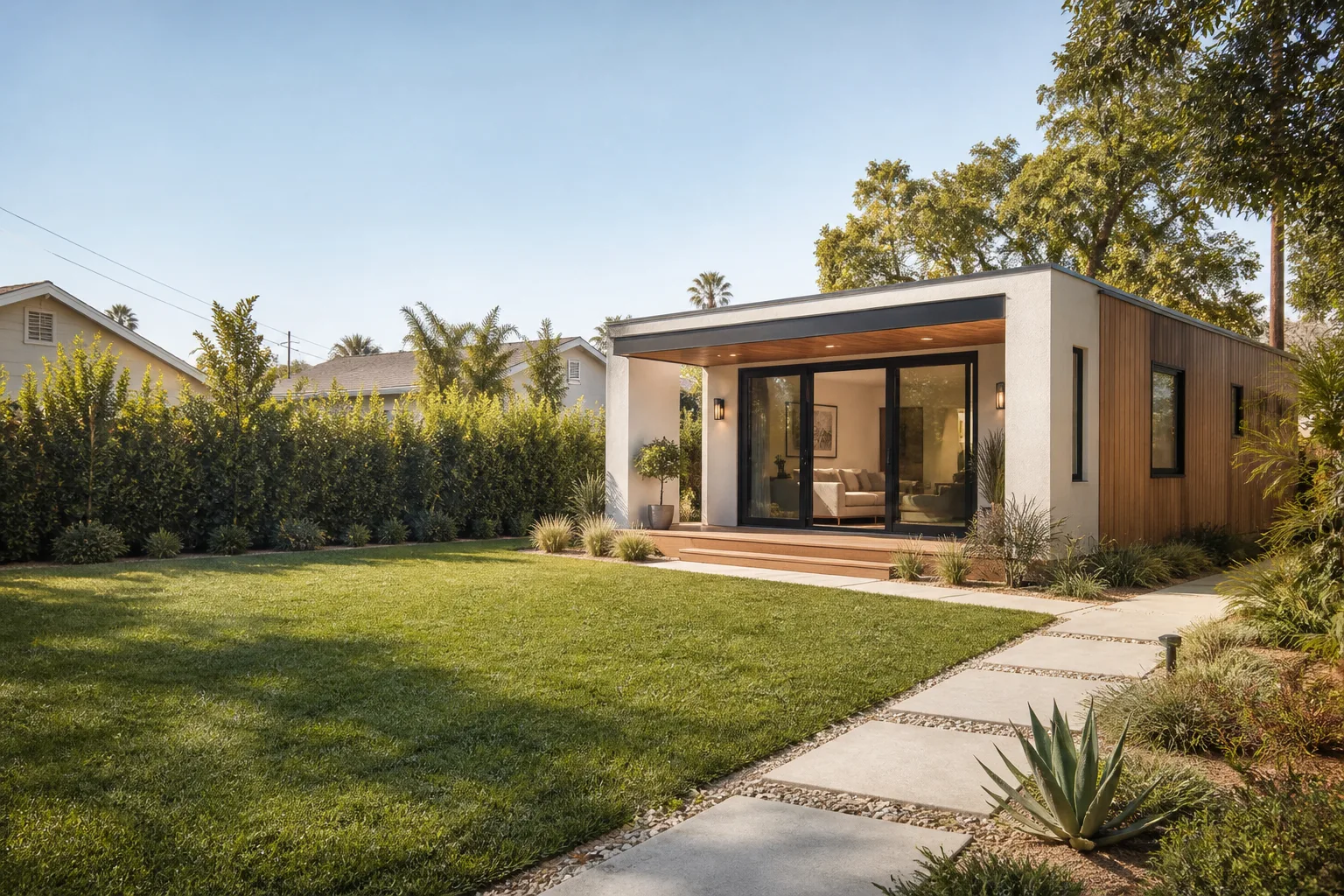
Building a detached ADU in Los Angeles typically takes 9 to 14 months from the day you hire a designer to the day you receive final sign-off, though home addition timelines can differ. Construction itself is often only 4 to 6 months of that window. The rest is design, plan check, permits, and utility connections, which are stages that surprise most first-time homeowners.
Table of Contents
- Phase One: Design and Pre-Construction (4 to 10 weeks)
- Phase Two: LADBS Plan Check and Permits (6 to 16 weeks)
- Phase Three: Site Prep and Foundation (2 to 6 weeks)
- Phase Four: Construction and Utility Connections (4 to 6 months)
- Phase Five: Inspections and Final Sign-Off (3 to 6 weeks)
- Which Phases You Can Speed Up (and Which You Can’t)
- Realistic Scenarios: Best Case, Typical Case, Delayed Case
- The Utility Connection Gap Nobody Budgets For
- Common Mistakes to Avoid
- When to Call a Professional
- Frequently Asked Questions
- The Bottom Line
Phase One: Design and Pre-Construction (4 to 10 weeks)
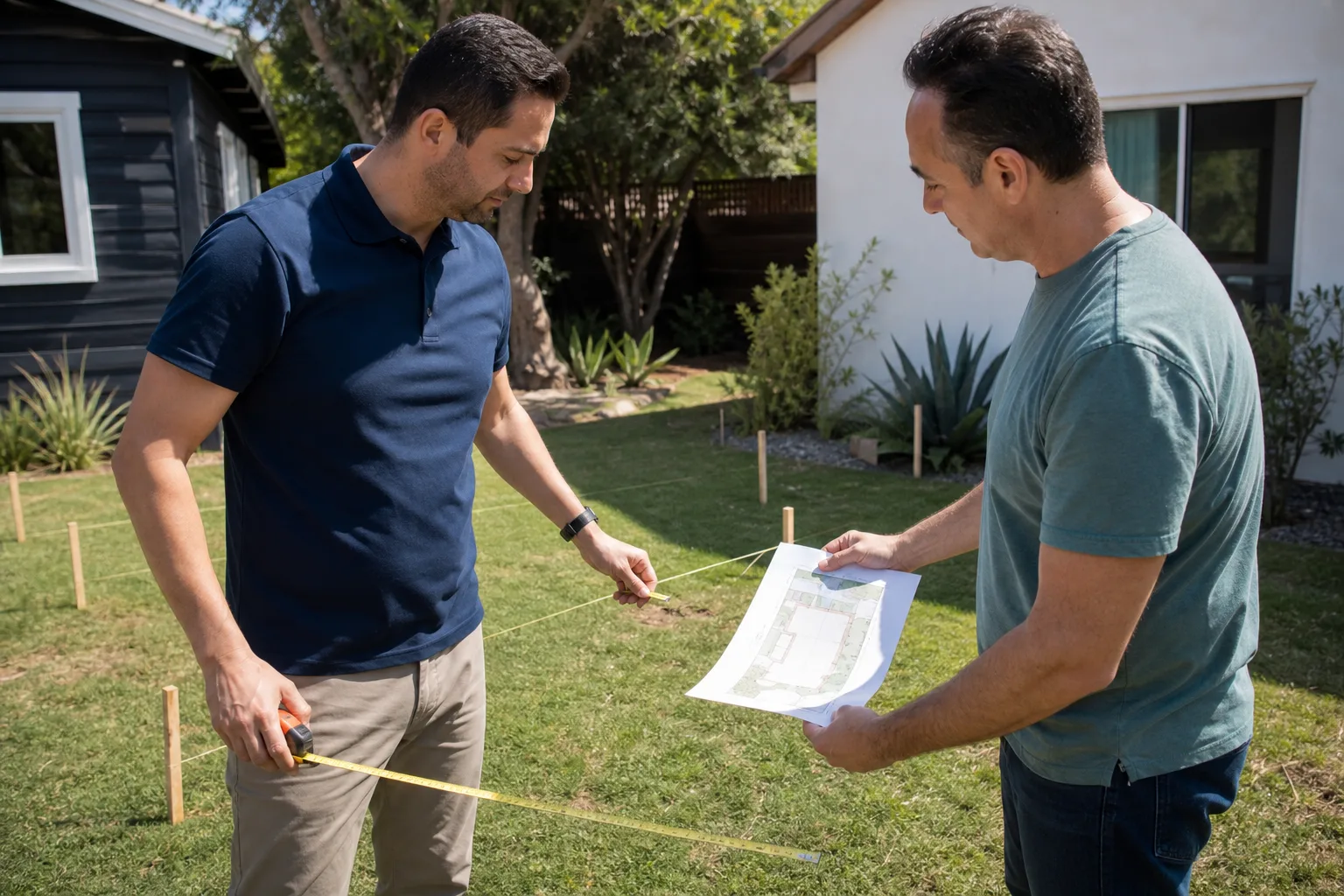
Your ADU calendar starts ticking before anyone files a permit application. The design phase includes site measurements, architectural drawings, structural engineering, and any decisions about prefab versus site-built construction. Most Los Angeles homeowners spend 4 to 8 weeks here, but indecision stretches it longer. Every revision to your floor plan, window placement, or roofline adds days or weeks before the clock on permits even starts.
This phase is entirely within your control, which is why it’s worth being decisive. Homeowners who choose a prefab or modular system from manufacturers like Dvele or Boxabl often compress design time because the floor plans are pre-engineered and already approved by state housing authorities. A custom site-built ADU gives you more flexibility but typically takes longer in design. At Sutton ADU Builders home, we’ve seen the design phase make or break the entire schedule. A homeowner who takes eight weeks to finalize window sizes has already added two months to their move-in date before a single permit is pulled.
The other variable in phase one is site assessment. A sloped lot in Echo Park requires more grading analysis than a flat lot in the San Fernando Valley. Soil reports, boundary surveys, and title checks all take time. If your property has a sewer line easement or an old retaining wall near the proposed footprint, expect additional review time. None of this is bad news. It just belongs on the calendar from day one.
Phase Two: LADBS Plan Check and Permits (6 to 16 weeks)
The Los Angeles Department of Building and Safety, known locally as LADBS, reviews every ADU plan before issuing permits. Standard plan check timelines currently run 6 to 10 weeks for straightforward projects. But if your plans trigger corrections, which is common on first submissions, add another 3 to 6 weeks for resubmission and re-review. This is the phase that frustrates homeowners most because nothing visible happens while the file sits in a queue.
There’s a meaningful difference between standard plan check and what LADBS handles for pre-approved ADU plans. The city maintains a library of pre-approved ADU designs that have already passed structural, fire, and zoning review. If you build one of these plans essentially as designed, plan check can drop to 2 to 4 weeks. That’s a real gap. But pre-approved plans have fixed dimensions and limited exterior finishes, and they may not work on every lot. A Los Angeles ADU builder who understands which pre-approved plans fit which zoning districts can save you a month or more simply by steering you toward plans that avoid discretionary review.
Your permit package also determines how long this phase runs. A detached ADU requires building, electrical, plumbing, and mechanical permits. If your project triggers a zone variance, a coastal development review, or hillside grading approval, plan check expands. We tell homeowners to assume 10 weeks for standard plan check and to feel pleasantly surprised if it comes back sooner. Budgeting for the longer timeline means no stress when LADBS requests revisions.
Phase Three: Site Prep and Foundation (2 to 6 weeks)
Once permits are issued, the visible construction starts. Site preparation includes utility locates, demolition of any existing structures (a garage conversion means a different timeline than a ground-up build), tree protection if needed, excavation, and grading. In Los Angeles, this phase often includes working around mature root systems, existing gas lines, and sometimes unreinforced masonry foundations from the original house built in the 1940s.
A standard concrete slab foundation can be poured within 1 to 2 weeks of excavation. A raised foundation with perimeter footings takes longer, especially if engineering required deeper piers. If your lot has expansive soil, the geotechnical report may require over-excavation and recompaction, which adds days. None of this is unusual in Los Angeles. The city’s varied geology from hillside bedrock in Silver Lake to sandy soil in Venice means foundation timelines vary block by block.
The hidden variable in this phase is the LADBS inspection schedule. Foundation inspections must happen before concrete is poured, and the inspector’s availability determines whether your pour happens Tuesday or Thursday. Experienced contractors build this buffer into their schedule. We schedule site prep with the assumption that inspection days will shift, because in this city they always do.
Phase Four: Construction and Utility Connections (4 to 6 months)
This is the part everyone pictures when they ask how long a room addition takes. Framing moves fast. A 500-square-foot detached unit can be framed, roofed, and weather-proofed in 3 to 5 weeks. Plumbing rough-in, electrical rough-in, and insulation follow. Drywall, paint, flooring, cabinetry, and fixtures take the bulk of the interior finish work. For a typical one-bedroom ADU, 4 to 6 months of active construction is reasonable.
Prefab construction changes this math. Factory-built ADUs from manufacturers like Plant Prefab or Mighty Buildings arrive on a truck and can be set on a prepared foundation in a matter of days. The tradeoff is that site work, foundation prep, and utility trenching still take months before and after the module arrives. A prefab ADU may save 1 to 2 months of on-site construction compared to stick-built, but it does not eliminate the permit or utility phases. That distinction matters when you’re estimating a move-in date.
The part of construction most timelines ignore is the utility connection step. Your ADU needs its own electrical service, and in many Los Angeles neighborhoods that means a separate DWP meter. SoCalGas connection for a gas range or water heater adds its own scheduling queue. These utilities do not coordinate with your general contractor’s calendar. The DWP meter application alone can take 4 to 8 weeks after your electrician’s work is complete, and it cannot be started until the panel is installed and inspected. We’ve watched beautifully finished ADUs sit unoccupied for two months waiting on a meter. Start the utility applications the day permits are issued, not when construction finishes.
Phase Five: Inspections and Final Sign-Off (3 to 6 weeks)
After construction wraps, the project enters its final bureaucratic phase. LADBS requires a series of inspections: electrical, plumbing, mechanical, and a final building inspection. Each one gets scheduled separately, and each one must pass before the next can occur. A failed inspection adds a correction cycle of one to two weeks. Most projects need three to four inspections minimum in this phase.
The final sign-off, technically called the Certificate of Occupancy, is the document that makes your ADU legally habitable. You cannot rent it, move family in, or list it on Airbnb before this is issued. In Los Angeles, final sign-off typically arrives 1 to 3 weeks after the last inspection passes, assuming no corrections are outstanding. The entire phase generally runs 3 to 6 weeks, but that assumes everything before it went smoothly.
Some homeowners face an additional step: recordation of the ADU with the county assessor. This establishes the unit for tax purposes and is usually handled by your title company or a document service. It doesn’t delay occupancy, but it does matter for your property tax bill. We advise homeowners to expect a supplemental tax assessment in the year following completion and to budget for it.
Which Phases You Can Speed Up (and Which You Can’t)
You can speed up exactly two phases: design decisions and anything involving discretionary approvals like HOA review. Everything else runs on someone else’s calendar. The distinction matters because homeowners often waste energy trying to rush things they can’t influence while neglecting the decisions that are entirely theirs.
- Design decisions (fully in your control). Every day you spend deciding on flooring, fixtures, or window placement is a day added to the front of the project. The fastest projects we see are homeowners who finalize selections in the first week of design and don’t revisit them. If you want a shorter timeline, commit early and don’t reopen choices.
- HOA approvals (partially in your control). If your property is in an HOA, their architectural review committee adds its own review window, often 30 to 60 days. You can speed this by submitting a complete package, responding to their questions the same day, and attending the review meeting in person. You cannot speed up their calendar, but you can remove yourself as the bottleneck.
- LADBS plan check (not in your control). The city’s review queue is what it is. You can reduce the number of review cycles by submitting plans that meet code the first time, which is where experienced contractors make a difference. But you cannot make an LADBS plan checker move faster.
- Utility connections (not in your control). DWP and SoCalGas scheduling runs on their timelines. You can start applications early, which shifts the work earlier in the project, but the connection date itself is theirs to set.
- Inspections (not in your control). Inspection scheduling depends on city staffing and inspector routes. Passing inspections the first time is in your control, which is the only way to keep this phase from stretching.
Understanding which lane each phase sits in changes how you manage the project, and you can find more guides & resources on our blog. Spend your energy where it moves the date. Accept the rest. That’s how realistic homeowners plan.
Realistic Scenarios: Best Case, Typical Case, Delayed Case
Numbers help more than generalities. Here are three honest scenarios for a detached ADU in Los Angeles, assuming standard site-built construction.
Best case (9 months): You finalize design in 4 weeks. Your plan check comes back in 6 weeks with no corrections. Site prep and foundation take 3 weeks. Construction runs 4.5 months. Utility applications were filed early, so DWP connects power 2 weeks after the panel passes inspection. Final sign-off arrives at week 39. You’re moving in at month 9.
Typical case (11 to 13 months): Design takes 7 weeks including a few revisions. Plan check takes 8 weeks with one correction cycle adding 4 weeks. Site prep runs 4 weeks because the lot had an old shed to demolish. Construction takes 5.5 months due to material lead times on windows and cabinetry. DWP meter adds 6 weeks after the panel passes. Final sign-off lands at month 12.
Delayed case (15 to 18 months): Design stalls for 10 weeks while you decide between prefab and site-built. Plan check triggers hillside review, adding 6 weeks. Winter rains hit during foundation work, delaying the pour by 3 weeks. SoCalGas adds 8 weeks because the local main needed upgrading. Inspections fail twice, each failure adding 2 weeks. You’re moving in at month 16 and wishing someone had given you this list a year earlier.
The gap between best and delayed is rarely about builder competence. It’s about which version of each phase your specific lot, neighborhood, and utility territory assigns you. A home addition contractor in Los Angeles who has navigated these variables can tell you early which scenario you’re looking at, not which one you’re hoping for.
The Utility Connection Gap Nobody Budgets For
Most online ADU timelines skip utility connections entirely. They list design, permits, construction, and inspections, then imply the project ends there. In Los Angeles, the DWP meter application and SoCalGas service connection are separate processes with their own timelines, and they routinely add 4 to 8 weeks that were never on the homeowner’s calendar. This is the gap that turns a 10-month build into a 12-month wait.
The sequence matters. Your electrician installs the panel and the conduit. An LADBS electrical inspection approves that work. Only then can DWP schedule their meter installation. If DWP needs to upgrade the transformer serving your street, which happens more often in older Los Angeles neighborhoods with aging infrastructure, the wait extends further. None of this can be fast-tracked by your contractor. The only lever is starting the DWP application as soon as permits are issued, so the engineering review happens in parallel with construction rather than after it.
SoCalGas has its own process. If your ADU includes a gas range, gas dryer, or gas water heater, the gas service line needs to be tested and approved before connection. If your ADU is all-electric, you skip this step entirely. That’s one of the quiet advantages of electric-only ADUs, which are increasingly common in Los Angeles as the city pushes building electrification. A Los Angeles room addition contractor with experience in both fuel types can walk you through which approach shortens your timeline.
We recommend homeowners ask three questions during design: will this ADU need its own DWP meter, does it use gas or is it all-electric, and which utility application should we file first? Getting these answers in week one prevents month eleven surprises.
Common Mistakes to Avoid
- Believing construction time equals project time. Construction is half the calendar. If you’ve only budgeted time for the building phase, you’re planning for a move-in date that doesn’t exist. The permit queue and utility connections are not side notes; they’re weeks of your life.
- Revising the design after plan check starts. Every plan change during review resets the review clock and often triggers new corrections. Decide first, submit once. This single discipline saves more time than any construction scheduling trick.
- Waiting until construction finishes to file utility applications. DWP and SoCalGas don’t care that your tenant is waiting to move in. File the applications the day permits are issued. The meter takes weeks, and those weeks can overlap with framing and drywall instead of sitting at the end.
- Choosing a contractor without verifying their permit history. Builders who routinely get corrections on plan check cost you months, not days. Ask how they handle LADBS submittals and how many correction cycles their recent projects went through. The answer tells you about your own timeline.
- Ignoring site-specific complications until grading begins. A hillside lot, an old retaining wall, a sewer easement, or a protected tree all add time. These issues should be identified in week one through a proper site assessment, not discovered when the excavator arrives.
- Assuming prefab means instantly faster. Factory-built units save on-site construction time, but the same permit check, foundation prep, and utility connections still apply. Prefab can compress the middle of the project. It does not compress the bureaucratic ends.
- Not budgeting for inspection corrections. First-time failures happen even on good projects. An inspector interprets a code section differently, or a detail was overlooked. Assume one correction cycle per trade and be glad when it doesn’t happen.
When to Call a Professional
Most homeowners should bring in a professional before the design phase, not after. If your lot has any complication, whether it’s a slope, a heritage tree, an easement, or an existing garage you want to convert, a builder who knows Los Angeles code will identify schedule risks in the first conversation. The same goes for choosing between prefab and site-built, between all-electric and gas, and between a detached unit and an attached addition. These decisions set your timeline in motion, and reversing them later costs months.
Sutton ADU Builders offers free estimates in Los Angeles. Call (472) 248-8213 to talk through your lot, your goals, and a realistic calendar before you commit to anything.
Frequently Asked Questions
A detached ADU in Los Angeles typically takes 9 to 14 months from design kickoff to Certificate of Occupancy. Construction itself runs 4 to 6 months, while design, plan check, permits, and utility connections account for the remaining time. Your specific lot, neighborhood, and utility territory determine which end of that range you land on. Call (472) 248-8213 for an exact estimate based on your property.
Prefab construction compresses the on-site building phase by 1 to 2 months, but it does not shorten permit review, foundation work, or utility connection timelines. A factory-built unit from a manufacturer like Plant Prefab or Mighty Buildings arrives ready to set on a prepared foundation, which shortens framing and finish work. The overall project still runs through the same LADBS and DWP processes as a site-built ADU.
For most Los Angeles homeowners, the longest single phase is the combination of LADBS plan check and permit issuance, which runs 6 to 16 weeks depending on corrections and lot conditions. Utility connection, especially the DWP meter application, is the phase most people don’t expect and can add 4 to 8 weeks at the end of the project.
Yes, LADBS plan check for pre-approved ADU designs can run 2 to 4 weeks, compared to 6 to 10 weeks for standard custom plans. The tradeoff is less design flexibility. A builder who knows which pre-approved plans fit your zoning and lot dimensions can often save a month or more in this phase.
The DWP meter application and installation for a new ADU typically takes 4 to 8 weeks after your electrical panel passes inspection. The application can be filed earlier in the project, which is the most reliable way to keep the meter from delaying your move-in date. In neighborhoods with older infrastructure, transformer upgrades can extend this timeline further.
Yes, the Los Angeles County Assessor will reassess your property based on the added value of the ADU, which triggers a supplemental tax bill in the year after completion. The assessment is based on the market value of the new construction, not a full reassessment of your entire property. Your tax advisor can give you a specific figure for your situation.
The Bottom Line
A realistic ADU timeline in Los Angeles is 9 to 14 months, and the date is decided less by how fast your builder works than by how early you make design decisions, how cleanly your plans pass LADBS review, and how quickly utility applications get filed. You control design and HOA approvals. You don’t control plan check queues, inspection schedules, or DWP meter timelines. Plan for the typical case, prepare for the delayed case, and choose a builder who tells you which scenario your lot is actually in. The free estimate is the fastest way to get an honest number. Call Sutton ADU Builders at (472) 248-8213.
Written by Miles Hartwell, Owner at Sutton ADU Builders, serving Los Angeles since 2006.