Last updated October 9, 2026
The Complete Room Addition Contractor Guide for Los Angeles Homeowners
A room addition in Los Angeles is rarely just a room addition. The city’s patchwork of building codes, hillside ordinances, seismic retrofit requirements, and Title 24 energy mandates means the same 400-square-foot primary suite that sails through permitting in one neighborhood can trigger a foundation upgrade, an electrical panel replacement, and a full structural engineering report four miles away. Most contractor guides skip this. This one won’t. You’ll learn what actually drives cost and delay in Los Angeles, which permits and fees to expect, what triggers expensive upgrades, and how to verify you’re hiring a contractor who knows the difference before you sign anything. For more guides & resources, explore our blog.
Quick Answer
A room addition contractor in Los Angeles should deliver a written price that already accounts for City of LA permit fees, Title 24 energy compliance, structural engineering requirements for your specific lot, and any mandatory upgrades to your existing systems. You can learn more about our Room Addition Contractor services to see how we handle these requirements. Most additions in Los Angeles cost between $250 and $450 per square foot for stick-built construction, with soft costs like permits, school fees, and engineering adding another $15,000 to $40,000 depending on scope and jurisdiction. The single most important hiring decision is verifying that your contractor knows which code triggers apply to your specific address, not just to Los Angeles generally.
Table of Contents
- Why Your Address Changes Everything: Los Angeles Jurisdictions
- When an Addition Triggers Upgrades to Your Existing Home
- Title 24 Energy Compliance: The Hidden Cost in Every LA Addition
- The Structural Engineer Question: When It’s Required and When It’s Not
- Permit Fees, School Fees, and Other Soft Costs in Los Angeles
- Realistic Budget Ranges for Los Angeles Room Additions
- How to Vet a Room Addition Contractor in Los Angeles
- Common Mistakes to Avoid
- When to Call a Professional
- Frequently Asked Questions
- The Bottom Line
Why Your Address Changes Everything: Los Angeles Jurisdictions
Here’s a fact most homeowners discover too late: “Los Angeles” as a mailing address means very little when it comes to building permits. The City of Los Angeles Department of Building and Safety (LADBS) governs roughly 4 million people, but if your home sits in an unincorporated county pocket like View Park-Windsor Hills or parts of the San Fernando Valley, you’re under Los Angeles County Public Works building codes instead. Different forms, different plan check timelines, different fee schedules, and sometimes different interpretations of the same state code.
Then there are the 87 other incorporated cities within Los Angeles County. Pasadena, Burbank, Santa Monica, Glendale, Torrance, Long Beach. Each has its own building department with distinctly different requirements. A room addition over an existing single-story home in Burbank might need a straightforward plan check, while the same addition in Santa Monica triggers a more demanding coastal zone review. Your contractor should know which jurisdiction applies to your address before the first design meeting. If they ask you which permits you need, you’ve hired the wrong contractor.
Here’s what actually varies by jurisdiction:
- Plan check turnaround: The City of LA typically runs 4 to 8 weeks for a standard room addition plan check. Some smaller cities clear it in 2 to 3 weeks. Unincorporated LA County can stretch to 10-plus weeks depending on the season.
- Setback rules: A setback is the required gap between your new structure and the property line. The City of LA generally requires 5 feet for side yards in R1 zones, but hillside overlay zones can require more. Some cities allow 3 feet. This single variable can shrink your buildable footprint by hundreds of square feet.
- Height limits and floor area ratio (FAR): FAR is the ratio of total floor area to lot size. The City of LA caps FAR at 0.45 to 0.50 in most single-family zones, but cities like Beverly Hills and Santa Monica have their own formulas that can be more restrictive.
- Design review: Some neighborhoods, including many in the Hollywood Hills and parts of the Westside, require a separate design review board sign-off, which adds weeks and sometimes mandates architectural changes.
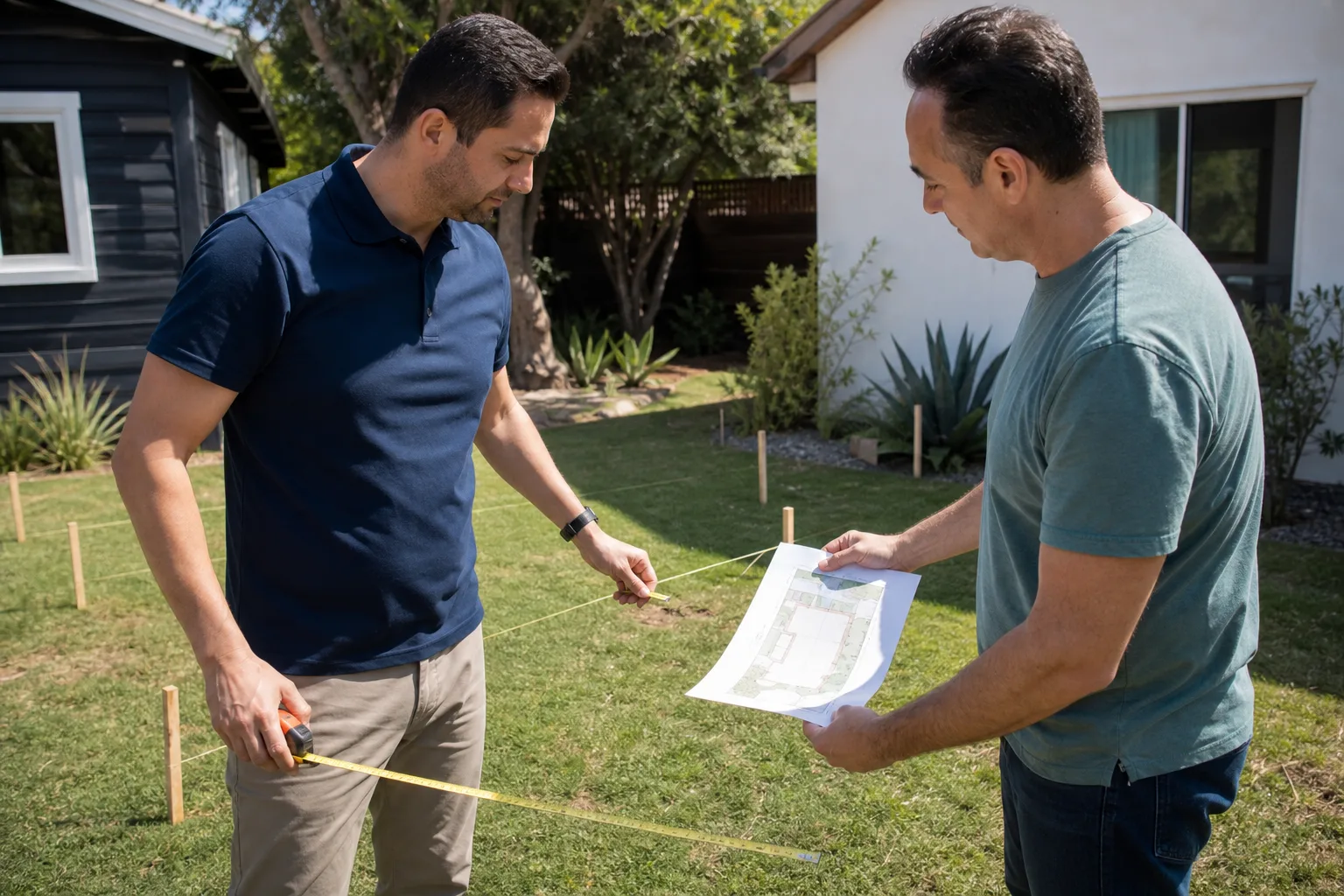
Before you get attached to a set of plans, confirm the jurisdiction and have your contractor walk you through the specific code triggers for that address. A good Home Addition Contractor in Los Angeles will do this in the first consultation without being asked.
When an Addition Triggers Upgrades to Your Existing Home
Here’s the part of room addition pricing that catches Los Angeles homeowners off guard: the new square footage is often the cheapest part of the project. What drives bills upward is the chain reaction your addition sets off in the existing structure. The City of LA Building Code has specific thresholds that, once crossed, force you to bring older systems up to current standards. If your contractor hasn’t priced this in, you’re looking at a mid-project surprise that can add $10,000 to $50,000.
The most common triggers we’ve seen in Los Angeles:
- Electrical panel upgrade: If your home still has a 100-amp panel (common in houses built before 1990) and the new addition adds a bedroom, bathroom, or HVAC zone, LADBS typically requires an upgrade to 200 amps. Cost: $3,500 to $7,000 including labor, permits, and sometimes a new service drop from LADWP.
- Foundation retrofit: Older homes in Los Angeles often have raised foundations that don’t meet current seismic standards. Adding square footage with a new foundation tied to the old one can trigger a requirement to retrofit the existing foundation. On hillside lots, this can escalate to caisson or pier-and-grade-beam work. Cost: $15,000 to $60,000 depending on slope and soil.
- HVAC system expansion: A 400-square-foot addition usually requires a dedicated HVAC zone. If your existing furnace or AC unit lacks the capacity, you’re buying a new system, not just new ductwork. Cost: $8,000 to $18,000 for a heat pump or high-efficiency system that meets Title 24 minimums.
- Water heater upsizing: Adding a bathroom with a tub or a larger shower can push your tankless or tank water heater past its rated capacity, triggering a replacement. Cost: $2,000 to $5,000.
- Fire sprinkler requirements: If your addition crosses a square footage threshold or creates a second story, some Los Angeles jurisdictions now require retrofitting fire sprinklers into the existing home, not just the new space. Cost: $8 to $12 per square foot of total home area, which on a 1,800-square-foot house means $14,000 to $21,000.
A reputable contractor flags every one of these triggers during the estimating phase. The written price you receive should itemize them. If your bid is one line that says “room addition: $145,000,” ask for the breakdown. If there’s resistance, walk away.
Title 24 Energy Compliance: The Hidden Cost in Every LA Addition
California’s Title 24 energy code applies to every room addition in Los Angeles, and it’s stricter than what most homeowners expect. Title 24 mandates minimum insulation values, window performance ratings, lighting efficiency, and HVAC specifications. For additions over 1,000 square feet, it requires photovoltaic (solar) capacity or equivalent battery storage in many cases. For smaller additions, the requirements land mainly on windows, walls, and HVAC equipment.
Here’s a realistic picture of what Title 24 adds to a Los Angeles room addition:
- Fenestration requirements: New windows in the addition must meet U-factor and solar heat gain coefficient (SHGC) ratings for your climate zone. Most of Los Angeles falls in climate zones 6 through 10 under Title 24 mapping, which generally means double-pane, low-E, vinyl or fiberglass frames. Expect to pay $40 to $80 per square foot of window area.
- Cool roof or insulation minimums: Los Angeles additions need attic insulation at R-30 or R-38 depending on the zone, plus wall insulation at R-13 or R-19. If you’re adding a flat roof (common on modern ADU and addition designs), Title 24 pushes you toward a cool roof surface or additional insulation. Cost: $2,000 to $6,000 beyond basic materials.
- Whole-house fan or balanced ventilation: Some additions trigger a requirement for whole-house ventilation if the existing home lacks it. Cost: $1,500 to $3,500.
- Mandatory solar for larger additions: If your addition pushes total conditioned floor area past the threshold where solar is required, you’re looking at a 2.0 to 3.5 kW system. Cost before rebates: $8,000 to $14,000.
Your contractor should include a Title 24 compliance report as a line item in the bid. This report is prepared by a certified energy consultant and costs $500 to $1,500 separately from the construction work. If a contractor tells you Title 24 “won’t really apply” to your project, that’s a red flag. It applies to every habitable addition in California, no exceptions.
The Structural Engineer Question: When It’s Required and When It’s Not
A structural engineer is not optional for most Los Angeles room additions. The City of LA requires structural calculations and stamped drawings for any project that modifies load-bearing walls, adds a second story, or sits within a designated seismic hazard zone. That covers most additions over 200 square feet. The only routine exception is a simple ground-floor bump-out on a flat lot with no modification to the existing roofline, and even then, LADBS often asks for a foundation detail stamped by a licensed engineer.
Here are the Los Angeles-specific conditions that make structural engineering mandatory:
- Hillside lots: Any lot with a slope of 2:1 or steeper triggers the City of LA’s hillside grading ordinance, which requires a soils report and a structural engineer’s foundation design. This is not where you cut corners.
- Liquefaction zones: Large portions of West LA, the South Bay, and the San Fernando Valley sit in designated liquefaction zones, where saturated soil loses strength during an earthquake. Additions in these zones require deeper foundations and often ground improvement work.
- Soft-story buildings: If your home has a garage underneath living space or large open walls on the ground floor (a common design in older Los Angeles homes, especially those built before 1978), an addition that adds weight above can trigger the city’s soft-story retrofit ordinance. This means steel moment frames or shear walls in the existing structure, not just the new space.
- Two-story additions: Any vertical addition requires full structural analysis of the existing load path, from roof to foundation.
A structural engineer in Los Angeles typically charges $3,000 to $10,000 for a room addition, depending on complexity. Your contractor should have an engineer they work with regularly. If they tell you the drafter handles the structural work, that’s someone who hasn’t done enough Los Angeles permit applications to know better.
Permit Fees, School Fees, and Other Soft Costs in Los Angeles
Construction costs are only part of the picture. The City of Los Angeles and its neighboring jurisdictions charge a series of fees that a legitimate contractor’s bid should itemize. These are not optional and they’re not negotiable. Here’s what to expect:
- Building permit fee: The City of LA calculates this based on the valuation of the work, typically running $2,500 to $6,000 for a room addition in the 400 to 1,000 square foot range. Los Angeles County charges a similar schedule but with different multipliers.
- Plan check fee: Roughly 65% of the building permit fee. Budget $1,600 to $3,900.
- School impact fees: Los Angeles Unified School District charges a per-square-foot fee on residential additions that add habitable space. As of the current schedule, that’s approximately $4.08 per square foot for residential construction in LAUSD territory. A 600-square-foot addition means about $2,450 in school fees. Other LA County districts, including Burbank Unified and Santa Monica-Malibu Unified, charge different rates.
- Utility and service fees: LADWP charges for any service upgrade (electrical panel, water line upsizing) and may require a separate meter or service drop. Budget $500 to $2,500 depending on scope.
- Title 24 energy compliance report: $500 to $1,500 as a separate consultant fee.
- Structural engineering: $3,000 to $10,000 as described in the section above.
- Survey and site plan: If your lot’s recorded survey is outdated, you’ll pay $2,000 to $5,000 for a new one.
Total soft costs for a typical Los Angeles room addition land between $15,000 and $40,000 before a single 2×4 is delivered. If you’re comparing bids and one contractor’s price is $30,000 below the others, the difference is almost always that they’ve left out permits, engineering, or Title 24 compliance. That’s not a discount. That’s an unfinished bid.
Realistic Budget Ranges for Los Angeles Room Additions
Los Angeles construction costs run higher than the national average, driven by labor rates, seismic requirements, and competition for trades. Here are realistic ranges for stick-built additions based on what we’ve priced across the city in recent years:
| Addition Type | Typical Size | Cost Range | What’s Included |
|---|---|---|---|
| Ground-floor bedroom bump-out | 200 – 300 sq ft | $70,000 – $130,000 | Foundation, framing, roofing, one window, electrical, flooring, paint |
| Primary suite addition | 350 – 500 sq ft | $120,000 – $220,000 | Bedroom, bathroom, walk-in closet, HVAC zone, Title 24 compliance |
| Family room or home office addition | 300 – 450 sq ft | $90,000 – $175,000 | Open plan, large windows or slider, electrical, lighting, flooring |
| Second-story addition | 400 – 600 sq ft | $180,000 – $350,000 | Structural engineering, roof framing, stairs, HVAC, full Title 24 package |
| Garage conversion to living space | 400 sq ft (typical 2-car) | $90,000 – $150,000 | Foundation retrofit, insulation, drywall, electrical panel upgrade, windows |
These ranges assume standard finishes: paint-grade trim, mid-range flooring, basic bathroom fixtures. High-end finishes (custom cabinetry, stone counters, premium windows) add 20% to 40%. And remember: soft costs from the section above are on top of these construction numbers. If you’re working with a prefab or panelized system through a company like ADU Builders in Los Angeles, the per-square-foot ranges shift but the soft costs remain the same. James Hardie exterior cladding, which we specify often for its fire-resistance rating in high-risk zones, typically adds $12 to $18 per square foot of wall area compared to standard stucco.
How to Vet a Room Addition Contractor in Los Angeles
In Los Angeles, anyone with a contractor’s license number can claim to build additions. The question is what standard they operate under. Here’s the process we recommend to homeowners, and it’s the same standard we hold ourselves to at Sutton ADU Builders:
- Ask for a written price before work begins. Not an estimate range, not a verbal ballpark, and not a cost-plus arrangement with vague allowances. A line-item written price. If a contractor won’t commit to a number in writing, the number will move.
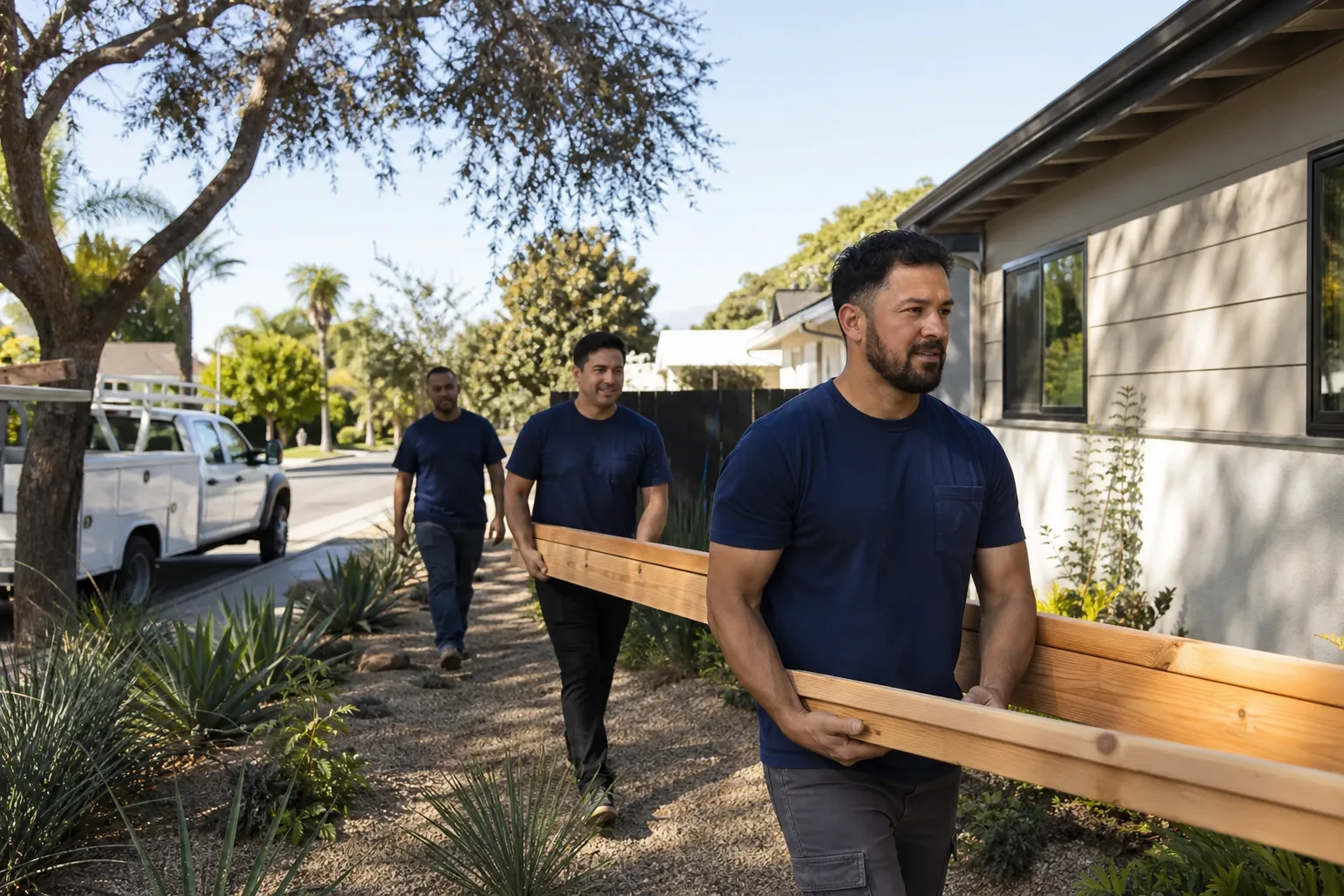
- Ask who exactly will be on your property. This is not a small thing. A construction crew has access to every room in your home for weeks. You should know each person’s name before they arrive, and they should carry photo ID. Our Threshold Standard exists because we believe this is non-negotiable. Every Sutton technician is background-checked, identity-verified, uniformed, and photo-badged, and you receive their name and photo before the visit.
- Ask what the warranty actually covers. “We stand behind our work” is not a warranty. A written, named, dated guarantee is a warranty. Our 365-Day Done Right Promise covers defects in workmanship for one full calendar year from project completion. If it isn’t right, Sutton makes it right. That includes a free second visit if any element fails.
- Ask about brand experience. If your addition involves a prefab component, a Tuff Shed conversion, or a specific cladding system, the contractor should have direct experience with that product line. We work regularly with Abodu, Plant Prefab, Boxabl, and James Hardie systems. Someone who has never installed a specific modular product is learning on your budget.
- Call the contractor at an inconvenient time. If you’re going to invest $150,000 in a project, you should be able to reach a human being when you have a question. Sutton has a live person answering calls 24 hours a day, 7 days a week. No voicemail trees, no callback queues.
The name Sutton comes from an old English word for a south farm, a settled and rooted place. That’s the spirit we bring to every addition: this is a permanent change to your home and your property, and it should be built by people you’d welcome back through the door.
Common Mistakes to Avoid
- Assuming all of Los Angeles has the same rules. The addition that’s allowed in your friend’s Encino house might not be allowed in your Santa Monica or Pasadena house, even if the lots look identical. Verify jurisdiction first.
- Comparing bids without checking what’s included. A $120,000 bid that includes permits, engineering, and Title 24 compliance is cheaper than a $95,000 bid that leaves those out. The first one is honest. The second one is a mid-project change order waiting to happen.
- Skipping the structural engineer on a hillside lot. Los Angeles hillside soil moves. Foundation failures on steep lots are among the most expensive problems to fix after the fact. An engineer’s $5,000 fee is cheap insurance.
- Waiting to upgrade the electrical panel. Older Los Angeles homes frequently trip the 100-amp limit once an HVAC zone is added. If your contractor plans to pull a homeowner electrical permit after the fact, that’s not a shortcut, that’s a violation waiting to be caught.
- Ignoring Title 24 until the plan check rejects it. Los Angeles plan check engineers review energy compliance carefully. An addition that fails the Title 24 review goes back for redesign, adding 3 to 5 weeks to your timeline.
- Hiring without verifying who comes to the door. You’re opening your home to a construction crew for weeks. If the contractor can’t tell you each person’s name and show you a photo badge system, you don’t actually know who’s in your house.
- Rushing the permit phase. The City of LA moves at its own pace. A contractor who promises to “expedite” a standard addition usually means they’re cutting a corner, not working a relationship.
When to Call a Professional
You should bring in a room addition contractor as soon as you have a rough idea of the square footage you want and the budget you’re working with. A good contractor will help you understand whether your specific Los Angeles lot, jurisdiction, and existing home can actually support the addition you’re imagining, and at what real cost. If you’re considering a detached structure instead of an attached addition, that’s a conversation worth having early too. A Room Addition Contractor in Los Angeles can explain the trade-offs between attached additions, detached ADUs, and garage conversions. Sutton ADU Builders offers free estimates in Los Angeles. Call (472) 248-8213 and we’ll walk your property, check your jurisdiction, and give you a written price before any work begins.
Frequently Asked Questions
Most room additions in Los Angeles cost between $250 and $450 per square foot for construction, with soft costs like permits, engineering, and Title 24 compliance adding $15,000 to $40,000 on top. A typical 400-square-foot primary suite addition runs $120,000 to $220,000 all-in, depending on finishes and site conditions. Call (472) 248-8213 for a written, line-item price on your specific project.
Plan check and permitting in the City of LA typically take 3 to 6 months before construction starts, and construction itself runs 4 to 8 months for a standard addition. Second-story additions and hillside projects add time to both phases. A realistic total timeline is 8 to 14 months from first design meeting to final inspection.
Yes. Any habitable space added to your home requires a building permit from the City of LA, Los Angeles County, or your local incorporated city. Unpermitted additions create problems when you sell, refinance, or file an insurance claim. A legitimate contractor will always pull permits.
Title 24 is California’s energy efficiency code, and it applies to every room addition in Los Angeles. It sets minimum standards for insulation, windows, lighting, and HVAC systems. A Title 24 compliance report costs $500 to $1,500 and should be included as a line item in your contractor’s bid.
Often, yes. Adding habitable square footage in Los Angeles can trigger requirements for a 200-amp electrical panel, an HVAC system upgrade, a foundation retrofit, or a fire sprinkler system, depending on your home’s age, size, and location. A qualified contractor identifies these triggers during the estimate, not during construction. Call (472) 248-8213 for a free assessment.
A room addition is attached to your existing home and shares its systems. An ADU (accessory dwelling unit) is a separate living unit with its own kitchen, bathroom, and entrance. ADUs in Los Angeles have specific size limits, parking rules, and streamlined approval processes that additions don’t. The right choice depends on how you plan to use the space. Read our comparison of DIY vs Professional ADU Builders: What’s Safe to Do Yourself to understand the build options.
The Bottom Line
A room addition in Los Angeles is a significant investment with city-specific rules that generic guides skip. Your address determines your jurisdiction, your jurisdiction determines your code triggers, and those triggers determine your true cost. Hire a contractor who itemizes soft costs, includes Title 24 compliance, brings in a structural engineer when the lot demands it, and gives you a written price before work begins. And know who’s coming to your door. The Threshold Standard exists because your home deserves better than an anonymous crew and a vague estimate. Sutton ADU Builders home is where you’ll find a contractor built on that standard, serving Los Angeles since 2006.
Written by Miles Hartwell, Owner at Sutton ADU Builders, serving Los Angeles since 2006.